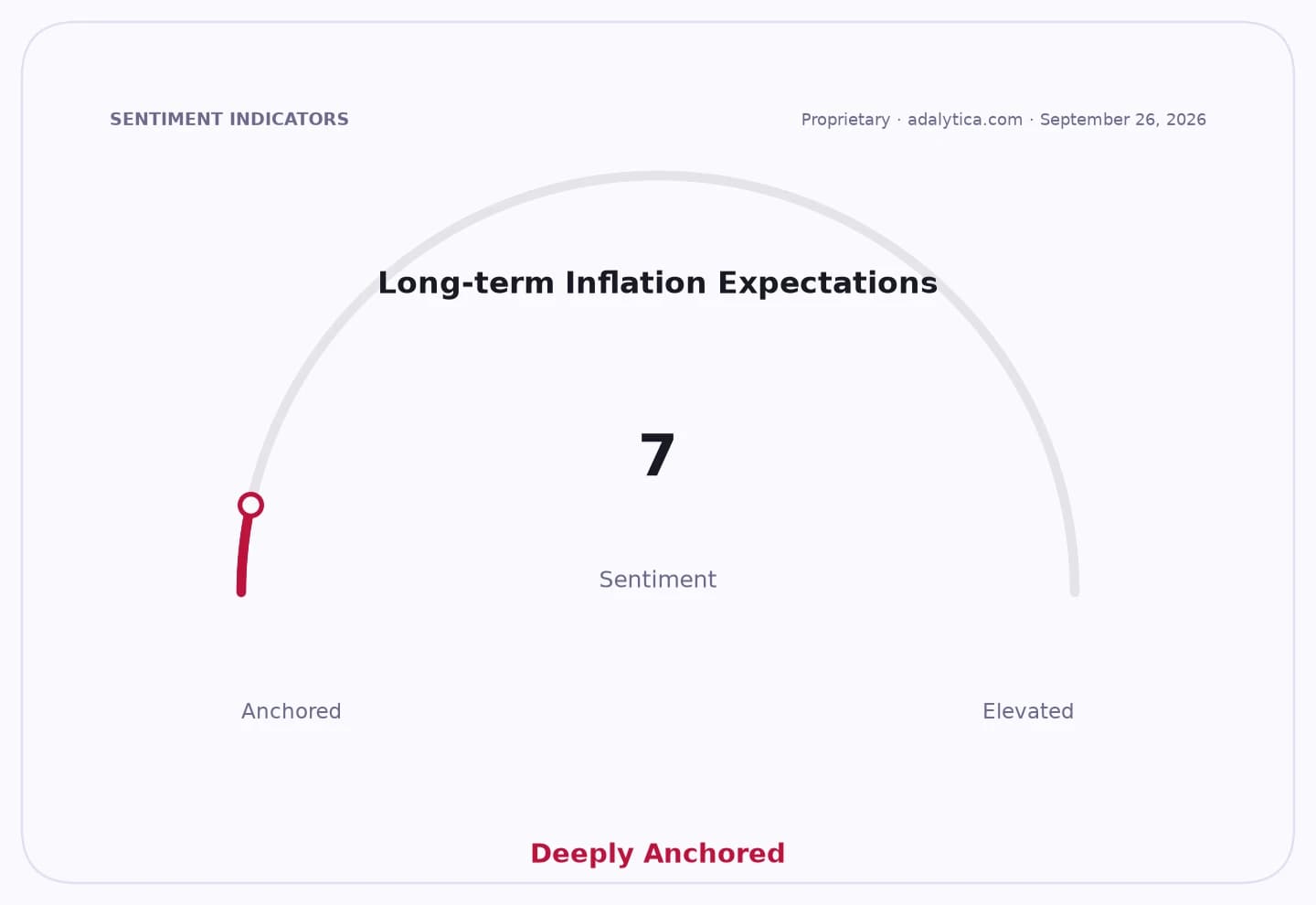
The Federal Reserve’s unanimous decision to raise its base interest rate and warn that inflation will remain above target for a “considerable” period has shifted the market narrative back toward tighter policy for longer, lifting short-end yields, pressuring Treasuries and favoring bank shares over rate-sensitive bond proxies.
Fed hawkishness favors banks over Treasuries

That matters because the message from policymakers is not just that inflation is still uncomfortably high, but that the central bank is prepared to keep policy restrictive until it sees clearer evidence of disinflation. In a market that had begun to price an easier path after softer June consumer prices, the Fed is pushing back against the idea that one benign reading changes the cycle. The focus now is on whether monthly core inflation can stay contained and whether the next CPI print confirms a durable slowdown rather than a temporary pause.
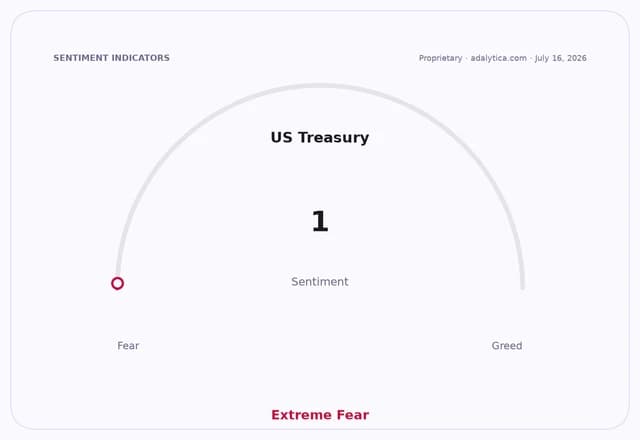
The bond market has already begun to reflect that shift. The 10-year Treasury yield was trading around 4.6%, far above crisis-era lows and consistent with a regime in which the Fed does not pivot quickly. Longer-dated inflation expectations have also shown renewed sensitivity to the policy stance, with 5-year and 10-year breakeven gauges drawing heavy attention as investors test whether pricing pressures are truly easing or merely stabilizing at an elevated level. The Adalytica “US Treasury Bonds Trade Signals” snapshot shows extreme fear in TLT, underscoring how aggressively investors have been trimming duration exposure.
That pressure is visible in Treasury-bond funds such as TLT, whose price has slipped below its 200-day moving average and whose relative strength readings point to weak momentum. The ETF’s technical picture suggests investors are still cautious on duration even after recent moves higher in bond prices. In contrast, the banking sector has benefited from the prospect of elevated rates for longer. The Financial Select Sector SPDR Fund, XLF, has climbed well above both its 50-day and 200-day moving averages, while regional-bank ETF KRE has also outperformed, reflecting expectations that wider net interest margins can persist if rates stay higher for longer.
US Treasury — 30-day sentimentadalytica.com
Explore this data interactively — full history, time series and cross-market comparisons.Open AlphaPulse
For banks, the policy path has a direct earnings implication. Higher policy rates can support net interest income, particularly for lenders with strong deposit franchises, although the benefit depends on how quickly deposit costs rise and how credit quality holds up. Recent filings from major lenders including Bank of America and U.S. Bancorp highlight the industry’s sensitivity to parallel rate shifts, deposit pricing and long-end rate moves. If the Fed stays restrictive into the second half of the year, large banks with sticky funding bases and asset-sensitive balance sheets could keep a relative earnings advantage over rate-capped borrowers and capital-light sectors.
The bull case for the Fed’s stance is straightforward: inflation is easing, but not fast enough, and credibility requires keeping pressure on demand until price gains are decisively back toward target. The bear case is that tighter policy is arriving just as growth is cooling and financial conditions are already doing some of the Fed’s work, raising the risk of an unnecessary squeeze on consumers, housing and credit-sensitive borrowers.
For investors, the immediate implication is a sharper distinction between duration and cash-flow stories. Long-duration assets, including Treasuries and many growth stocks, remain vulnerable if the Fed sustains this hawkish bias and upcoming CPI data disappoints. Financials, particularly banks with strong deposit bases, may continue to attract flows so long as the market believes the central bank will keep rates elevated without triggering a credit break. The next catalyst is the inflation report itself: if core prices keep running hot, the case for another hike hardens; if they cool more convincingly, markets may be able to reprice toward a gentler path. Until then, the Fed has made clear that victory over inflation is still not in hand.
| Entity | Gains | Losses |
|---|---|---|
| Banks | ▲Wider net interest margins | ▼Deposit-cost pressure |
| Treasury bulls | ▲Later disinflation hopes | ▼Higher yields, weaker TLT |
| Rate-sensitive borrowers | ▲None | ▼Higher borrowing costs |
| Fed hawks | ▲Policy credibility | ▼Risk of growth slowdown |