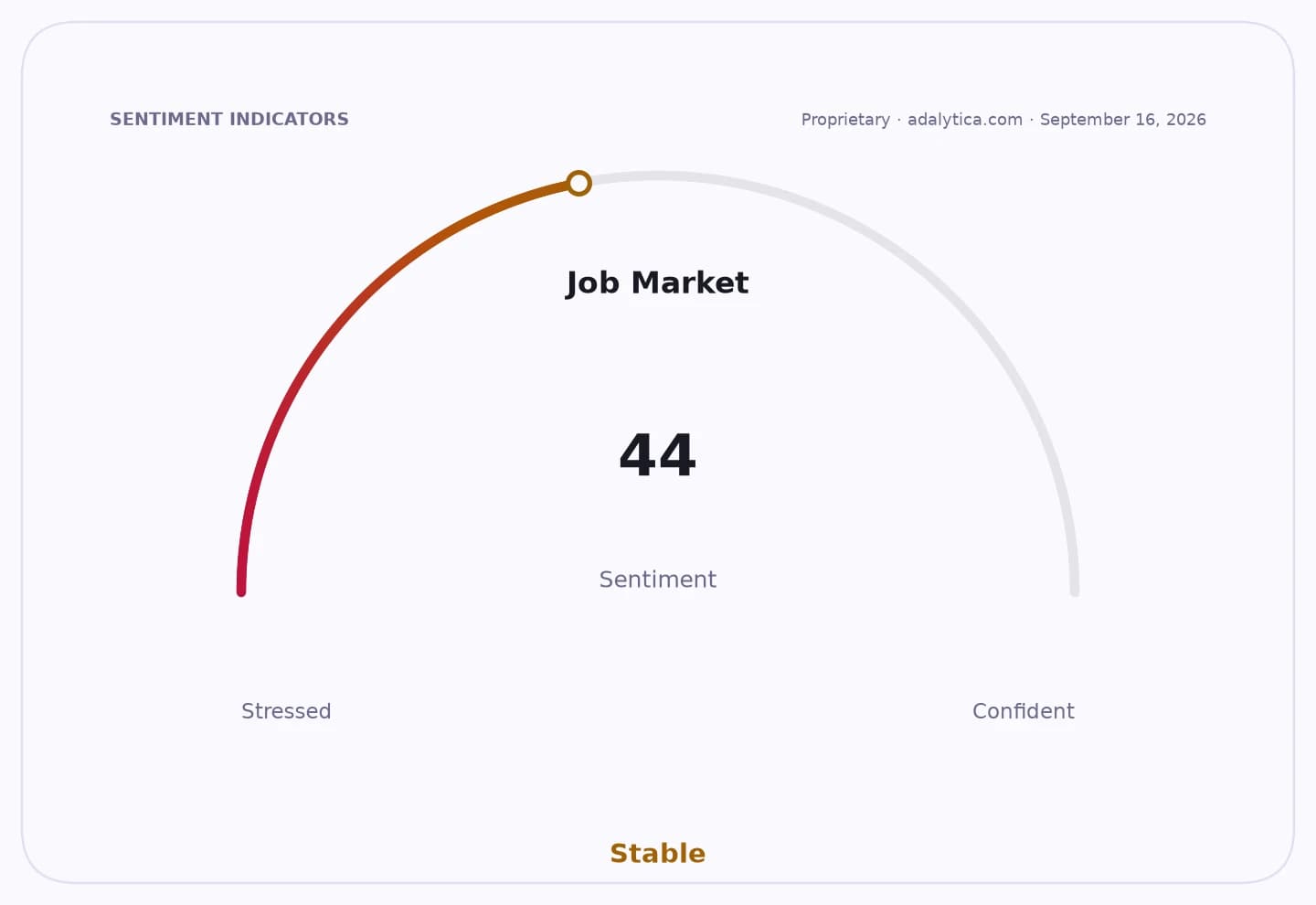
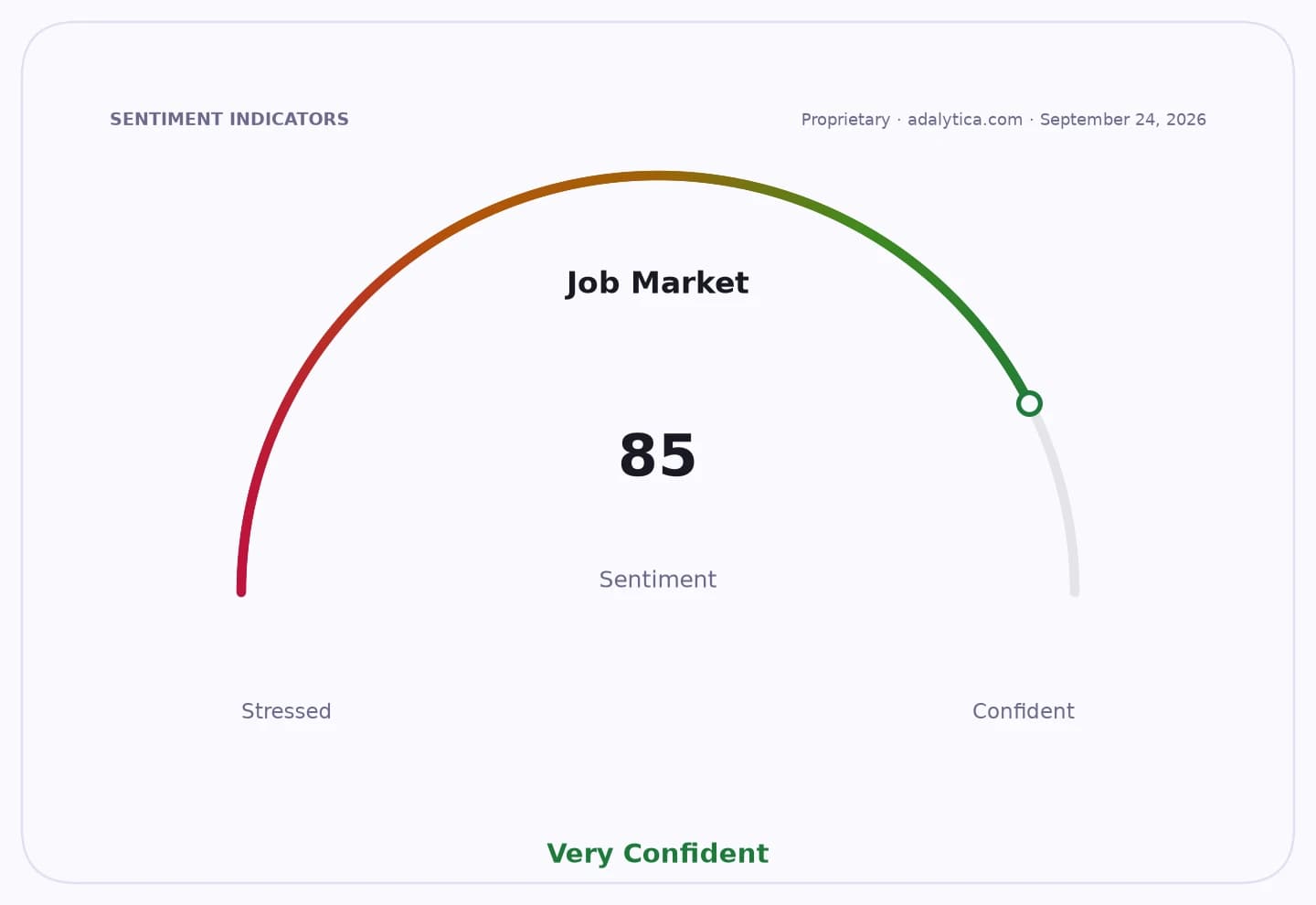
Finland’s employment areas have identified more than 100 hard-to-fill jobs, underscoring a labor market where employers still struggle to match vacancies with qualified workers even as demand for labor remains uneven across regions.
Finland lists 100 hard-to-fill jobs
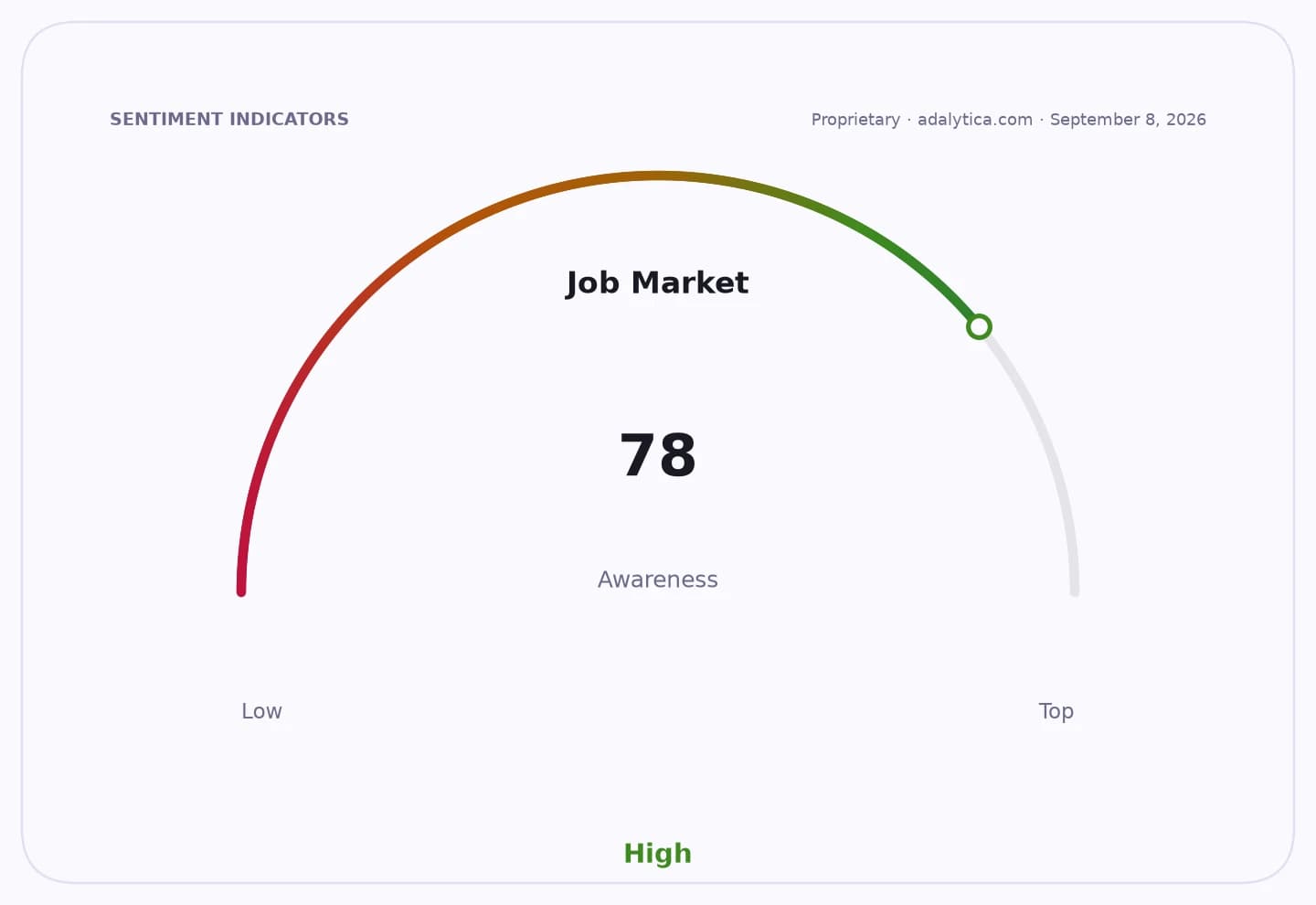
The biggest shortages cluster in industrial trades, construction and health care, with welders and machinists topping the list of jobs employers say are hardest to fill. Cooks also appear frequently, alongside a wide range of roles from shovelers and florists to specialist doctors.
Sentiment IndicatorsⓘProprietary · adalytica.com · September 8, 2026
This is a snapshot — live sentiment, awareness and momentum for 130+ markets update continuously in the dashboard.Open AlphaPulse
That matters economically because persistent vacancies can slow output, raise costs and delay projects at a time when employers are already being forced to search harder for staff. For Finland’s economy, the problem is not a single-sector bottleneck but a broad mismatch between available workers and the skills employers need, suggesting the labor market is tight in some occupations even when the overall job market may look more balanced on paper.
The regional spread is also important for investors and companies with exposure to Finland. Shortages in industrial and construction roles can hit contractors, manufacturers and infrastructure projects, while gaps in health care and social services can add pressure to public providers and local governments. Employers in areas with the sharpest shortages may face wage pressure, higher recruitment costs and longer hiring times, all of which can feed into margins and service delivery.
The picture fits a wider Northern European labor trend in which aging workforces, specialized skill requirements and uneven regional mobility keep certain jobs chronically open. Finland’s list suggests the issue is becoming more granular: the labor shortage is less about a lack of workers overall than a lack of the right workers in the right places.
Investors will be watching whether these shortages translate into faster wage growth, more training spending or greater reliance on migrant labor and automation. The next catalyst is whether local labor authorities and employers can narrow the mismatch before it starts to weigh more visibly on growth, public services and corporate earnings.
| Entity | Gains | Losses |
|---|---|---|
| Skilled workers in shortage roles | ▲Better pay leverage | ▼Wider workload pressure |
| Employers in Finland | ▲Stronger urgency to hire | ▼Higher recruitment costs |
| Construction, industry, health care | ▲Policy focus on staffing | ▼Delayed projects and service gaps |
| Regional labor authorities | ▲More data and attention | ▼More pressure to fix mismatches |