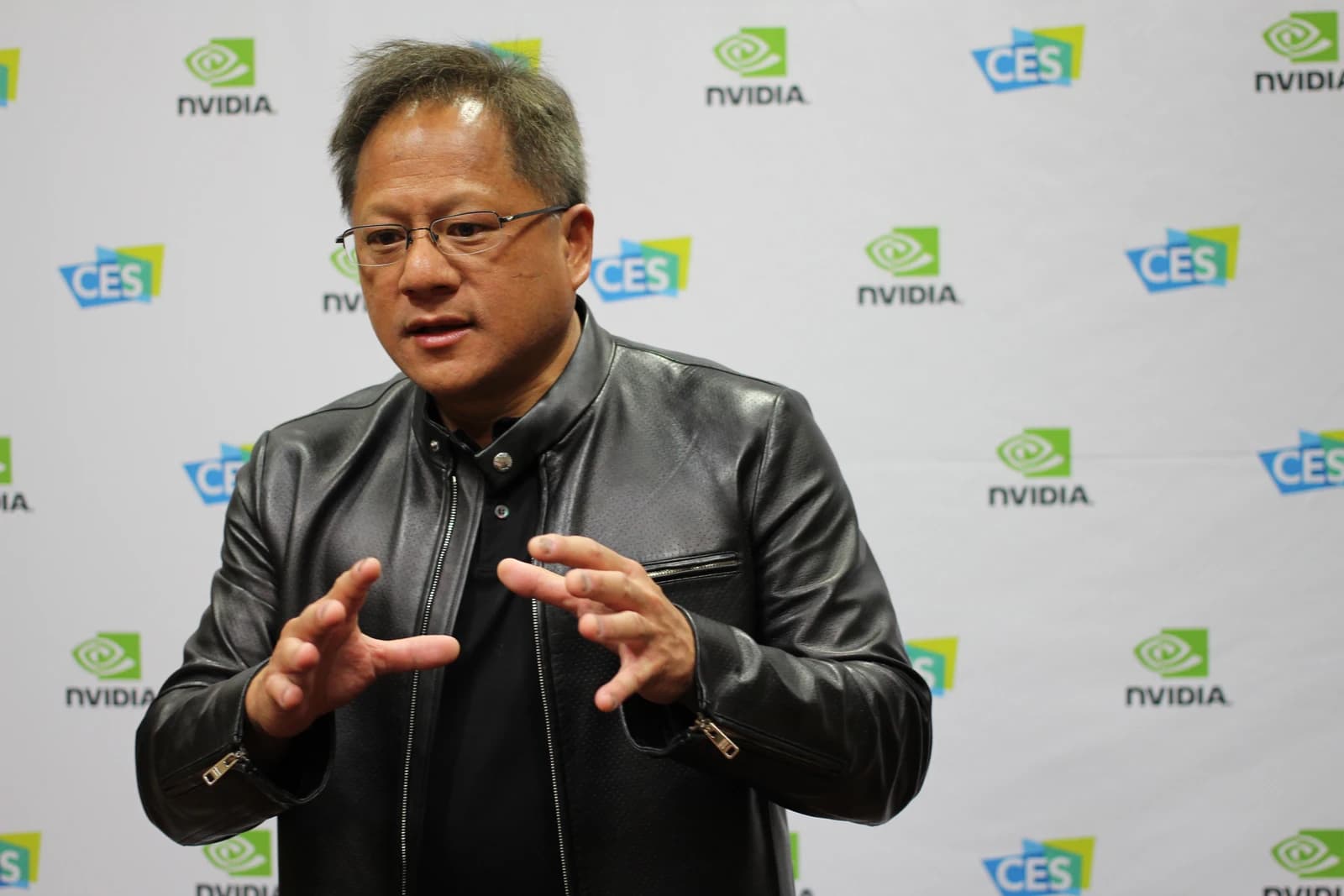
Firmus’ post-IPO valuation is now the real story, not the debut itself, because the market is deciding whether AI-linked listings still deserve premium multiples after the offering disappointed and scrutiny intensified around its dependence on former Nvidia chief Jensen Huang’s backing.
Firmus IPO Valuation Gets Scrutiny After Weak Debut
That matters because this is no longer just about one startup’s first days of trading. It is a read-through on how much capital investors are still willing to allocate to the next tier of AI companies after a frenetic run-up in the sector, and whether “narrative value” can substitute for the kind of scale, cash flow and strategic control public markets increasingly demand.
Sentiment Indicators
The timing is especially sensitive for Nvidia, whose shares have been bruised even as the broader AI trade remains a magnet for capital. Nvidia closed at $155.38 on Nov. 24, far below its 50-day moving average of $204.95 and its 200-day average of $202.81, with a 14-day RSI of 34.4 and a deeply negative MACD reading. That tells you the market is not treating AI as an untouchable momentum trade anymore; it is demanding proof that the spending boom still translates into durable earnings power.
That is the key investment implication. If Firmus is being marked down after an underwhelming IPO, the market is effectively pricing a higher bar for every AI name that relies on halo effects, celebrity endorsements or second-order exposure to the Nvidia ecosystem. For investors, that can be a warning sign on frothy pre-profit AI listings, but it can also create opportunity in the infrastructure layer where demand is still real and recurring.
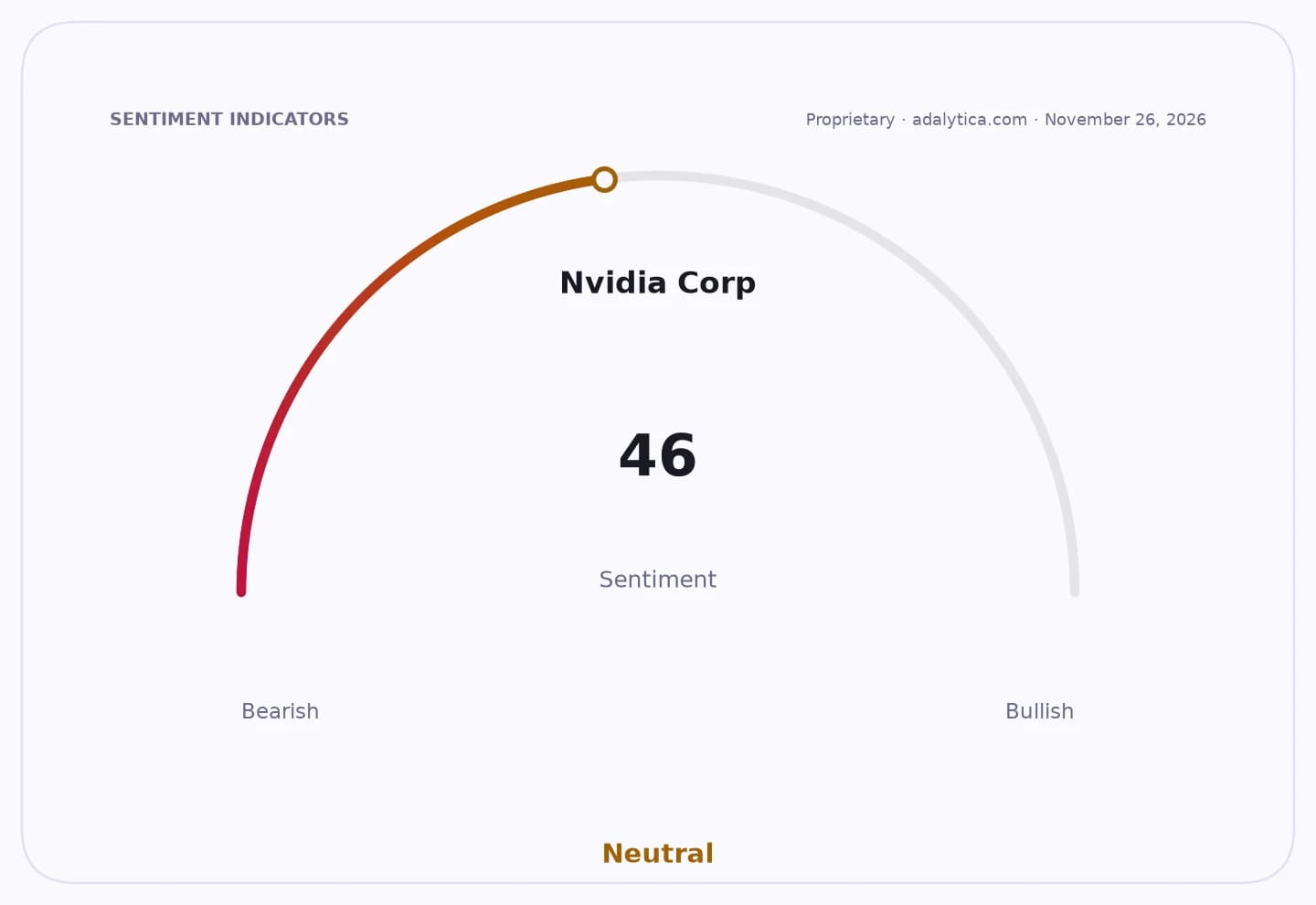
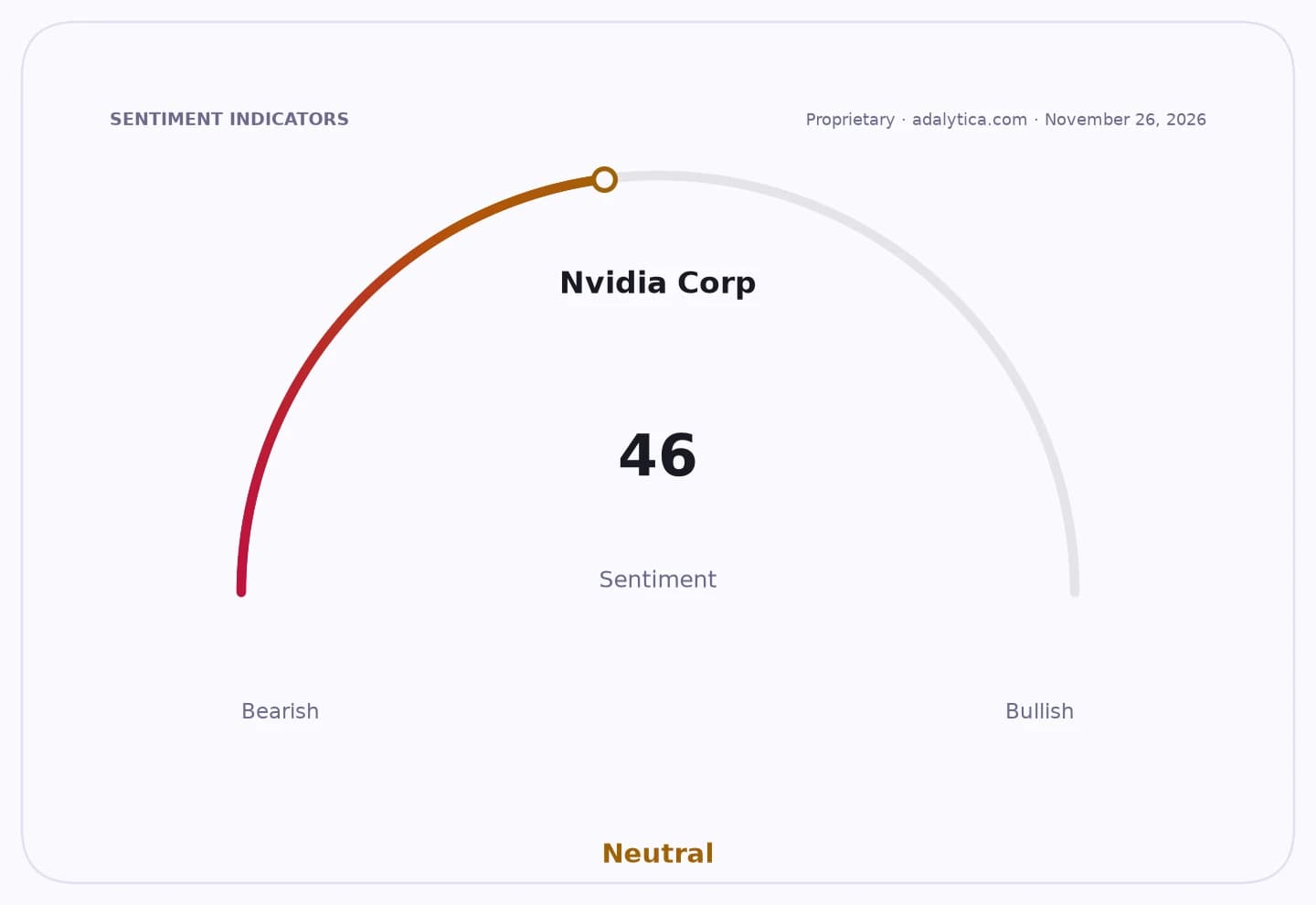
Adalytica’s AI sentiment snapshot underscores the split. AI awareness remains extreme at 93, but sentiment has slid to 29, a fear reading that suggests enthusiasm is still high even as conviction weakens. In Nvidia’s case, sentiment is neutral at 43, with awareness still elevated at 75, a combination that usually shows investors are watching closely but are no longer chasing blindly.
That divergence is where the next trade likely lives. The market is becoming more selective, and that is bullish for the firms that actually sell the picks and shovels of AI — chips, networking, power, cooling and data-center buildout — while it is bearish for speculative issuers whose valuations depend on momentum rather than monetization.
If Firmus can stabilize its valuation after the IPO flop, it will revive the case for a broader AI listing pipeline. If it cannot, the message to the market will be harsher: the AI capital cycle is still alive, but the easy money phase is over.
| Entity | Gains | Losses |
|---|---|---|
| Firmus | ▲Stabilized valuation if demand returns | ▼Valuation reset after weak debut |
| Nvidia | ▲Ecosystem validation if AI funding persists | ▼Halo effect fades if scrutiny deepens |
| AI infrastructure suppliers | ▲More selective capital into real capex | ▼None if hype names keep absorbing flow |
| IPO investors | ▲Potential rebound if shares rerate | ▼Losses if sentiment stays cautious |