Rising government bond yields are turning an already difficult debt problem into a more expensive one for the world’s biggest developed economies, and that matters because higher borrowing costs can quickly crowd out spending, force tax increases or both.
Fitch Warns on Rising Developed-Market Bond Yields
Fitch’s warning lands at a sensitive moment for investors because it ties the recent surge in yields directly to debt sustainability, not just to inflation or central-bank policy. The rating agency said 10-year government bond yields across the 10 largest developed economies have risen by an average of 81 basis points this year, helping push developed-market government debt up by almost $4 trillion to more than $75 trillion. In other words, governments are now financing a larger debt stock at a higher rate, and that combination is what makes fiscal arithmetic deteriorate so fast.
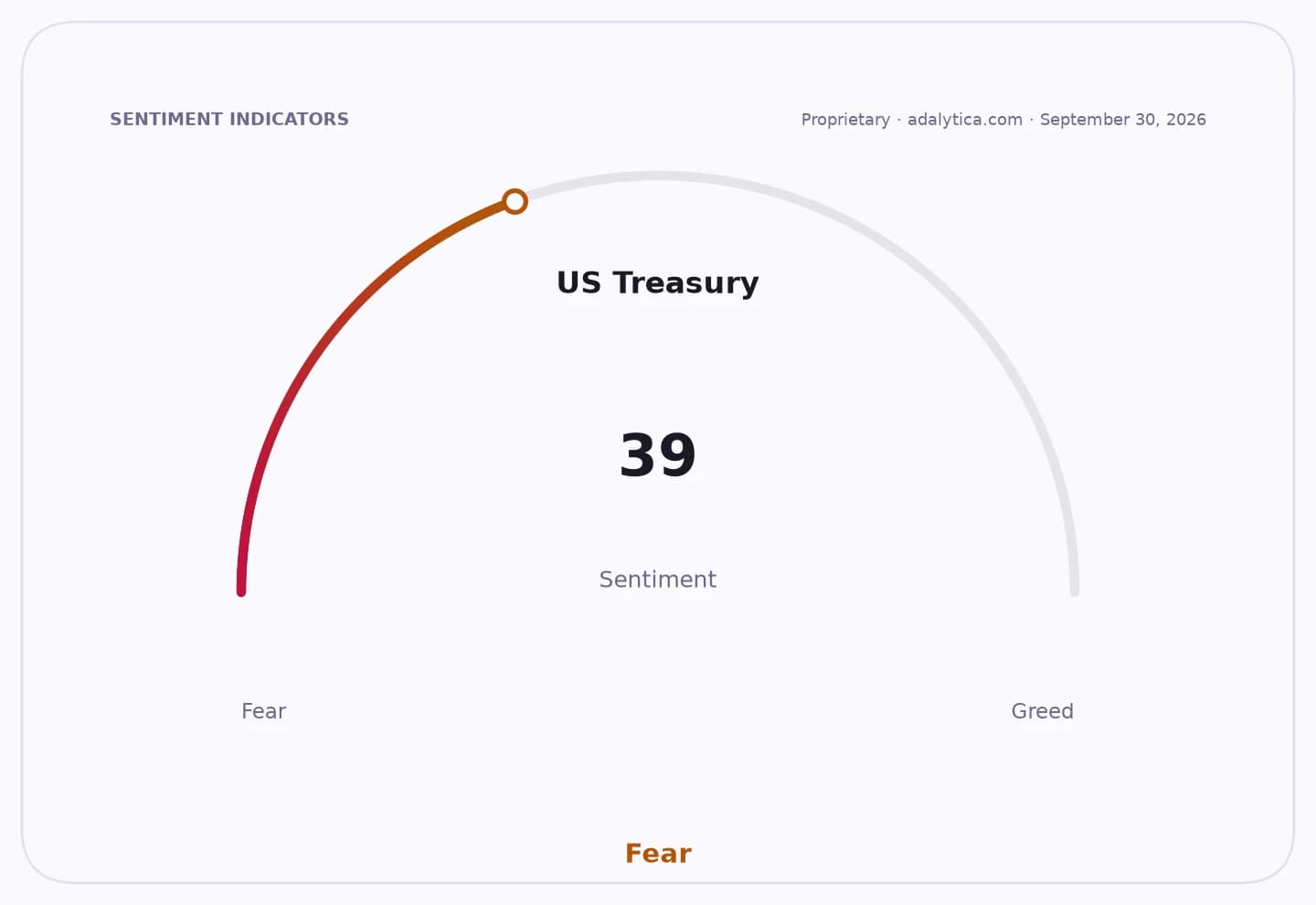
Sentiment IndicatorsⓘProprietary · adalytica.com · October 13, 2026
This is a snapshot — live sentiment, awareness and momentum for 130+ markets update continuously in the dashboard.Open AlphaPulse
The problem is especially acute when market yields sit well above the average interest rate governments are actually paying on their existing debt. Fitch said the median 10-year yield is now 161 basis points above that average, which makes it harder to stabilize debt ratios even if growth holds up. For long-term investors, that is not just a headline about sovereign finance — it affects the whole rates complex, from Treasury and gilt pricing to credit spreads, bank balance sheets and the valuation of every asset that competes with government bonds for capital.
France stands out as one of the most exposed economies. Fitch said it would need to slash its primary deficit to 0.4% of gross domestic product from a projected 2.9% this year just to stabilize debt, and even more if borrowing costs remain at current market levels. The US, meanwhile, is still on track for the largest general government deficit among the group at 7.5% of GDP, or $2.4 trillion, with Britain and France also running wide gaps. Germany’s deficit is widening too, which is important because it shows the pressure is no longer confined to the usual high-debt names.
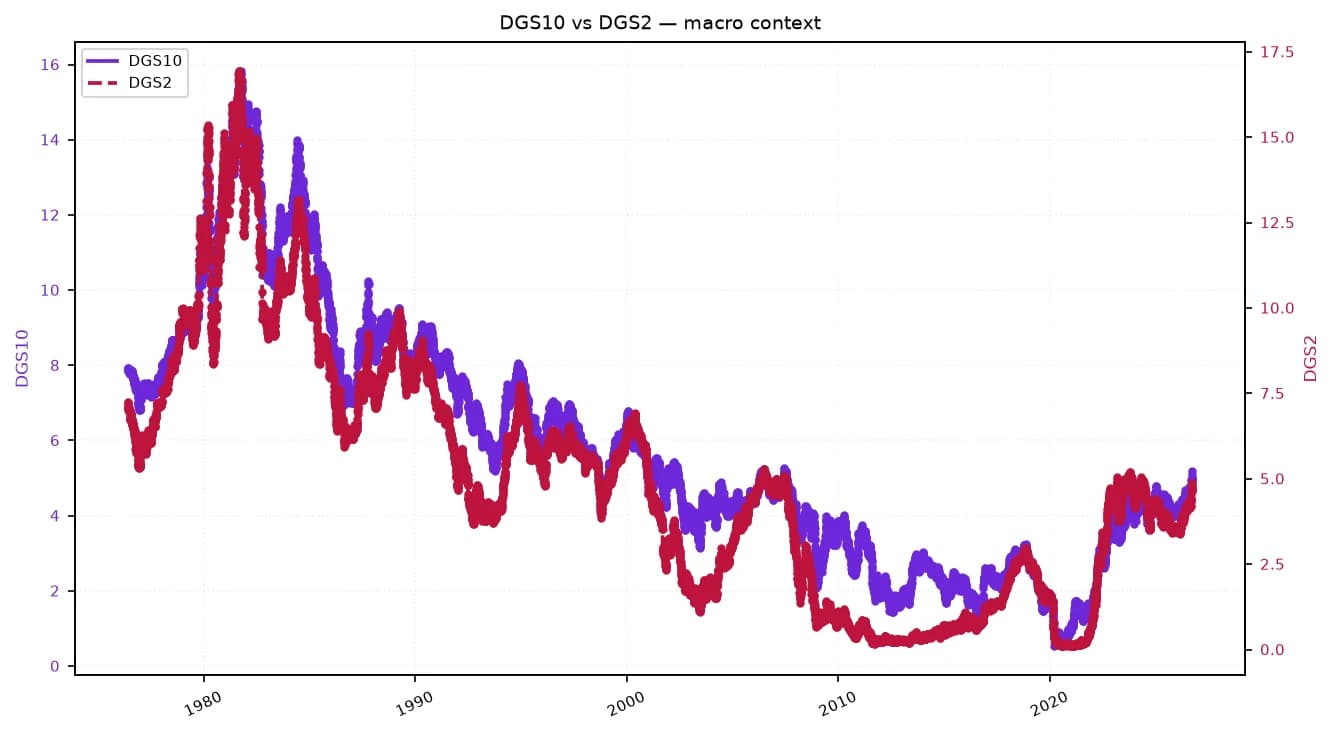
DGS10 vs DGS2 — macro contextadalytica.com
Explore this data interactively — full history, time series and cross-market comparisons.Open AlphaPulse
That is why the bond market matters so much here. Yields are not moving in a vacuum; they are feeding back into fiscal policy, refinancing risk and the cost of capital across the economy. A sustained rise in sovereign yields can reshape how investors think about duration, defensive income and even the relative appeal of equities, since higher risk-free rates tend to compress valuations. It also helps explain why bond funds such as long-dated Treasury ETFs have remained under pressure, while shorter-duration funds have been comparatively more resilient.
For investors, the key takeaway is simple: this is becoming a structural story, not a temporary wobble. Governments with heavy debt loads and persistent deficits will have less room to maneuver if yields stay elevated, and markets are likely to keep rewarding countries that show credible fiscal discipline while punishing those that do not. That makes developed-market sovereign debt one of the most important macro risks to watch over the next several years, especially if inflation proves sticky and long-term rates keep grinding higher.
| Entity | Gains | Losses |
|---|---|---|
| Short-duration bond investors | ▲Less price sensitivity | ▼Lower yield pickup |
| Long-duration bondholders | ▲Higher yield potential on new buys | ▼Capital losses on existing holdings |
| Governments with large deficits | ▲None | ▼Higher refinancing costs |
| Fiscal disciplinarians | ▲Market confidence | ▼Less political room to spend |