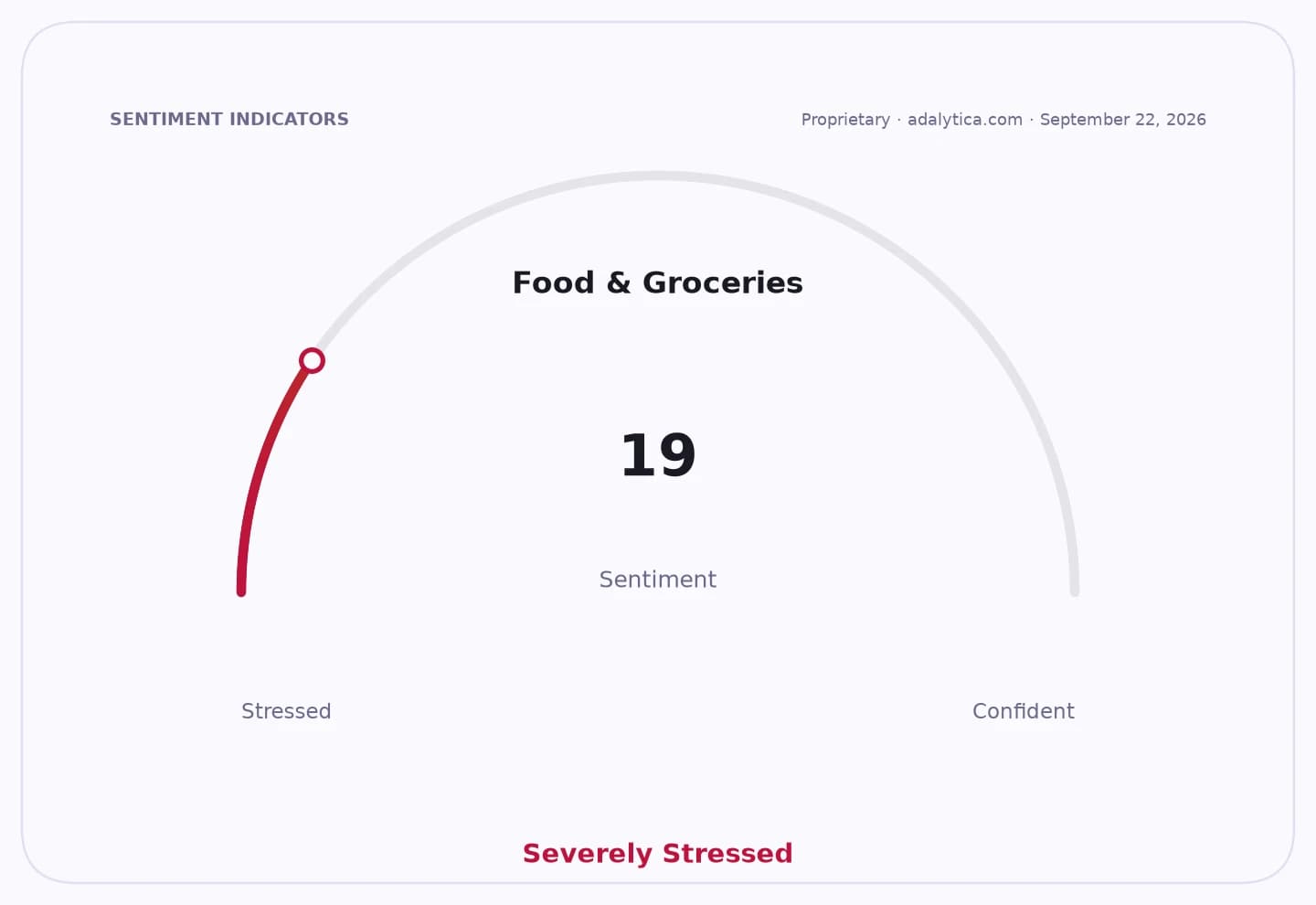
Food prices are becoming the next major inflation threat for bond markets, with investors warning that a mix of El Niño weather, fertilizer shortages, shipping disruptions and heat damage could push global food inflation back to 5% in early 2027 and keep government borrowing costs elevated.
Food Inflation Risks for Bonds in 2027

That matters because food shocks feed directly into household inflation expectations, wages and central-bank policy at a time when sovereign bond yields are already near post-financial-crisis highs. The new risk comes after energy prices and debt concerns in the US and Europe have already driven yields sharply higher, leaving little room for another inflation impulse.
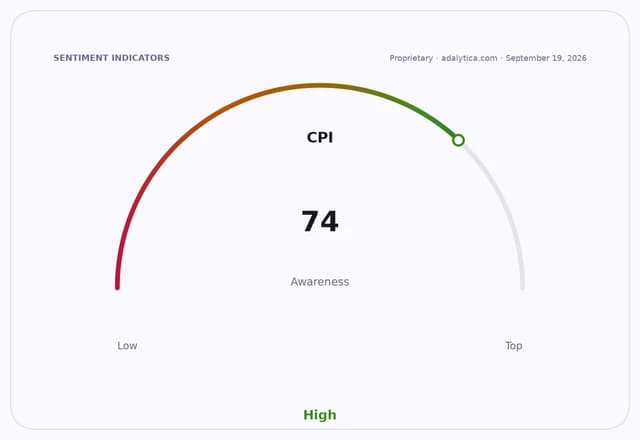
Sentiment IndicatorsⓘProprietary · adalytica.com · September 19, 2026
This is a snapshot — live sentiment, awareness and momentum for 130+ markets update continuously in the dashboard.Open AlphaPulse
Fund managers at Carmignac, Fidelity International and Troy Asset Management are already adding inflation protection or cutting exposure to economies seen as vulnerable. The concern is not just that food is volatile, but that it can become persistent when bad weather, supply bottlenecks and geopolitical disruptions hit multiple crops and transport routes at once.
The UN’s broad agricultural commodities gauge is already at its highest since late 2022, while the latest US inflation data show price pressures remain sticky. US CPI stood at 334.131 in August, up 0.4% on the month, and core CPI rose to 337.765, underscoring how little cushion central banks have if food costs start climbing again.

Bond markets are especially sensitive because food inflation tends to move quickly into expectations for broader price gains. When consumers see grocery bills rising, they are more likely to demand higher wages, making it harder for the Federal Reserve, the European Central Bank and emerging-market policymakers to ease rates without risking another inflation flare-up.
The danger is most acute in import-dependent economies and in countries where food carries a large weight in consumer baskets. Egypt and Turkey could face added pressure if currencies weaken at the same time as food costs rise, while India and the Philippines are exposed to weather-driven food inflation. Fidelity says Asia and Latin America are likely to absorb a large share of the damage if El Niño brings hotter, drier conditions.
The market backdrop leaves investors with a difficult trade-off. Higher food inflation would favor inflation-linked bonds, commodities and companies with pricing power, but it would likely hurt duration-heavy government debt, especially in markets already burdened by fiscal stress. It also raises the odds that central banks are forced to keep policy restrictive for longer even as growth cools.
Technical positioning in bond proxies and consumer-sensitive names is already reflecting the strain. US Foods shares have fallen to $93.42 from a recent peak above $106, and the stock’s relative strength index has dropped to 17, a conventional technical reading that suggests deep oversold conditions. Cboe Global Markets has also slid to $272.86 from more than $307 earlier in the month as volatility and rate sensitivity keep pressure on risk assets.
For investors, the key catalyst is whether this autumn’s weather and crop data confirm a broader food-price shock. If they do, inflation hedges may outperform again while nominal bonds, importers and consumer discretionary stocks face another round of valuation pressure.
| Entity | Gains | Losses |
|---|---|---|
| Inflation-linked bonds | ▲Higher demand | ▼Nominal bond holders |
| Food producers / agri commodities | ▲Pricing power | ▼Consumers and importers |
| Central banks | ▲Less room to ease | ▼Growth-sensitive borrowers |
| Import-dependent EMs | ▲— | ▼Currency and inflation pressure |