FPT’s shares have been punished far harder than its business, and that gap is now the real story for investors.
FPT shares fall as AI transition pressures margins
The Vietnamese technology group fell 1.53% to 45,000 dong on Nov. 20, its third straight decline, leaving the stock trading near its lowest level in 3.5 years and down almost 48% from the end of 2025. Market value has shrunk to about 84.9 trillion dong, underscoring how quickly sentiment can overwhelm fundamentals when investors decide the growth story is no longer as simple as it once looked.
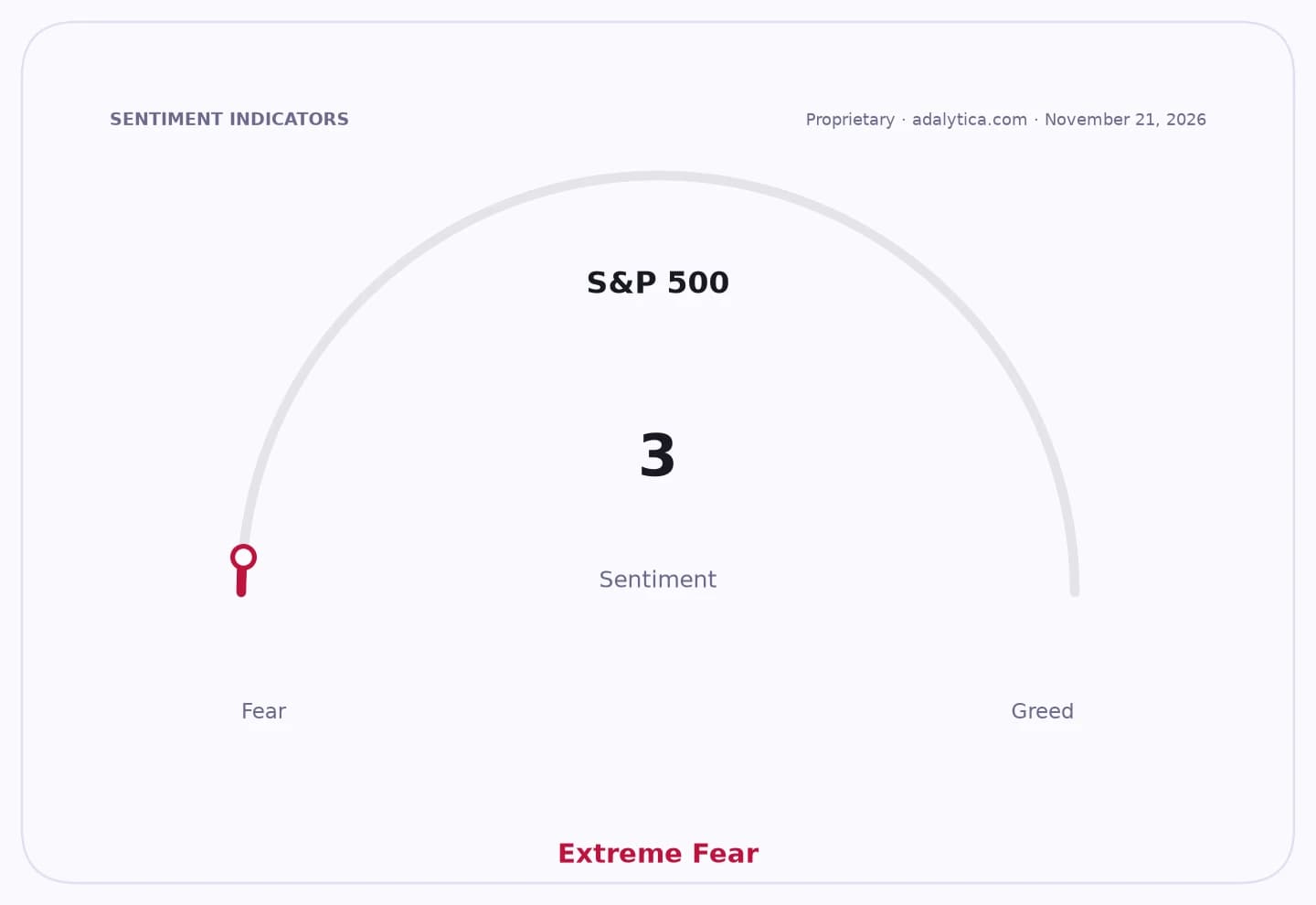
Sentiment Indicators
For long-term investors, that disconnect matters because FPT is still growing. In the first 10 months of 2026, revenue rose 12.5% year on year to 44.959 trillion dong, while pretax profit increased 16.8% to 9.954 trillion dong. Those figures put the company at 77% of its full-year sales target and 84% of its profit goal, suggesting the business is still expanding even as the stock market discounts it heavily.
The problem is not a collapse in operations, but a changing business model that is forcing a re-rating. FPT is trying to move away from the traditional time-and-materials outsourcing model toward outcome-based pricing, a shift that can improve pricing power over time but usually creates friction first. Clients, especially in Japan, have been cautious, and contract talks have stretched out, delaying some deals by roughly a quarter and weighing on third-quarter revenue.
That transition is taking place just as the global IT services market is being reshaped by artificial intelligence. Customers are shifting spending from conventional software work toward AI, but many are also pulling back after early deployments exposed security, performance and reliability concerns. FPT is testing models from Microsoft, OpenAI, Google and Anthropic, which means near-term costs are rising before the payoff arrives. The company also has to run old and new delivery systems in parallel until 2027, which limits margin expansion in the short run.
Currency pressure is adding another headwind. The weaker yen is hurting profitability in Japan, one of FPT’s key markets, while training and redeploying staff for AI-related work is also expensive. In other words, investors are being asked to pay today for a transformation whose benefits may not be fully visible until 2028.
That is why the stock’s steep fall matters beyond the headline number. Foreign investors have been persistent sellers, dumping more than 14 million FPT shares over the past three sessions and more than 157 billion dong in the latest session alone. That kind of outflow does more than pressure the price; it can sap liquidity, weigh on ownership levels and reinforce a narrative that the market no longer wants to wait for the next phase of growth.
Still, the long-term thesis is not broken. MBS says FPT’s shift is progressing at about the same pace as global software services peers and ahead of similarly sized rivals in Japan, with productivity gains targeted at 10% a year from 2027. If that holds, the current slump could eventually look like the market pricing in transition risk too aggressively rather than a permanent deterioration in the franchise.
For investors, the key question is whether FPT can convert AI-driven change into durable pricing power before the market’s patience runs out. The next year is likely to remain messy, with margin pressure, contract delays and more debate over valuation. But for those with a 3-to-5-year horizon, the stock is now worth watching closely, not because it is cheap on momentum, but because the business is still compounding underneath the selloff.
| Entity | Gains | Losses |
|---|---|---|
| Long-term FPT shareholders | ▲Future AI-led margin upside | ▼Near-term mark-to-market pain |
| Foreign sellers | ▲Liquidity and risk reduction | ▼Exposure to rebound potential |
| FPT management | ▲Chance to retool business model | ▼Margin pressure and execution risk |
| Competitors in IT services | ▲Opportunity to win delayed contracts | ▼Pressure to match AI pricing changes |