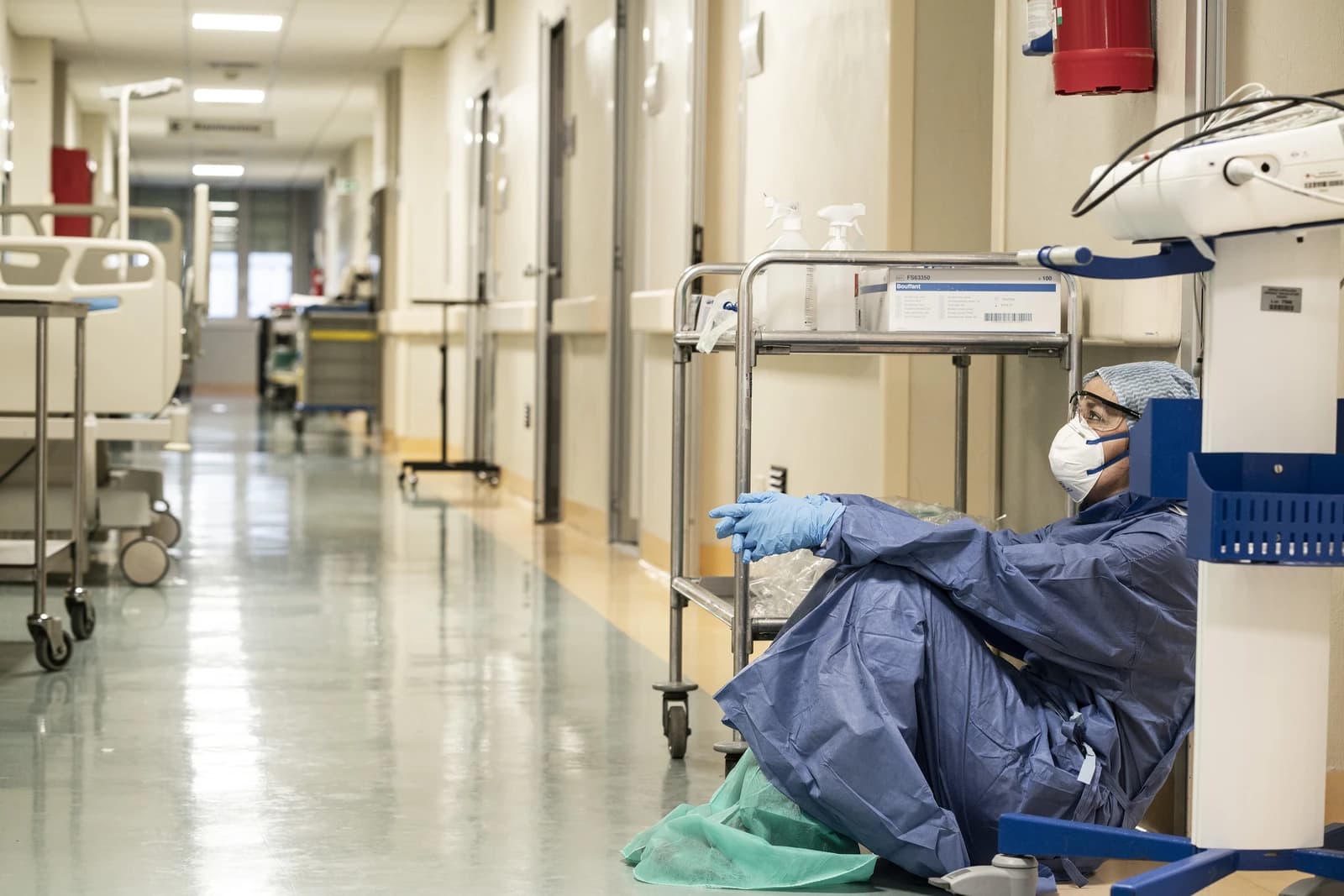
France’s absenteeism rate in companies climbed to a record 4.68% in 2025, sharpening pressure on the government as it prepares another fight over sick-leave spending and employer coverage.
France absenteeism rate hits record 4.68% in 2025
The Apicil observatory’s latest reading means that, on average, French workers are now approaching two work stoppages a year for each employee who takes leave, underscoring how costly and persistent the problem has become for businesses, the health system and public finances. The rise is being driven less by short absences than by long-term leave: stoppages lasting more than 90 days added 0.21 percentage point to the rate and now account for more than half of total absenteeism.
That matters economically because absenteeism is no longer a marginal labour issue. France paid 12.1 billion euros in daily sickness benefits in 2025, and 17.9 billion euros when workplace accidents and occupational diseases are included. Long absences also remove experienced workers from production for extended periods, adding pressure to already fragile labour supply in a country where manufacturing output, according to the broader industrial backdrop, has been soft rather than robust.
The composition of the absences is as important as the headline rate. More than 73% of absenteeism comes from leaves longer than 30 days, and among those, 42.75% are linked to mental-health disorders and 30.54% to musculoskeletal conditions. That points to a structural, not cyclical, problem: burnout, stress and physical strain are increasingly shaping staffing costs and productivity losses. For employers, the burden is heaviest among blue-collar workers, older employees, women and permanent staff, all of whom show materially higher absenteeism rates than managers, younger workers, men and temporary hires.
For investors, the immediate implication is margin pressure for labour-intensive sectors and a rising compliance and benefits cost for employers in France. Companies with large domestic workforces may face higher payroll disruption, more overtime spending and greater reliance on temporary labour. Health and insurance providers could see more demand for supplementary coverage if the state pushes part of the short-term sick-leave bill onto private insurers, as one government-commissioned report has suggested.
The political significance is equally clear. Prime Minister Sébastien Lecornu has made sick leave a central budget issue ahead of the 2027 social security debate, and the government has already moved to tighten the rules. Since Sept. 1, first-prescribed sick leaves have been capped at one month. Earlier this year, daily benefit ceilings were lowered, and another cap on occupational accident and disease payments is due to fall on Nov. 1. The new data gives officials fresh ammunition, but it also highlights how far reform will need to go if it is to curb structural long-leave costs rather than simply shift them between payers.
The most likely outcome is another round of confrontation between the state, employers and insurers over who should finance short absences and how much protection firms must provide. If the government follows through on transferring more short-term coverage to provident insurers, the winners would be employers with existing coverage and insurers able to price the risk; the losers would be firms without broad benefits packages, along with workers in weaker contracts who are less likely to have equivalent protection.
| Entity | Gains | Losses |
|---|---|---|
| French government | ▲Lower public sick-leave outlays | ▼Political backlash |
| Employers with private coverage | ▲More predictable costs | ▼Higher admin burden |
| Insurers / provident funds | ▲New premium revenue | ▼Greater claims exposure |
| Employees without strong benefits | ▲None | ▼Weaker coverage, tighter rules |