France’s private-sector base pay is now rising faster than inflation, and that matters because it marks a clear inflection point for household purchasing power after years of erosion.
France Private-Sector Pay Rises Above Inflation
The monthly base salary in the private sector climbed 2% year on year in the second quarter of 2026, outpacing consumer prices, which rose 1.7% over the same period, the Dares said. That means real wages are edging back into positive territory just as the French economy is still digesting the aftershocks of inflation, tighter monetary policy and slowing growth across Europe.
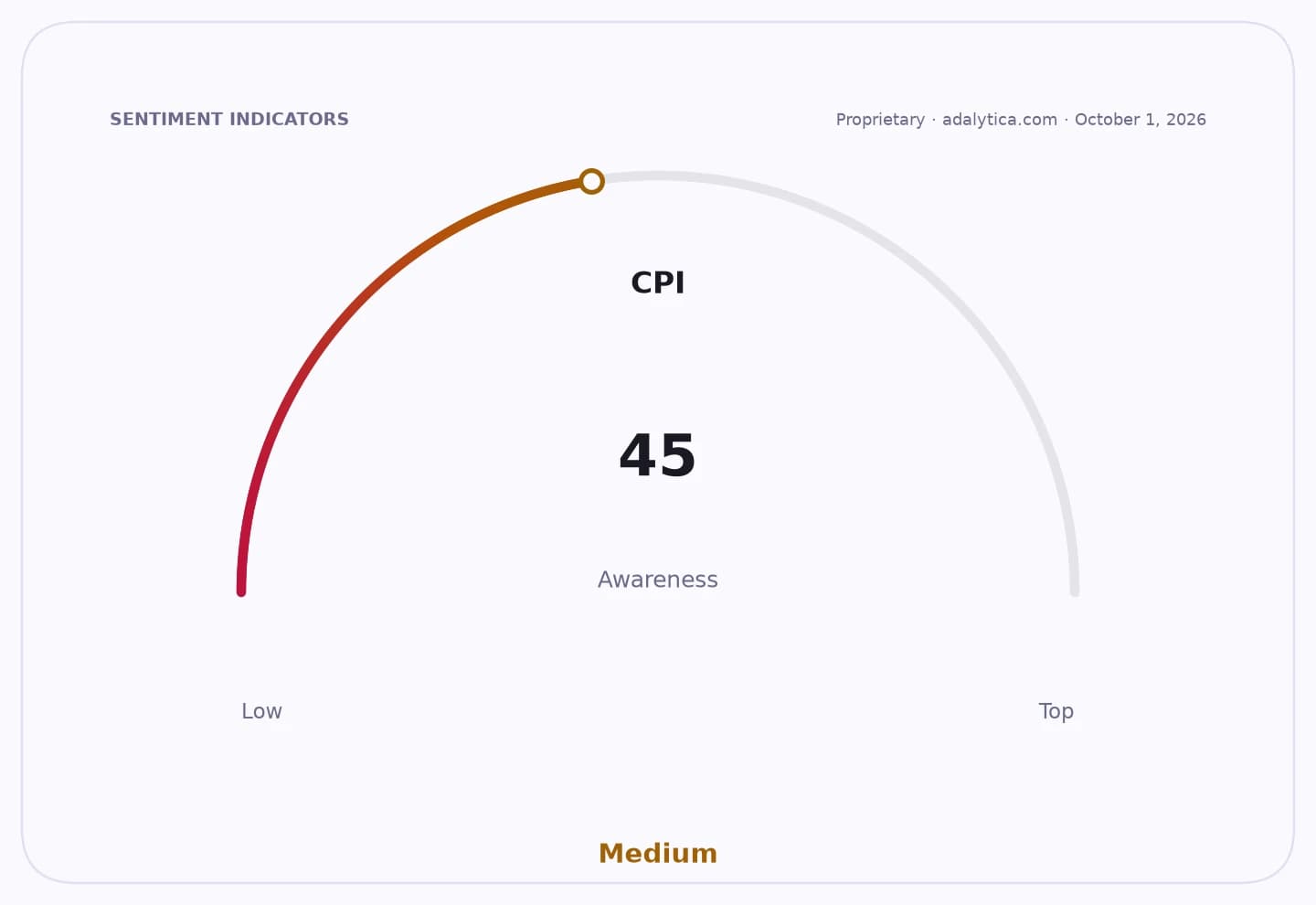
Sentiment IndicatorsⓘProprietary · adalytica.com · October 1, 2026
This is a snapshot — live sentiment, awareness and momentum for 130+ markets update continuously in the dashboard.Open AlphaPulse
For investors, the key takeaway is that wage gains are no longer just a cost story — they are a demand story. When pay begins to outstrip inflation, consumers get room to spend rather than merely defend their budgets, and that improves the outlook for retailers, staples, home improvement groups and leisure operators tied to French household demand. It also reduces the odds of a sharp consumer retrenchment that would weigh on revenues across the broad market.
The second-quarter reading also improved from the first quarter, when base salary growth and inflation were both 1.7%. On a quarterly basis, the base salary rose 0.7%, with employees seeing the fastest increase at 1%, ahead of workers at 0.8%, executives at 0.6% and intermediate professions at 0.5%. The hourly base wage index for workers and employees climbed 2.1% year on year, reinforcing the message that the labor market is still generating nominal pay growth even as inflation cools.
That combination is politically important as well. France has been under pressure to protect living standards, and the broader wage backdrop supports the case for maintaining consumer resilience even without a major acceleration in employment. The unemployment rate, at 4.1% in August, remains low enough to keep wage bargaining firm, while inflation has eased enough to let those raises show up in real terms.
The market implication is straightforward: this is the kind of macro shift that favors cyclicals over defensive fear trades. If real wages keep improving, the best positioned names are not just the obvious consumer beneficiaries, but also the companies exposed to housing-related spending, discretionary purchases and everyday household upgrades. That is why the recent weakness in broad consumer sentiment looks more like an opportunity than a warning sign.
The bigger setup is whether this becomes a durable trend. If inflation stays near current levels and wage gains remain above it, France could enter 2027 with a consumer backdrop far stronger than many investors are pricing in. For now, the message is simple: the market should treat rising private-sector pay in France as the start of a real-income recovery, not a one-off print.
| Entity | Gains | Losses |
|---|---|---|
| French workers | ▲Higher real pay | ▼Inflation squeeze eases |
| French consumers | ▲More spending power | ▼Budget pressure falls |
| Retailers and staples | ▲Stronger demand | ▼Less trade-down behavior |
| Employers | ▲Calmer wage environment | ▼Higher labor costs |