France is emerging as one of Europe’s clearest beneficiaries in the global AI race as Nvidia deepens its investment footprint on the continent, with the chipmaker saying its European commitments are approaching $10 billion.
France AI investments rise with Nvidia support

That matters because the push is about more than venture funding. It ties France’s bid for “AI sovereignty” to hard infrastructure, open-weight models and data control at a time when the U.S. and China are competing to dominate the next phase of artificial intelligence.
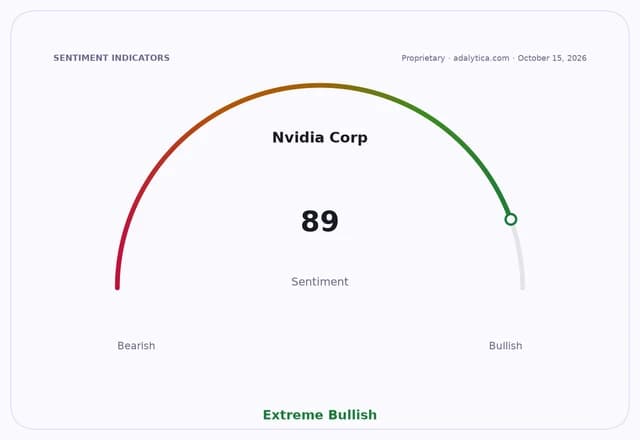
Sentiment IndicatorsⓘProprietary · adalytica.com · October 15, 2026
This is a snapshot — live sentiment, awareness and momentum for 130+ markets update continuously in the dashboard.Open AlphaPulse
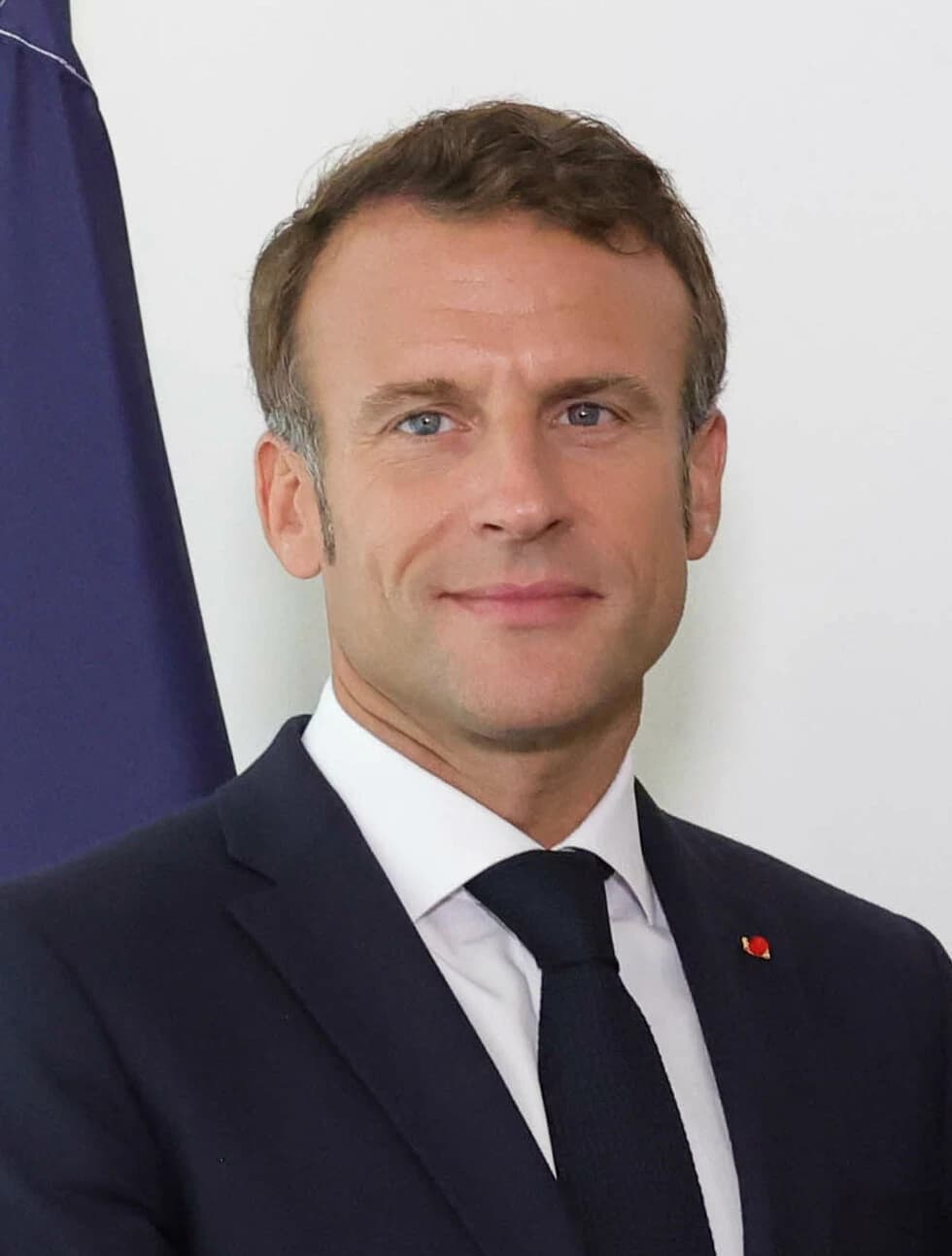
On Tuesday, Nvidia said it plans investments in French companies Doctolib, Genesis AI, Entalpic and Pigment, adding to a broader European spend that the company says is nearing $10 billion, or about 9 billion euros. The move reinforces Paris’ strategy, championed by President Emmanuel Macron, to attract global capital while building domestic AI capacity that can operate with less dependence on American and Chinese platforms.
The economic logic is straightforward. France is trying to turn cheaper, more reliable power — including its nuclear-heavy grid — and a deep engineering base into an edge in AI infrastructure, from chips and data centers to robotics and enterprise software. That is why Nvidia’s partnerships matter: the company supplies the processors, while firms such as Foxconn and France’s Bull are helping build the compute backbone in western France.
The industrial buildout is already taking shape. Foxconn and Bull this year announced a partnership to construct AI computers in Europe, with assembly and validation taking place at Bull’s newly opened factory in Angers. From 2028, Bull is due to manufacture systems based on Nvidia’s Vera Rubin Ultra NVL72 rack-scale supercomputer, linking French manufacturing directly to one of the industry’s most advanced platforms.
For investors, the story is twofold. First, Nvidia is broadening demand for its chips beyond the U.S. hyperscaler cycle and into sovereign and enterprise AI markets, which can support long-duration revenue growth. Second, France is positioning itself as a regional hub that could capture more AI-related capital spending, software deployment and industrial contracts, even as the biggest model makers remain concentrated in the U.S. and China.
Nvidia’s open-weight push also carries strategic weight. The company said its Nemotron models are already in production at French organizations that require “sovereign and reliable” data, and it highlighted a large deployment in public administration through Twake.ai, the workplace platform chosen for more than 2,500 French public entities. In banking, SBS is rolling out an AI platform that keeps agents inside institutions’ own systems, with Nvidia as a partner.
That fits a broader geopolitical split in AI. Chinese developers have led much of the open-weight momentum, while U.S. firms including OpenAI have kept their most advanced systems closed. France is betting it can sit in between — drawing on foreign chip supply and global partnerships while keeping data, models and deployment under European control.
The market implication is that Europe’s AI story is shifting from policy rhetoric to capital allocation. Nvidia’s support gives France credibility in that effort, while also underscoring how the AI contest between Washington and Beijing is now being fought through alliances, factories and model access, not just software.
The next test is execution: whether France can keep building the power, compute and manufacturing base fast enough to convert political ambition into a durable AI ecosystem.
| Entity | Gains | Losses |
|---|---|---|
| France | ▲More AI investment and infrastructure | ▼Dependence remains on foreign partners |
| Nvidia | ▲New sovereign AI demand | ▼Greater exposure to geopolitics |
| U.S. and China | ▲Compete for influence | ▼France seeks a third path |
| French tech firms | ▲Funding and deployments | ▼Pressure to meet scale and sovereignty goals |