France is emerging as the biggest risk in Europe’s sovereign debt market, with borrowing costs, credit protection and budget pressures all moving sharply higher even as a handful of northern countries still meet the bloc’s fiscal test.
France Bond Yields Rise as Europe Debt Gaps Widen
The immediate market alarm came after France’s 10-year bond yield approached 5%, its highest since 2002, while the spread over Germany widened to 140 basis points, the most since 2011, according to DWS. Credit-default swap pricing has moved even more decisively: insurance against French sovereign default has more than doubled in a month to 253 basis points, compared with 70 for Italy, 44 for the United States and 14 for Germany.
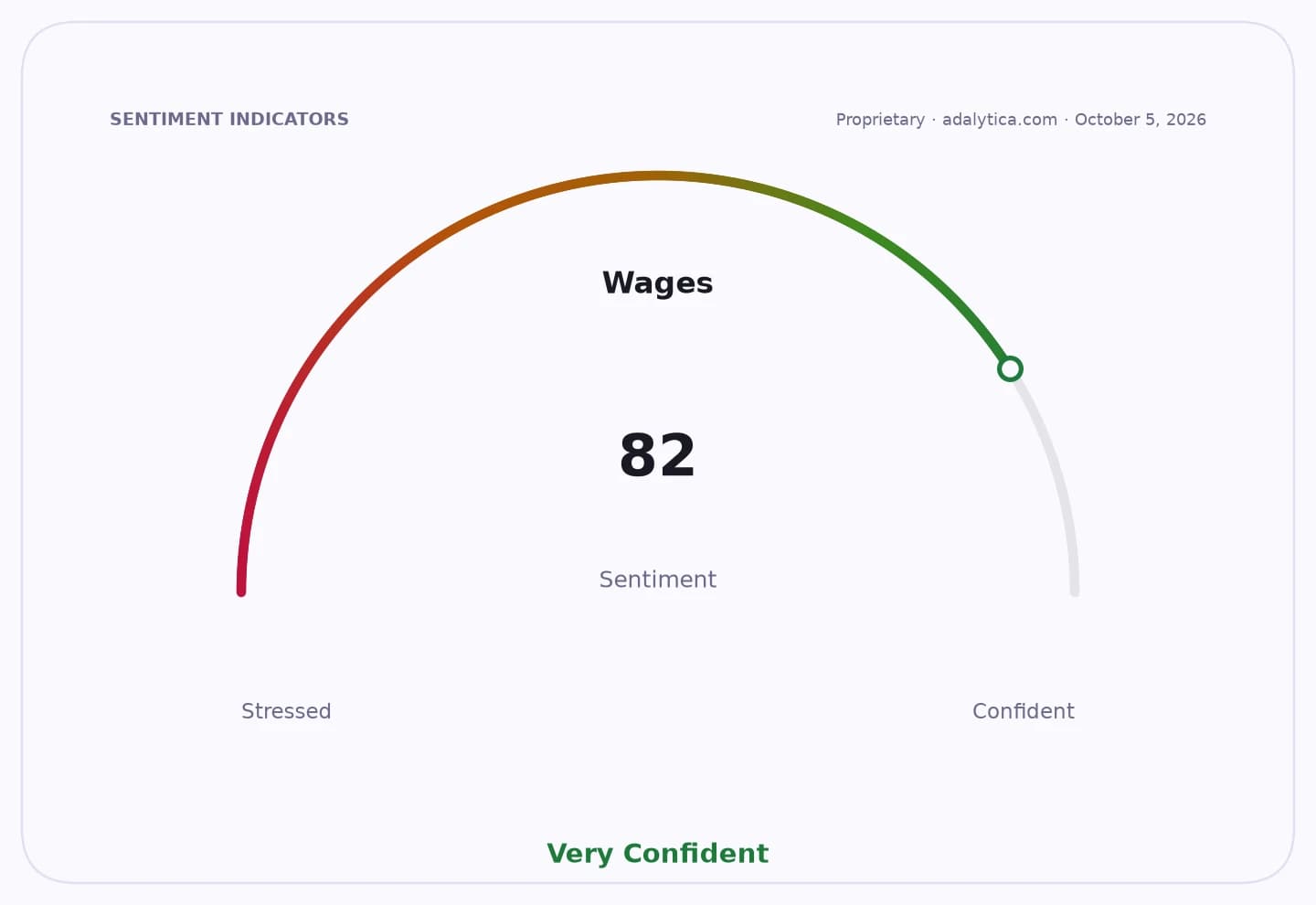
Sentiment IndicatorsⓘProprietary · adalytica.com · October 10, 2026
This is a snapshot — live sentiment, awareness and momentum for 130+ markets update continuously in the dashboard.Open AlphaPulse
That matters because investors are no longer pricing Europe as a single credit story. The region’s average debt load may look broadly stable — Scope Ratings forecast euro-zone public debt around 90% of GDP in 2031, versus 88% at the end of 2025 — but the gap between winners and losers is widening fast. Denmark stands out as the only country in the panel to satisfy all four tests at once: growth, inflation, surplus and debt. France, by contrast, is carrying debt above 110% of GDP, running a deficit above 5% and facing weak growth of 0.8%.
The message from markets is that trajectory now matters more than absolute debt levels. France can still borrow at less than Italy, Greece or Belgium on some measures, but its spread over Germany and the cost of hedging its debt have deteriorated quickly, while lower-debt Nordic economies remain far more resilient. Goldman Sachs said France would need a primary surplus above 1% of GDP just to start cutting debt, based on assumptions of 1% growth, 2% inflation and 4% financing costs, versus a current primary deficit of about 2.6%.
Italy is no longer the benchmark for improvement either. Goldman revised Rome’s deficit forecasts higher to 3.4% of GDP in 2027 and 3.2% in 2028, above earlier targets, and sees debt peaking around 137% before stabilizing, potentially leaving Greece as the euro zone’s most indebted sovereign. That keeps pressure on both governments as they prepare budgets that will decide whether current market stress stays localized or spreads across the currency bloc.
Investors have already started to distinguish between countries. The main euro-area equity and bond proxies show that shift: the U.K.’s EWU ETF is trading below its 50-day average, with RSI readings in weak territory, while the broader Europe fund VGK is also below key short-term trend levels, underscoring that fiscal anxiety is weighing on regional assets. The next catalyst is October budget detail from Italy and France, which will determine whether Europe’s fiscal divide narrows or becomes the market’s dominant macro trade.
| Entity | Gains | Losses |
|---|---|---|
| Denmark | ▲Fiscal credibility | ▼None materially |
| France | ▲None materially | ▼Higher yields, wider spreads |
| Italy | ▲Relative safe-haven status vs France | ▼Higher deficit, rising debt path |
| Germany/Bund holders | ▲Flight-to-quality demand | ▼Lower relative spread income |