French motorists scrambling to cut fuel bills are discovering that not every cheaper alternative is legal, practical or worth the risk.
France Fuel Prices: E85, LPG and Oil Risks

With diesel averaging 2.41 euros a litre, SP95-E10 at 2.18 euros and SP98 at 2.28 euros, the latest surge in pump prices has revived interest in substitutes ranging from Superéthanol-E85 and LPG to improvised blends of rapeseed oil and diesel. The economic logic is straightforward: when filling a 40-litre tank costs close to 90 euros, even modest substitutions can free up household cash. But the market is also exposing a sharper divide between regulated alternatives that scale and informal fixes that can destroy engines or trigger fines.
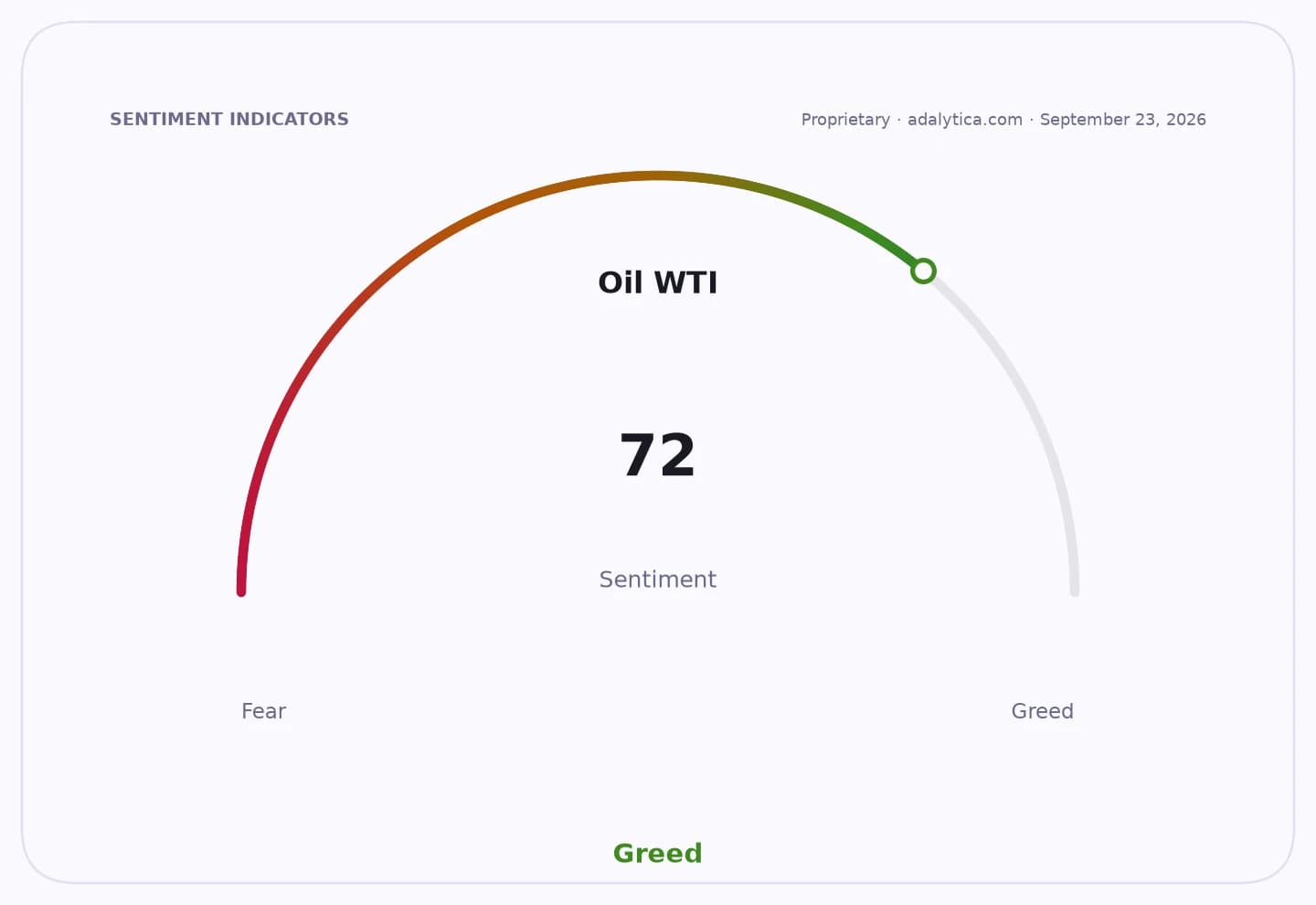
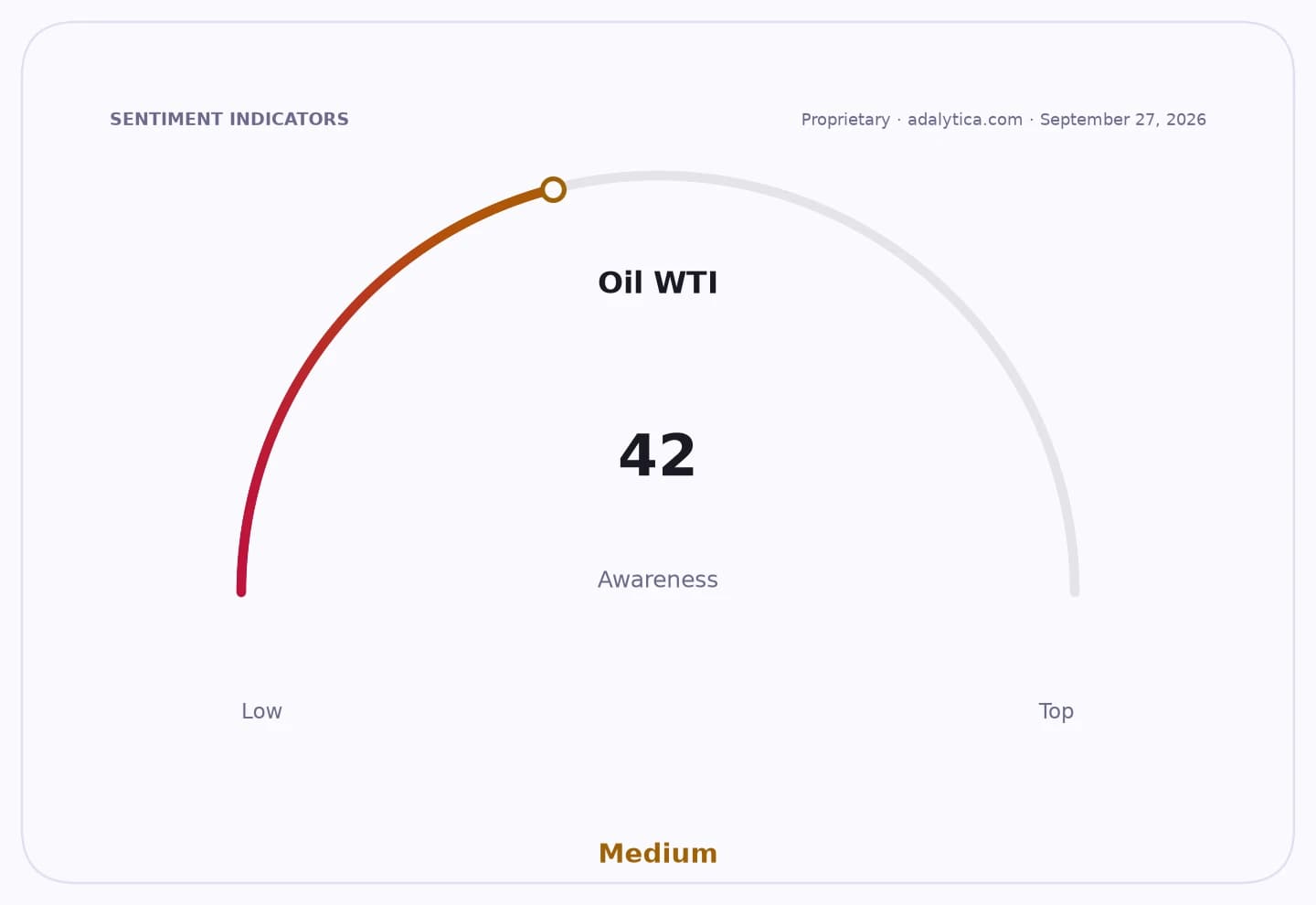
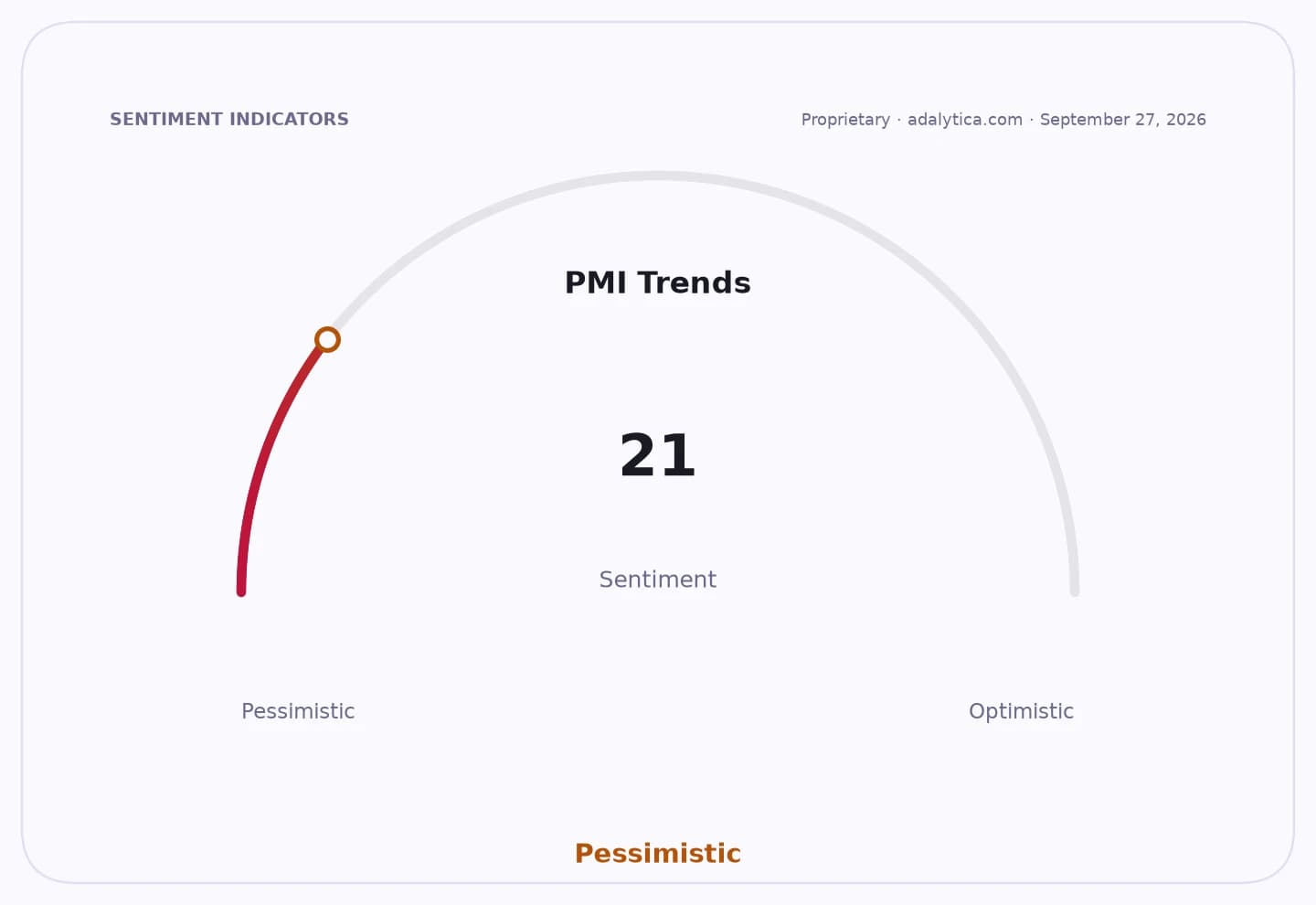
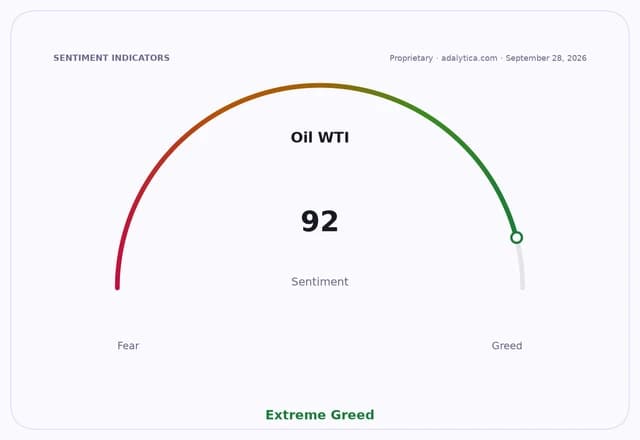
Sentiment IndicatorsⓘProprietary · adalytica.com · September 28, 2026
This is a snapshot — live sentiment, awareness and momentum for 130+ markets update continuously in the dashboard.Open AlphaPulse

The clearest winner is E85. At about 0.85 euro a litre, it cuts a 40-litre fill-up to roughly 34 euros, less than half the cost of standard unleaded. Conversions are not free — a homologated flex-fuel kit costs around 500 to 1,000 euros — but the payback is fast for drivers who clock regular mileage. Pierre Chasseray, head of the 40 Millions d’Automobilistes association, said the investment can be recouped in about a year, assuming about 50% fuel savings. That matters for consumers, but also for the broader fuel market: when price gaps widen this much, demand can shift quickly toward lower-taxed, partially renewable fuels.
The fiscal gap is the reason. E85 benefits from a much lighter tax burden than gasoline, with France’s TICPE set at 12 centimes a litre versus 67 centimes for petrol. That gives E85 a structural advantage that oil-product price moves alone cannot erase. For investors, that makes the fuel more resilient than a simple discount product: as long as policy support remains intact, E85 retains a built-in price floor relative to conventional gasoline.
DCOILWTICO — macro contextadalytica.com
Explore this data interactively — full history, time series and cross-market comparisons.Open AlphaPulse
LPG is a more mixed proposition. At about 1.06 euro a litre, it is still cheaper than petrol, and dual-fuel conversions are available for roughly 3,000 euros. But the economics are weaker because the upfront cost is higher and the network is thin. Only around 1,500 of France’s roughly 10,000 stations sell LPG, according to France Gaz Liquides. That limits adoption, especially outside dense urban corridors and fleet use. The investment case is therefore narrower than for E85: attractive for high-mileage owners, less compelling for the average driver.
The riskiest alternatives are also the most viral online. Rapeseed oil, which sells for around 1.47 euros a litre, may look like an obvious substitute for diesel, but mechanics warn it can clog injectors and fuel pumps, reducing power and causing breakdowns. There is also a legal barrier: vegetable oils are not authorized motor fuels under French customs rules, and using red-dyed non-road diesel in a private car can bring a 135-euro fine and vehicle seizure. Those penalties matter because they erase any short-term savings and highlight how much of the “cheap fuel” conversation is really about regulatory arbitrage, not genuine efficiency.
Hydrogen, meanwhile, remains a distant option rather than a mass-market answer. France has just 66 hydrogen refuelling stations for about 1,155 vehicles, underscoring the gulf between technological promise and consumer reality. For investors in mobility, that means the near-term substitution story is still dominated by liquid fuels and conversion kits, not by a wholesale shift to new vehicle architectures.
The broader narrative is that high fuel prices are forcing a re-rating of what counts as a viable alternative. In the short term, legal and relatively mature options such as E85 and, to a lesser extent, LPG can absorb some of the stress on households. Over time, however, the market remains constrained by infrastructure, taxation and vehicle compatibility. That leaves consumers with a familiar trade-off: pay more at the pump, or save money only if the alternative is legal, mechanically compatible and used long enough to justify the conversion cost.
| Entity | Gains | Losses |
|---|---|---|
| E85 users | ▲Lower fuel bills | ▼Need compatible vehicles |
| LPG drivers | ▲Cheaper refills | ▼High conversion cost |
| Rapeseed oil users | ▲Short-term savings | ▼Engine damage, fines |
| Oil companies/petrol stations | ▲Higher conventional fuel demand | ▼Share of alternative-fuel demand |