French unions are pressing for the first major boost to the minimum wage in more than a decade, arguing that inflation and squeezed pay scales justify an “immediate” increase that would ripple through the labor market and the public finances.
France Unions Push for Higher Minimum Wage

The demand puts the government in a difficult spot: any meaningful lift in the minimum wage would raise wage bills across low-paid sectors, push up state payroll costs and test employers already contending with softer hiring conditions. Labor Minister Jean-Pierre Farandou has left the door open to a modest “coup de pouce,” but has warned against a large move because of its potential impact on employment.
Sentiment Indicators
The CFDT, now asking for a 100-euro net rise, says that would amount to a 6.8% increase and would have to be followed by a broader reset of wage grids so workers do not remain stuck at or near the minimum. The CGT wants an immediate 10% rise to 2,053.72 euros gross, then a move to 2,200 euros and a return to wage indexation to prices. FO is pushing for the minimum wage to be tied to 80% of median pay, while the CFTC wants at least the 0.6% top-up granted under François Hollande, in addition to the automatic annual revaluation.
The stakes go beyond the minimum wage itself. Unions say 122 of roughly 200 industry pay agreements still start below the legal minimum, creating what they call an “ecrasement” of pay bands that leaves promotions and skill progression unrewarded. That matters for productivity, hiring incentives and consumption, especially if higher entry-level pay is not matched by broader wage growth higher up the ladder.
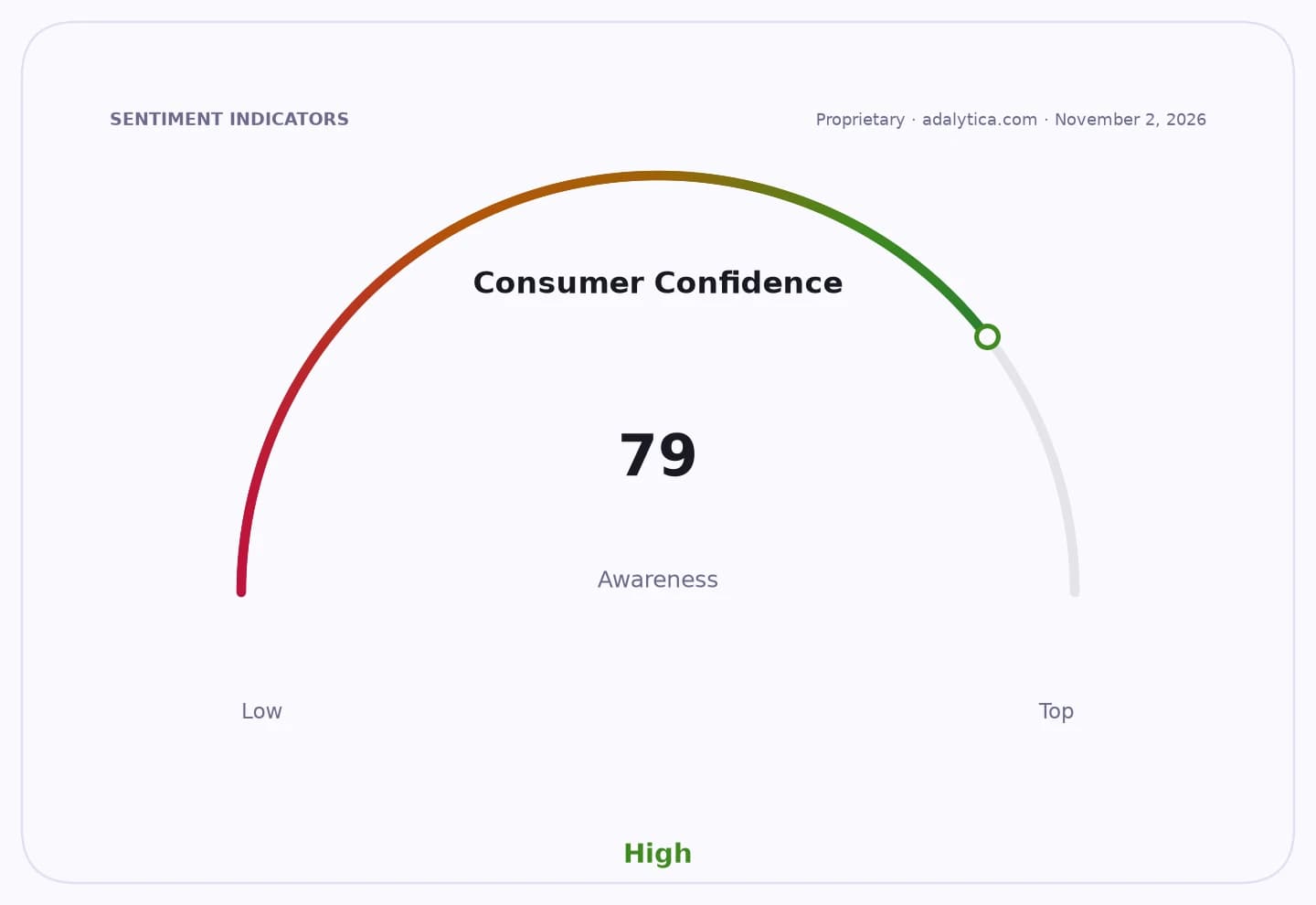
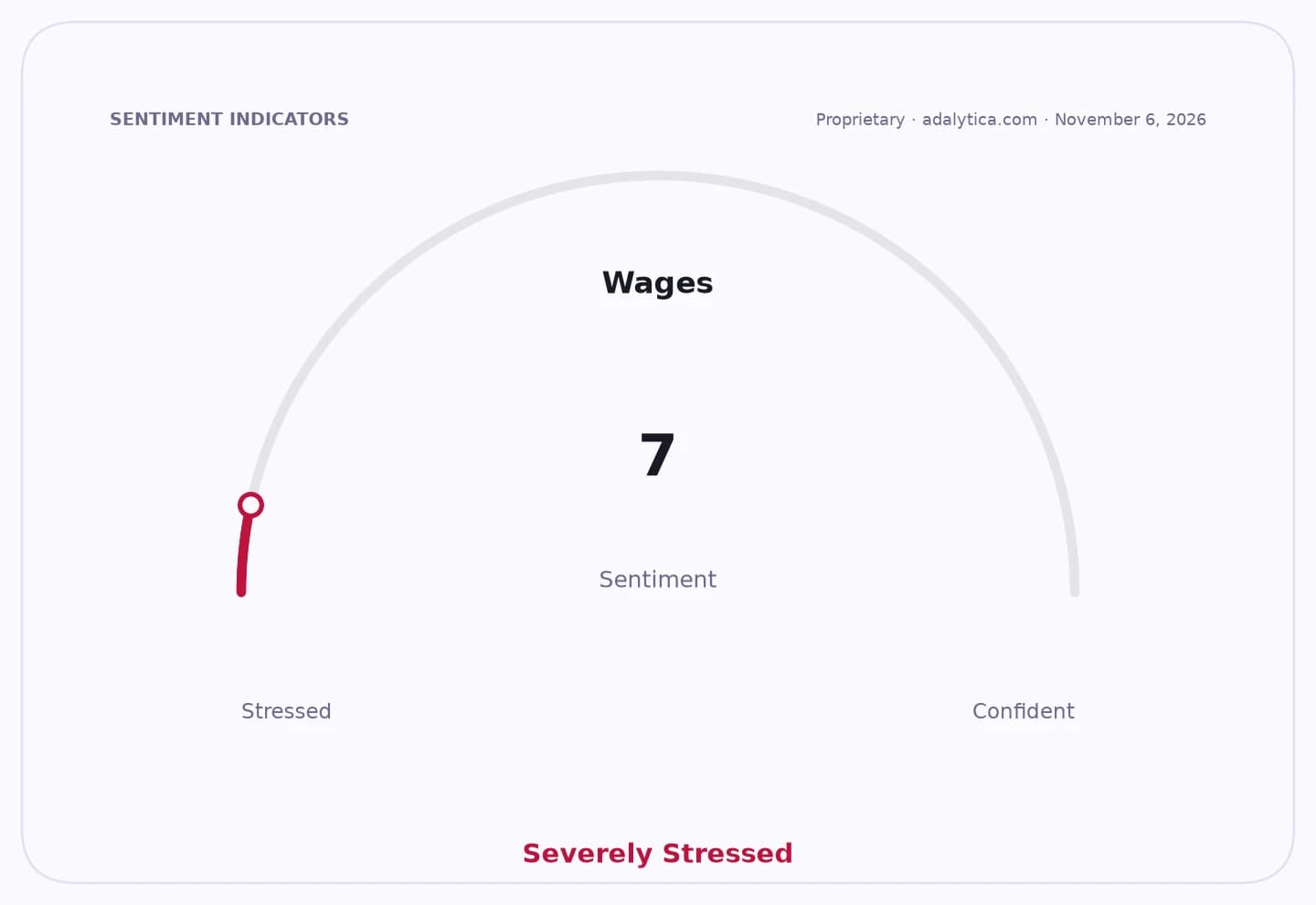
The debate also lands in a more fragile labor backdrop. Adalytica’s job-market sentiment gauge is at 43, in neutral territory, while its payroll sentiment measure is in “extreme fear” at 4, underscoring investor sensitivity to any policy that could alter hiring costs. A larger increase could also feed through to indexed public-sector pay and social spending, making the issue more than a labor-relations dispute.
For investors, the main risk is margin pressure for labor-intensive businesses and a possible knock-on effect on inflation expectations. A larger minimum-wage rise would be watched closely by retailers, hospitality groups and consumer-facing employers, while policymakers will be trying to avoid a wage-price spiral as they balance household purchasing power against jobs.
The next catalyst is the government’s response, which will determine whether this becomes a symbolic adjustment or a broader reset of French wage policy.
| Entity | Gains | Losses |
|---|---|---|
| Low-paid workers | ▲Higher take-home pay | ▼— |
| Unions | ▲Leverage over wage policy | ▼Risk of watered-down demand |
| Labor-intensive employers | ▲— | ▼Higher payroll costs |
| French government | ▲— | ▼Bigger budget and employment pressure |