Some French employees on work stoppage after an accident at work or an occupational illness will receive lower daily benefits from Nov. 1, after the government reduced the salary ceiling used to calculate compensation for higher earners.
France lowers work-injury benefit cap
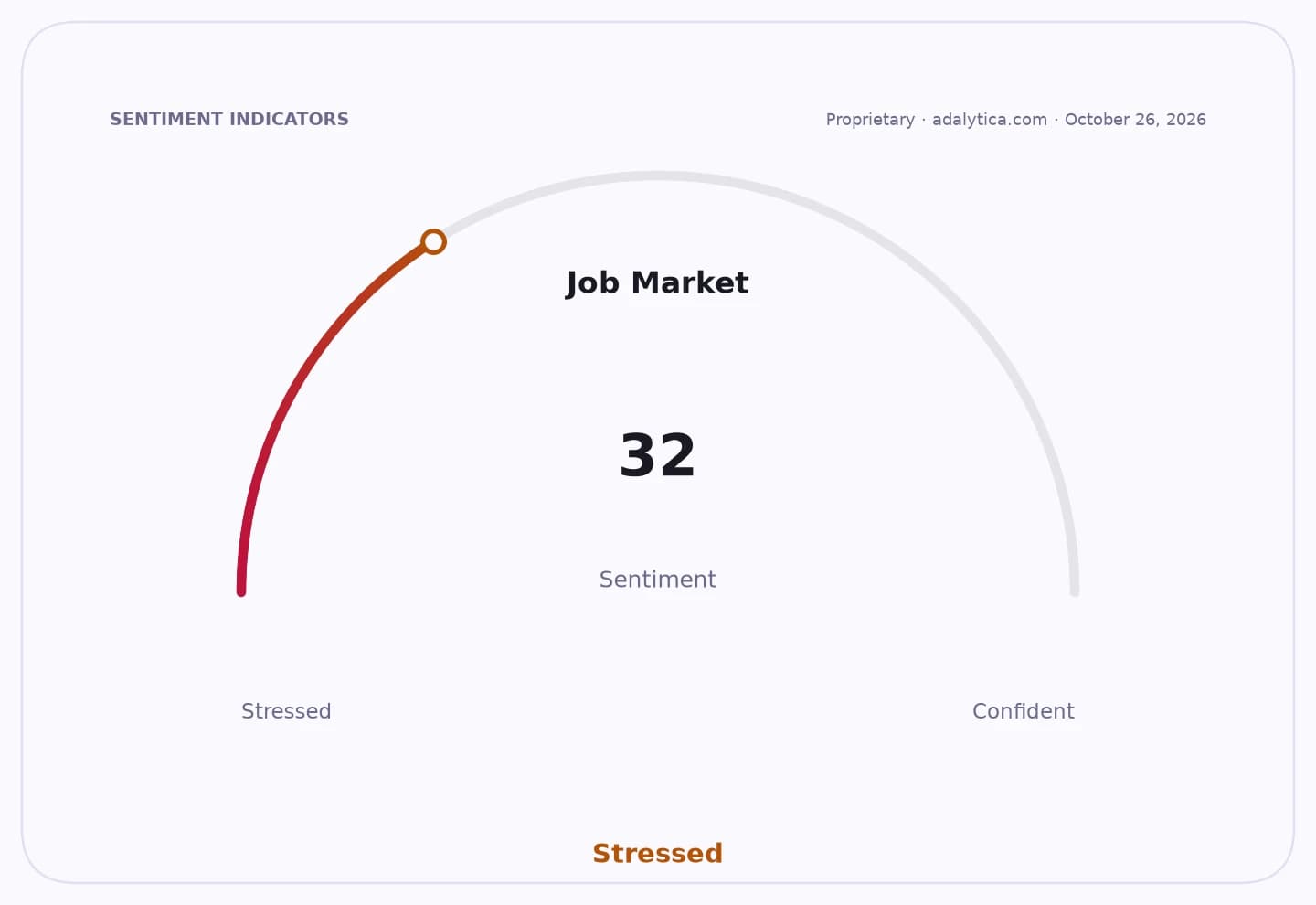
The change matters because it trims a piece of labor income insurance at a time when companies and households are already navigating a softer labor backdrop and tighter scrutiny of payroll costs. For workers above 1.8 times the minimum wage, a portion of pay will no longer be included in the benefit formula, which means the state-paid allowance can fall even if the underlying injury or illness is unchanged.
Sentiment Indicators
The decree published Sept. 30 applies only to stoppages starting on or after Nov. 1, and it does not automatically reduce all affected employees’ take-home pay. Where employers maintain salary during leave, companies can still top up the public benefit, limiting the immediate hit for some households. But the policy shifts more of the burden away from the social security system and toward employers, private insurers and higher-paid employees.
That makes the rule economically significant beyond the narrow group it affects. By lowering the cap on earnings used in the calculation, the state is effectively reining in replacement rates for better-paid workers, a modest but visible tightening of social protection. In practice, that can improve the finances of the insurance system at the margin, but it also raises questions about whether compensation is still sufficient for mid- to upper-income employees facing long absences from work.
For investors, the direct market impact is limited, but the measure has second-order implications for labor costs and claims management. Employers with generous sick-pay or disability top-up arrangements may see slightly higher obligations, while insurers and payroll administrators will need to adjust systems and policies. The broader backdrop is a labor market that remains mixed, with formal private employment under pressure even as claims data have eased, underscoring how governments are trying to balance worker protection with cost containment.
The key test will be how many companies offset the lower public benefit with contractual pay supplements. If they do, the immediate earnings impact on workers will be muted; if they do not, the policy will leave a larger share of compensation risk with employees just as economic uncertainty keeps labor policy under close watch.
| Entity | Gains | Losses |
|---|---|---|
| French social security system | ▲Lower payout pressure | ▼Higher-income claimants |
| Employers with top-up schemes | ▲Limited cash impact | ▼Payroll budgets |
| Higher-paid injured workers | ▲Partial protection if topped up | ▼Lower state benefit |
| Private insurers | ▲More role in compensation | ▼Workers without supplements |