A suspected leak of state secrets to China by a former French fighter pilot and YouTuber is a reminder that the biggest risk to national security is not always a missile or a satellite — sometimes it is a trusted insider with access, motive and reach.
French ex-pilot espionage probe boosts defense theme
For investors, that matters because espionage cases rarely stay confined to a courtroom. They tend to feed a broader cycle of tighter security rules, heavier compliance spending and renewed demand for defense, cyber and intelligence capabilities. In Europe, where governments are already racing to lift military budgets and harden supply chains, another high-profile breach reinforces the case for companies that sell secure communications, surveillance, aerospace systems and counterintelligence tools.
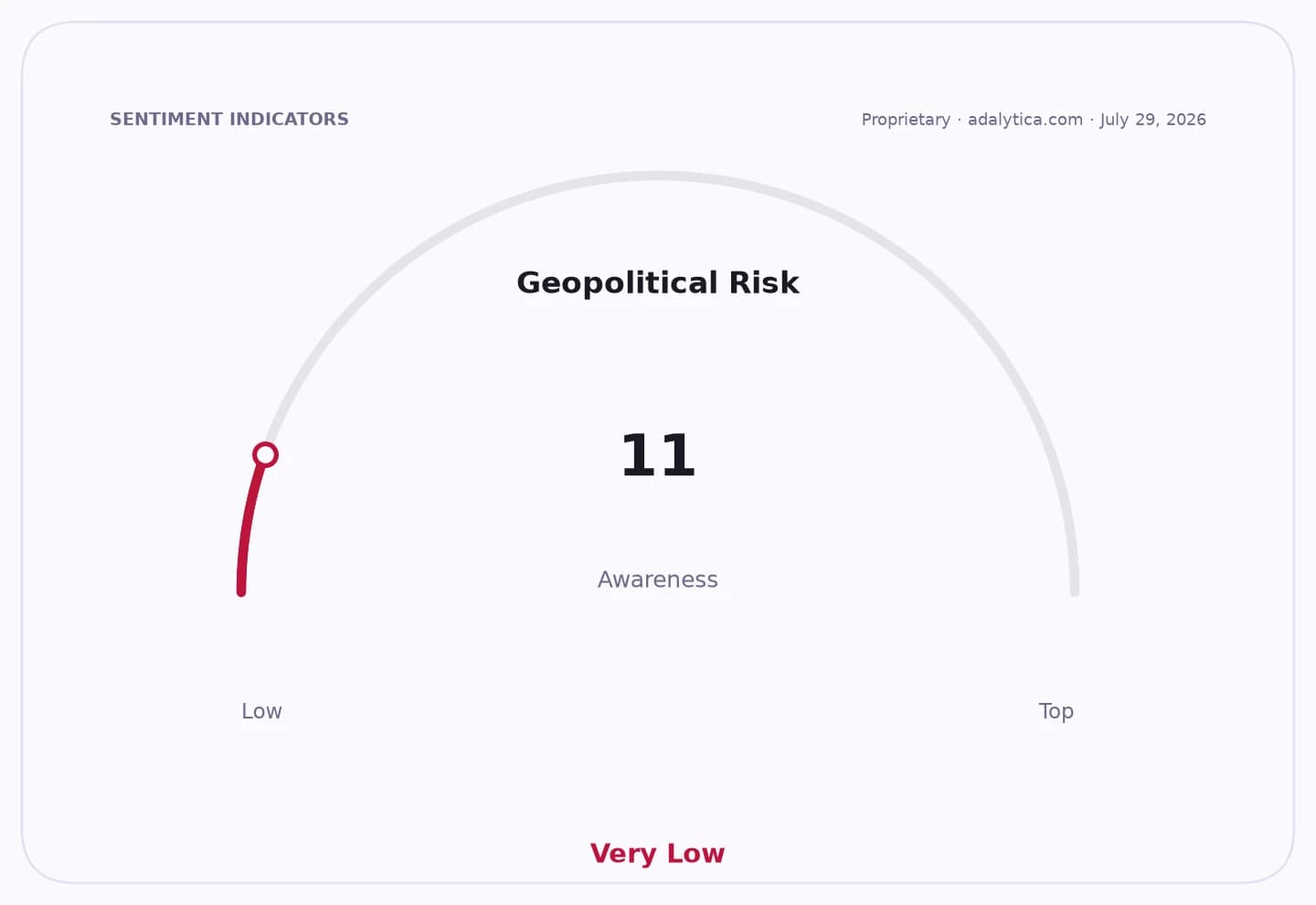
Sentiment IndicatorsⓘProprietary · adalytica.com · July 29, 2026
This is a snapshot — live sentiment, awareness and momentum for 130+ markets update continuously in the dashboard.Open AlphaPulse
The broader backdrop is one of rising geopolitical caution. Adalytica’s Global Stability Sentiment has jumped to 82, while its U.S.-China relations gauge sits at 64, even though awareness remains elevated. That combination suggests investors are becoming more comfortable with the idea that tensions are structural, not temporary. In practical terms, that usually means more spending on security rather than less.
The market impact is less about a single stock than about a durable theme. Defense contractors and adjacent suppliers benefit when governments conclude they cannot rely on open systems alone. The recent trading in Europe-focused equity funds also shows that investors have been willing to pay up for that story: the iShares MSCI Spain ETF, EWP, has climbed to about $60 from the high $40s last summer, while the iShares MSCI Australia ETF, EWA, has pushed to a 52-week high near $29.55. Those moves are not directly tied to the espionage probe, but they underline a market that keeps rewarding exposure to resilient, security-linked economies and industries.
That does not make every defense name a buy at any price. Some of the easy money in the sector has already been made, and headlines alone do not create earnings. But it does strengthen the long-term investment case for companies with sticky government relationships, high switching costs and deep expertise in classified or mission-critical work. When states feel exposed, they spend on protection — and that spending often lasts for years.
The real lesson for investors is simple: geopolitical trust is expensive to rebuild, so the businesses that help governments protect information, communications and borders can enjoy a long runway. This is the kind of theme long-term portfolios should watch, not trade around.
| Entity | Gains | Losses |
|---|---|---|
| Defense contractors | ▲Higher security spending | ▼Budget pressure if probe widens |
| Cybersecurity firms | ▲Stronger demand for protection tools | ▼Complacent rivals |
| Governments | ▲Tighter controls and scrutiny | ▼Reputational damage |
| Suspected leaker/accused insiders | ▲None | ▼Legal exposure and career loss |