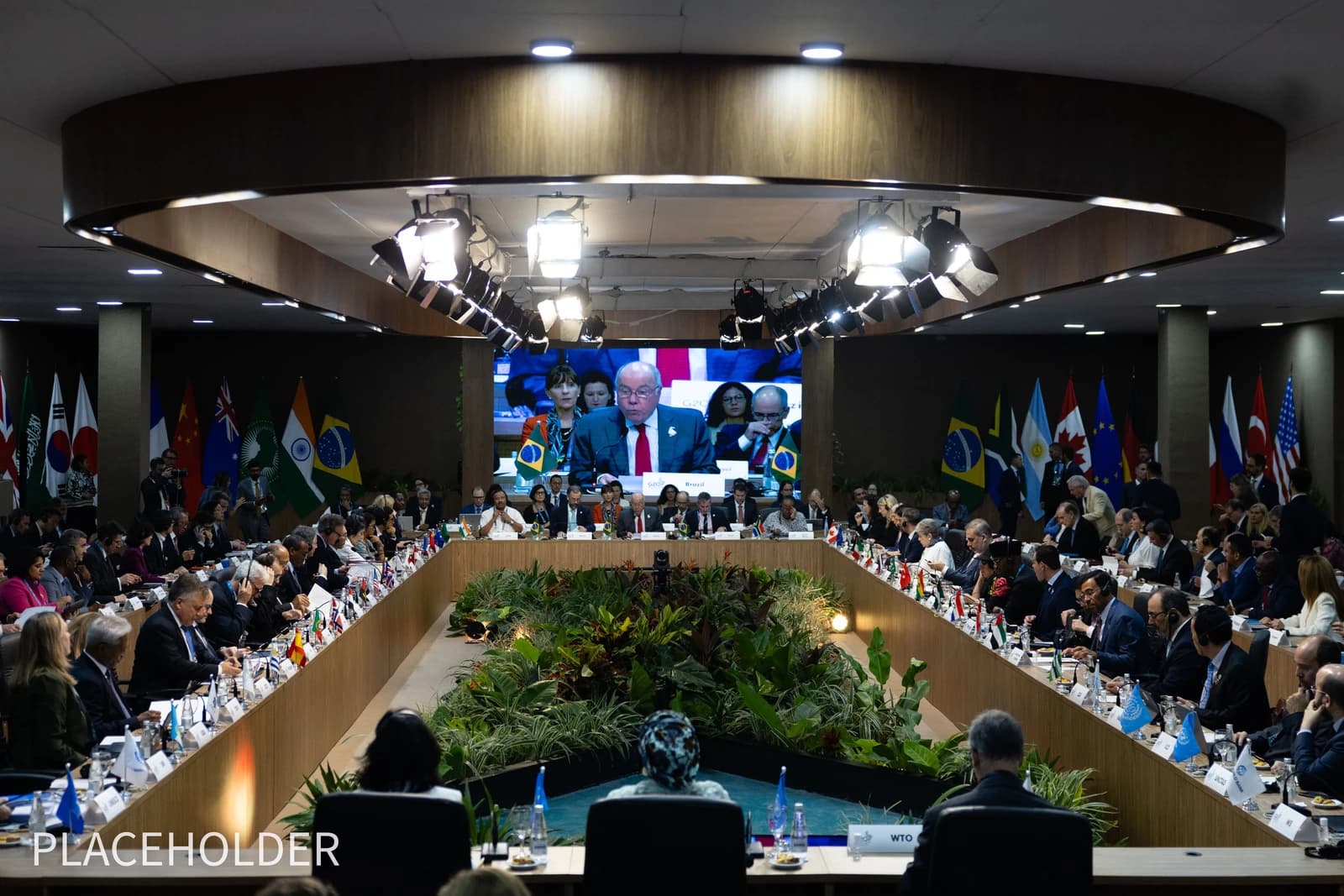
US officials said G20 foreign ministers discussed energy security, supply chains and geopolitical tensions, a reminder that the market’s biggest macro risks are still being set by politics rather than pure growth data.
G20 Energy Security Talks Lift Energy Trade
That matters because the world is entering a more fragile pricing regime for commodities, freight and capital. When major economies put energy security and trade resilience at the top of the agenda, they are effectively acknowledging that supply shocks, sanctions risk and transport bottlenecks are no longer tail risks — they are a baseline assumption for investors trying to price inflation, margins and policy.
Sentiment Indicators
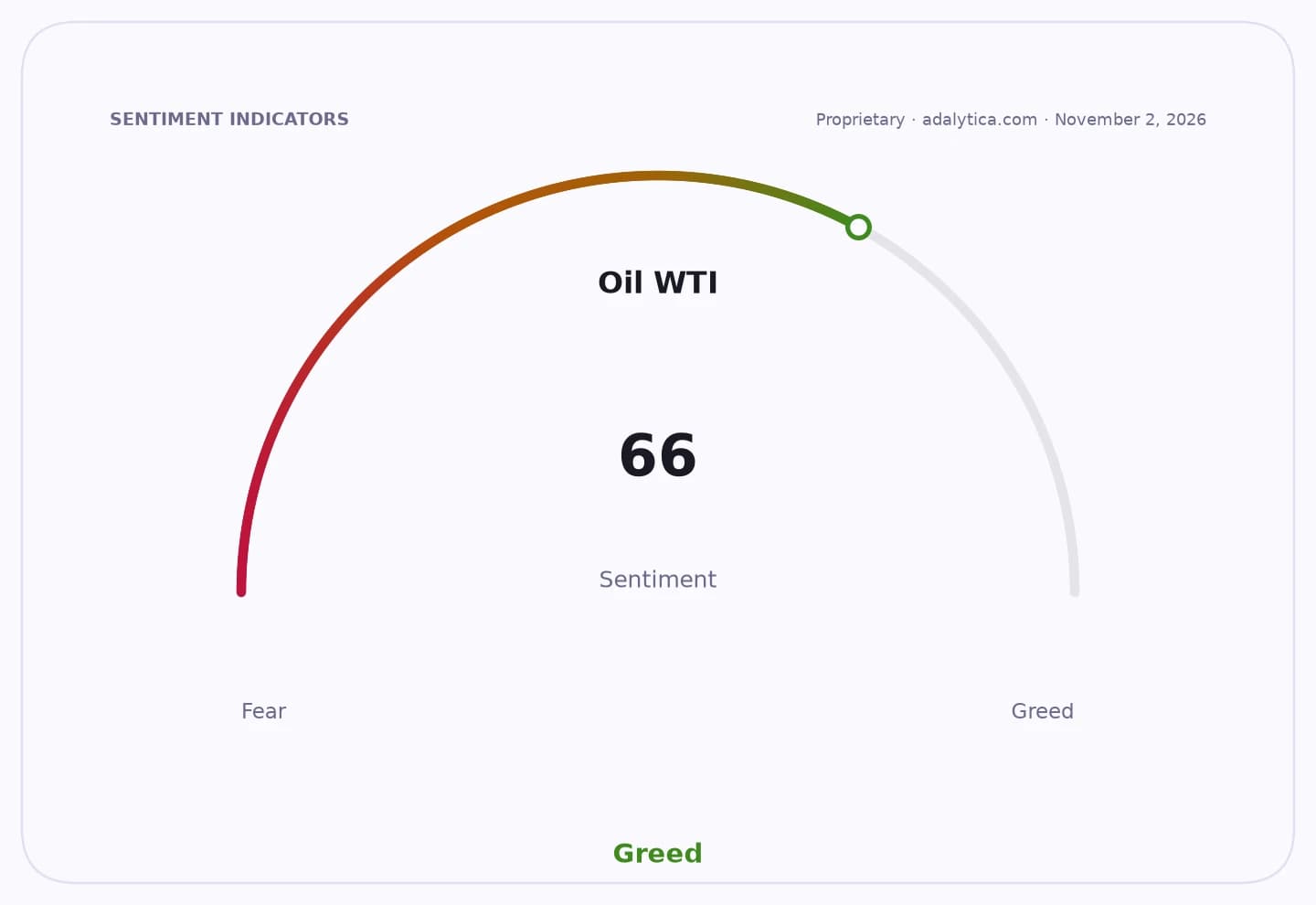
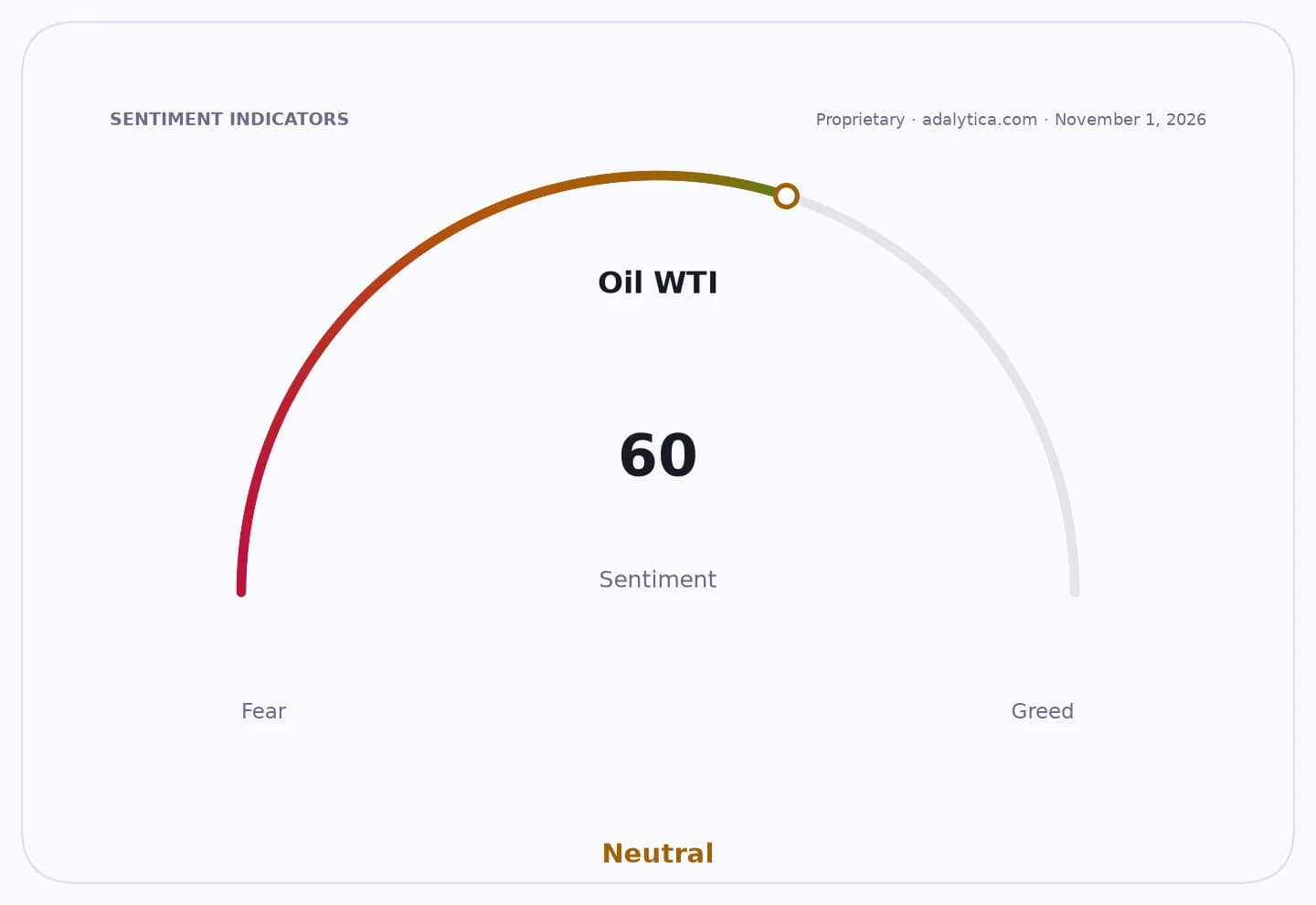
Oil WTI
Oil is already telling that story. WTI has been hovering around the high $90s after a stretch of violent swings, while the broad energy ETF XLE remains well above its 200-day moving average even after a sharp pullback to $63.52 on Nov. 4. That kind of action says the market still wants exposure to producers and cash-generating energy names when geopolitical risk stays elevated. At the same time, high-yield credit spreads have widened to 3.54 percentage points in the latest forecast, a sign investors are not fully comfortable with the growth backdrop if energy costs and trade friction stay sticky.
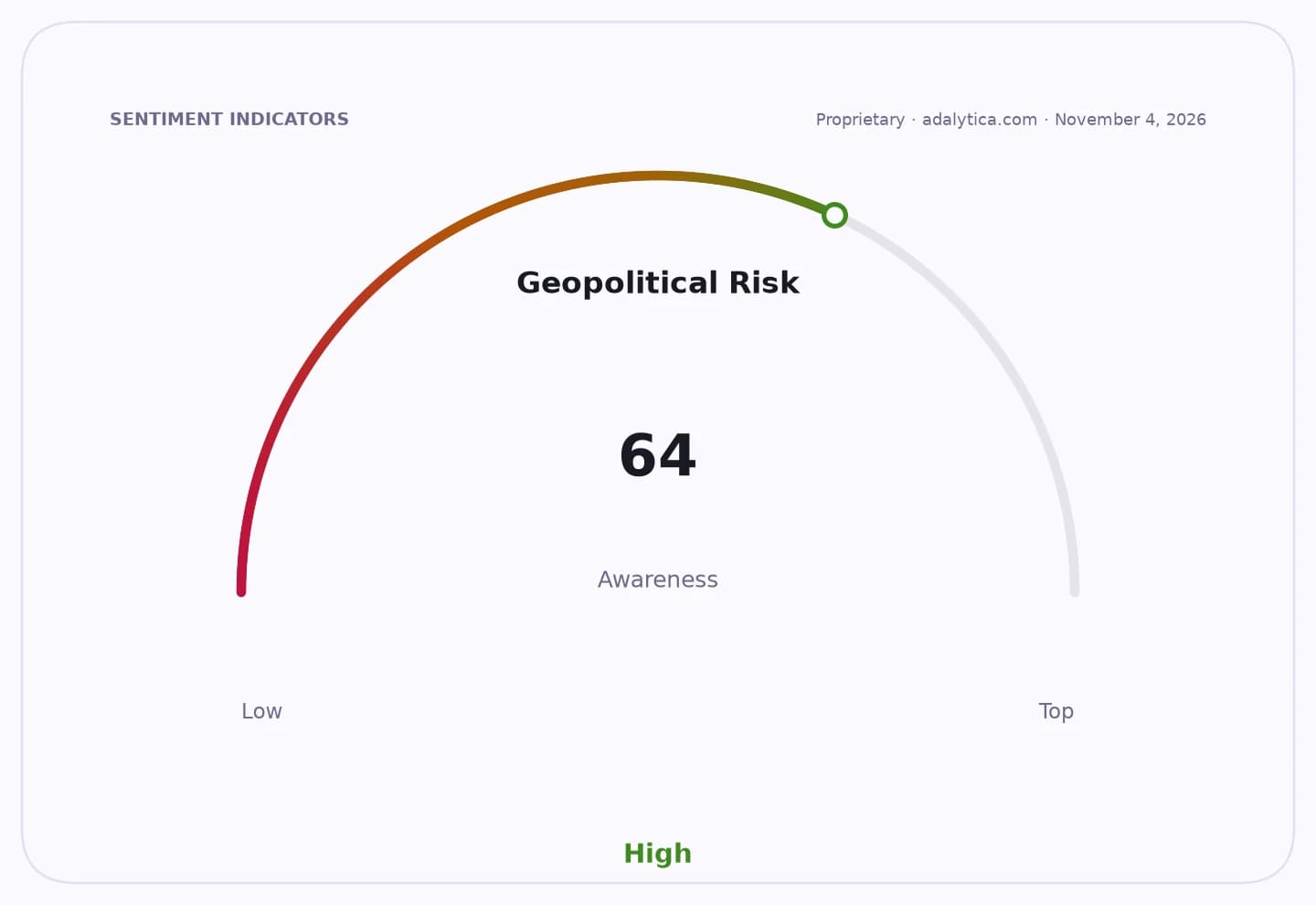
The implications extend beyond crude. A world that prioritizes supply-chain security tends to reward domestic infrastructure, LNG, shipping, defense and commodity-linked equities while pressuring import-dependent industries, airlines and transportation names with weak pricing power. The dollar’s weak sentiment reading and persistent geopolitical anxiety also point to a market that is still hedging for disorder, not complacency.
Oil WTI — 30-day sentimentadalytica.com
Explore this data interactively — full history, time series and cross-market comparisons.
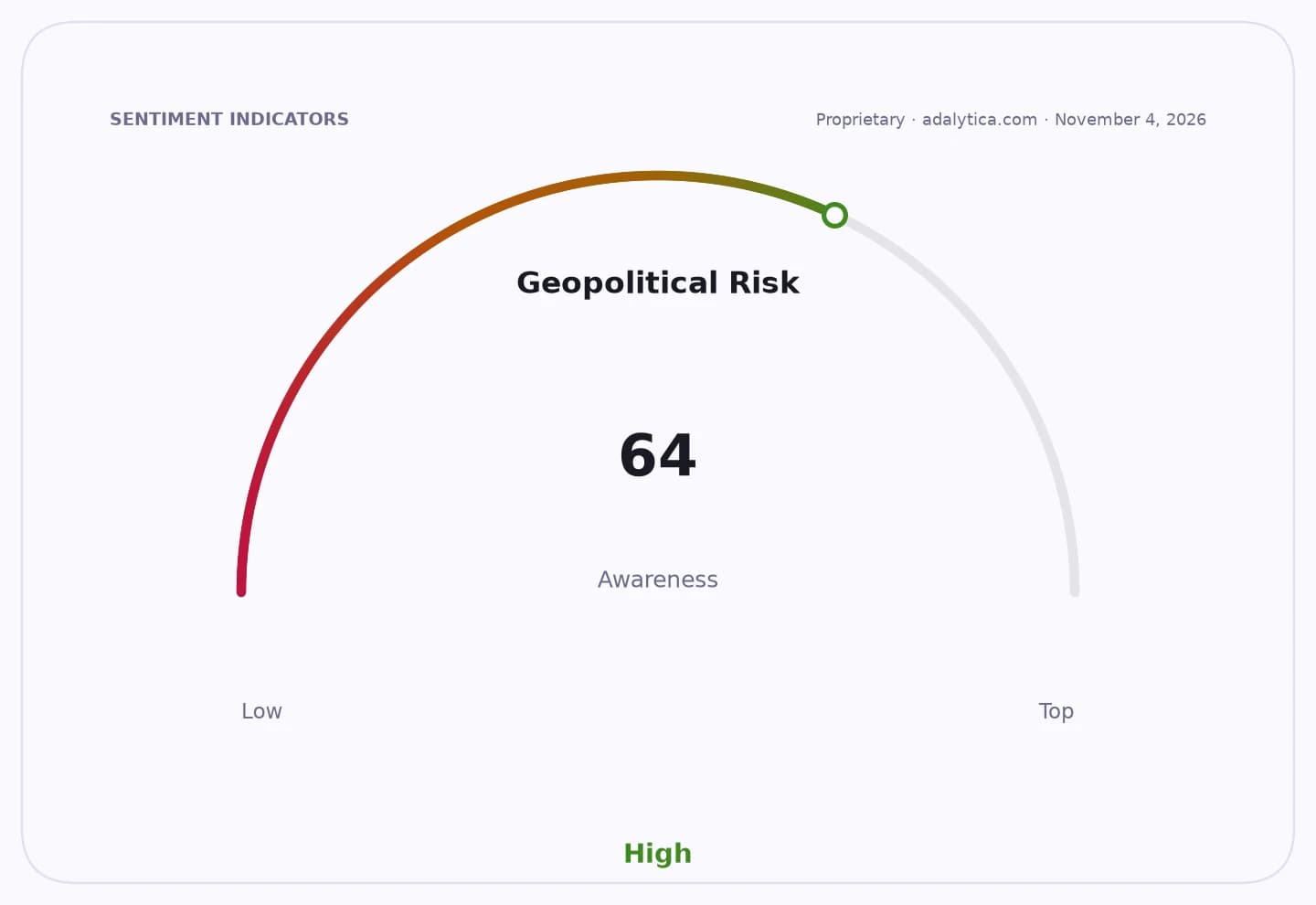
Geopolitical Risk
The investment thesis here is straightforward: the market underestimates how durable the capital cycle around energy security has become. Governments are pushing renewables, grid buildout, LNG, storage and logistics redundancy at the same time that defense budgets and strategic stockpiles are rising. That creates a multi-year runway for the picks-and-shovels of the security trade — energy producers, midstream operators, power equipment makers and defense contractors — even if headline oil prices cool.
For investors, the key is not to chase every spike in crude. It is to own the businesses that monetize volatility, infrastructure bottlenecks and policy-driven capex. If the G20 discussion is any guide, the next leg of the trade is not just about oil — it is about the entire system built to keep energy and goods moving in a less stable world.
| Entity | Gains | Losses |
|---|---|---|
| Energy producers | ▲Higher pricing power | ▼Fuel-demand volatility |
| Midstream/logistics | ▲More pipeline and transport demand | ▼Bottleneck risk |
| Importers/airlines | ▲Cheaper input certainty unmet | ▼Higher costs, margin pressure |
| Defense/infrastructure | ▲More policy capex | ▼Discounted if tensions ease |