Homeowners in Gaborone are carrying mortgage debt equal to nearly 94% of the value of their properties, leaving little equity cushion as higher borrowing costs and a weakening residential market raise the risk of forced selling and negative equity.
Gaborone Homeowners Face 93.7% Mortgage Loan-to-Value
The Bank of Botswana’s latest Household Indebtedness Survey puts the average loan-to-value ratio at 93.7%, up from 86.2% in the previous survey, a sharp deterioration in balance-sheet resilience for a market already showing signs of cooling. For a home valued at P1 million, the average debt load is about P937,000, leaving just P63,000 of equity. Any meaningful decline in prices would quickly erase that buffer.
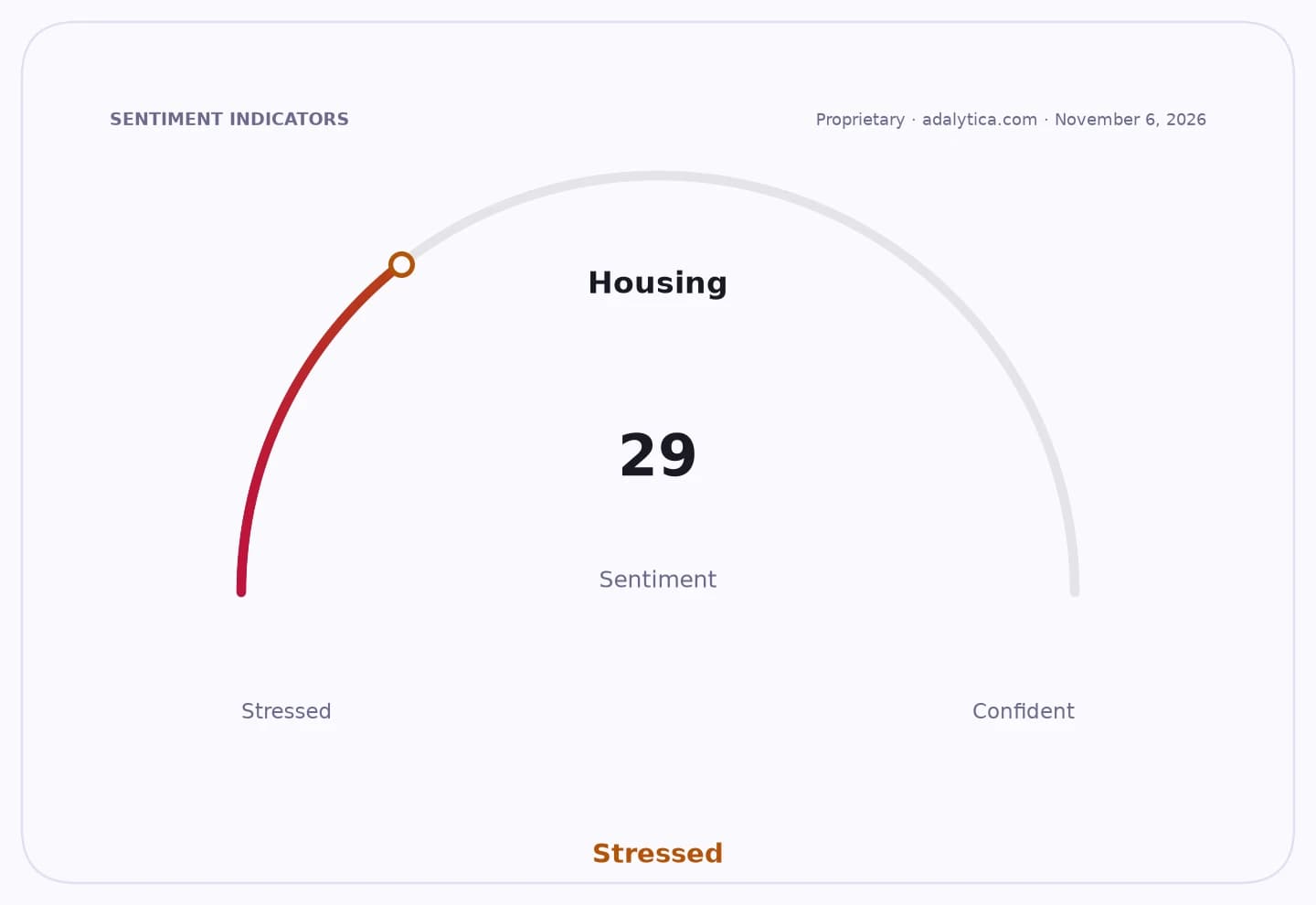
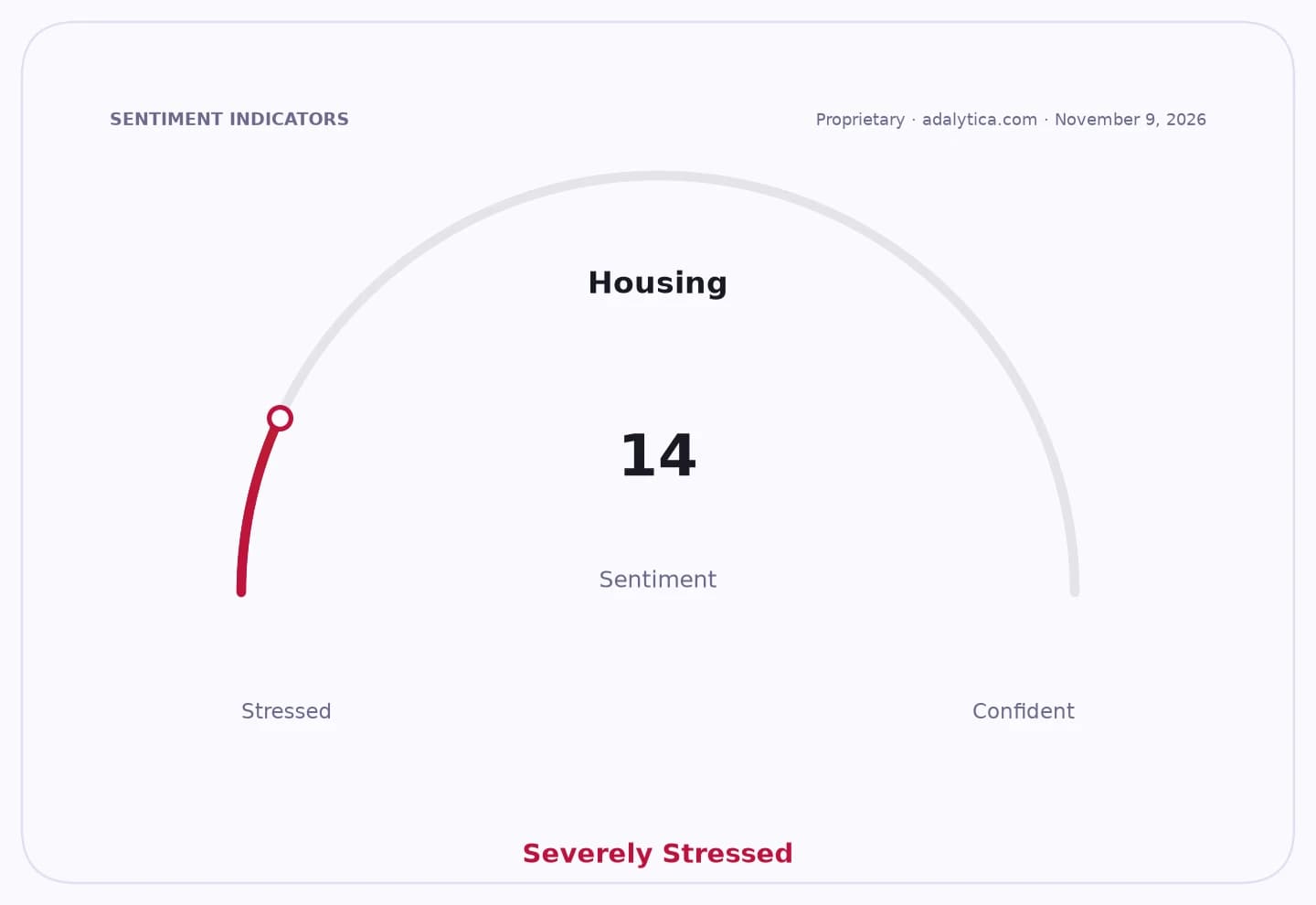
Sentiment Indicators
That matters economically because housing is usually the largest asset on household balance sheets and mortgage debt is the biggest liability. When loan-to-value ratios climb, homeowners become more vulnerable to shocks from job losses, rate increases or a broader slowdown in incomes. In Botswana’s case, the combination of expensive loans and softer property demand means households are less able to refinance, sell or absorb a downturn without crystallising losses.
For lenders, the shift points to rising credit risk even if arrears have yet to surge. Higher leverage reduces the collateral cushion behind mortgage books and can amplify losses if unemployment rises or home prices fall further. For the housing market, it also makes transactions more fragile: buyers with limited equity have less room to trade up, while sellers under pressure may be forced to accept lower prices, reinforcing weakness.
The data also fits a broader macro picture of strain in the residential market. Slower economic activity tends to dampen household confidence and borrowing appetite, while tighter financing conditions can suppress demand and reduce price momentum. In a market where equity has already thinned, even a modest decline in valuations can have outsized effects on consumer wealth and bank lending standards.
For investors, the immediate implication is that Botswana’s property market is moving deeper into a late-cycle phase. The risk is not just price softness, but a feedback loop in which weaker valuations, tighter lending and pressured households feed on one another. Unless borrowing costs ease or incomes improve materially, Gaborone’s mortgage-heavy homeowners may find that the cushion between debt and home values has all but disappeared.
| Entity | Gains | Losses |
|---|---|---|
| Banks and lenders | ▲More caution on new loans | ▼Higher collateral risk |
| Homebuyers with cash | ▲Better bargaining power | ▼Fewer distressed discounts if credit tightens |
| Leveraged homeowners | ▲Short-term access to credit | ▼Equity erosion and refinancing risk |
| Botswana housing market | ▲Potential policy focus | ▼Softer prices and weaker turnover |