Galicia is turning its public job centers into hiring hubs, betting that face-to-face interviews at employment offices can move jobseekers back to work faster in a labor market where matching the right worker to the right vacancy remains one of the biggest bottlenecks.
Galicia job centers add face-to-face hiring
The Xunta’s push matters because it targets a practical problem that companies and policymakers across Europe know well: unemployment is not only about a lack of jobs, but often a failure of coordination. By bringing employers, candidates and interviewers into the same place, Galicia is trying to shorten the time between applications and hiring decisions, which can lower recruitment costs for businesses and reduce the period people spend out of work.
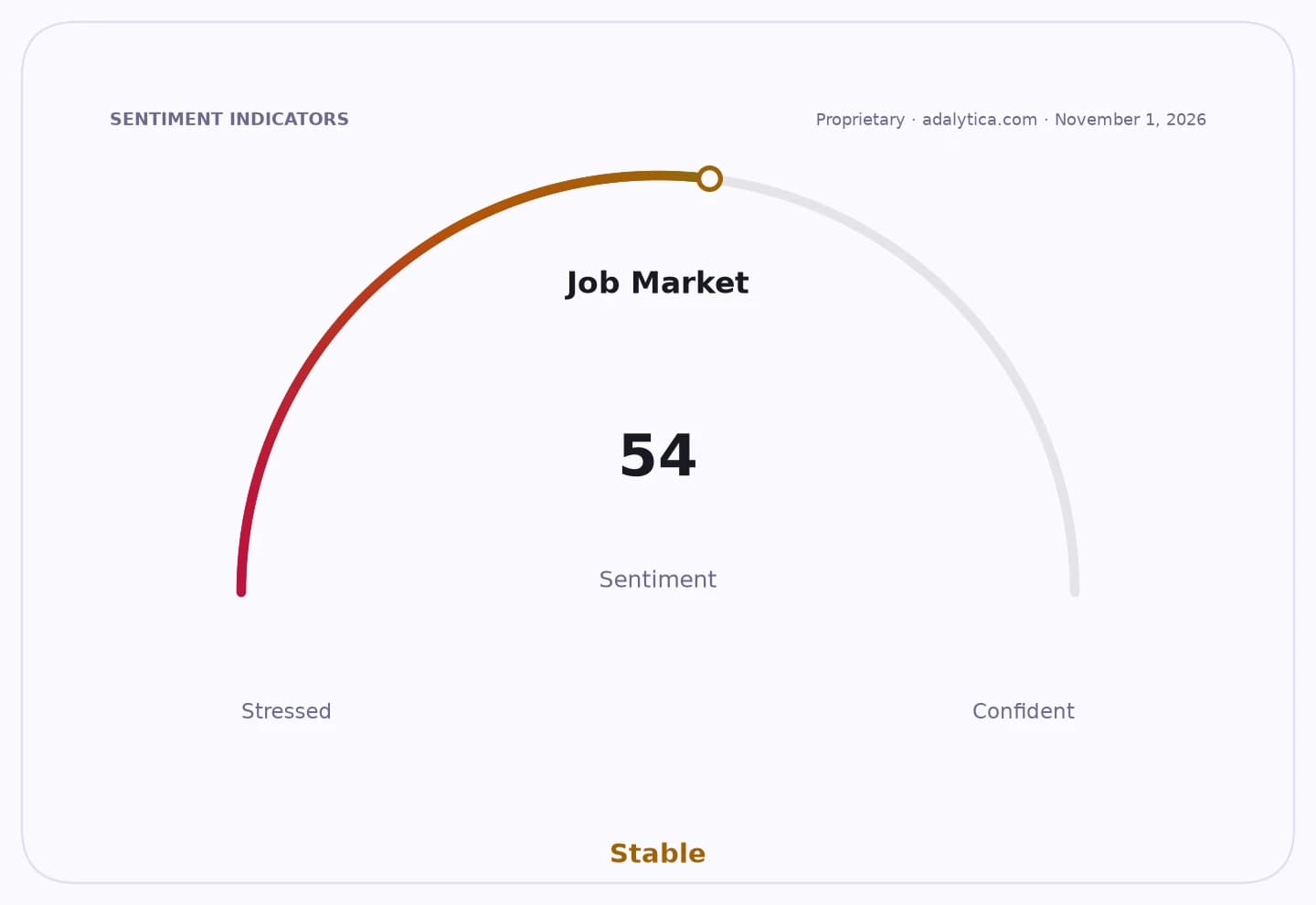
Sentiment Indicators
The regional government says the model is already working. According to data reviewed by the Consello de la Xunta, 55% of people who take part in group sessions with companies find employment within six months, making it the best-performing activity in Galicia’s public employment service. That is a meaningful rate for a policy tool that is relatively simple, low-cost and scalable compared with more expensive subsidy programs.
The new initiative, called Xunta Conecta, goes a step further than standard job fairs. It will not only allow jobseekers to hear directly from employers about open positions and required skills, but also to complete interviews in the employment offices themselves. The program also includes workshops on résumés and interview preparation, which is important because many unemployed workers are not just missing opportunities — they are missing the most effective way to present themselves for them.
For investors, this is a reminder that labor-market efficiency can be improved without waiting for a big macro turnaround. Better matching can ease wage pressure in tight local markets, support small and midsize businesses that struggle to recruit, and help keep regional economies running at fuller capacity. It also underscores how much value there is in public-private coordination, especially in sectors where employers say vacancies are hard to fill.
Galicia is also broadening the effort. It plans to let companies request these sessions directly through the public employment portal, which should make the process easier for firms of different sizes and industries. That matters because the policy only works if employers actually use it, and the region is clearly trying to make the system more responsive to local hiring needs rather than relying on one-off initiatives.
For long-term investors, the broader lesson is simple: labor markets reward speed, clarity and access. Regions that make it easier for employers and workers to connect tend to support more stable consumption, better business conditions and stronger participation in the workforce. Galicia’s experiment is worth watching because if it continues to deliver a 55% placement rate, it could become a model for other public employment systems looking to do more than shuffle paperwork.
| Entity | Gains | Losses |
|---|---|---|
| Jobseekers | ▲Faster access to employers | ▼Time lost to cold applications |
| Employers | ▲Easier hiring pipeline | ▼Higher recruiting friction |
| Xunta of Galicia | ▲Stronger policy credibility | ▼Little if uptake stays low |
| Competing job portals | ▲Less central role | ▼More competition from public offices |