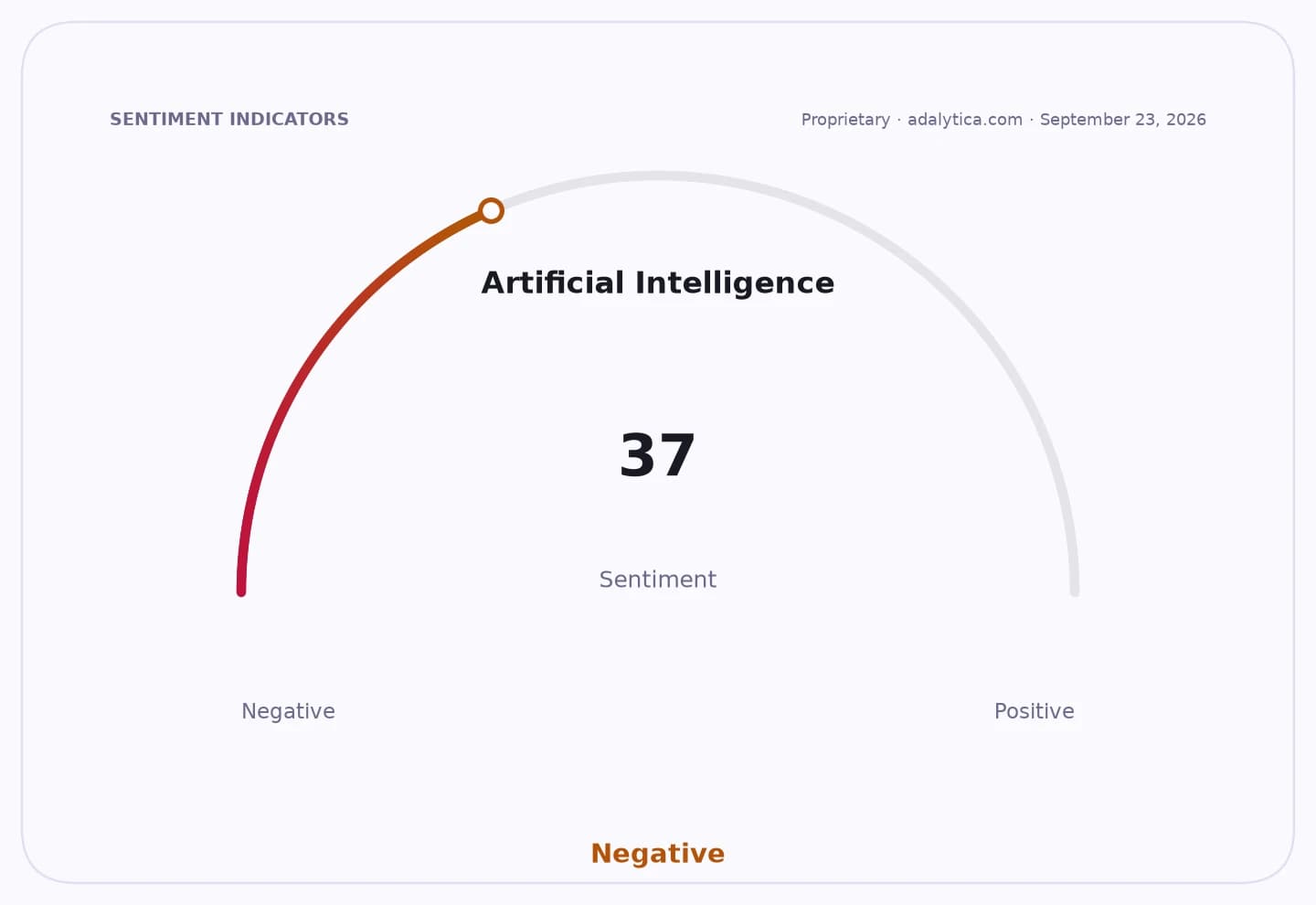
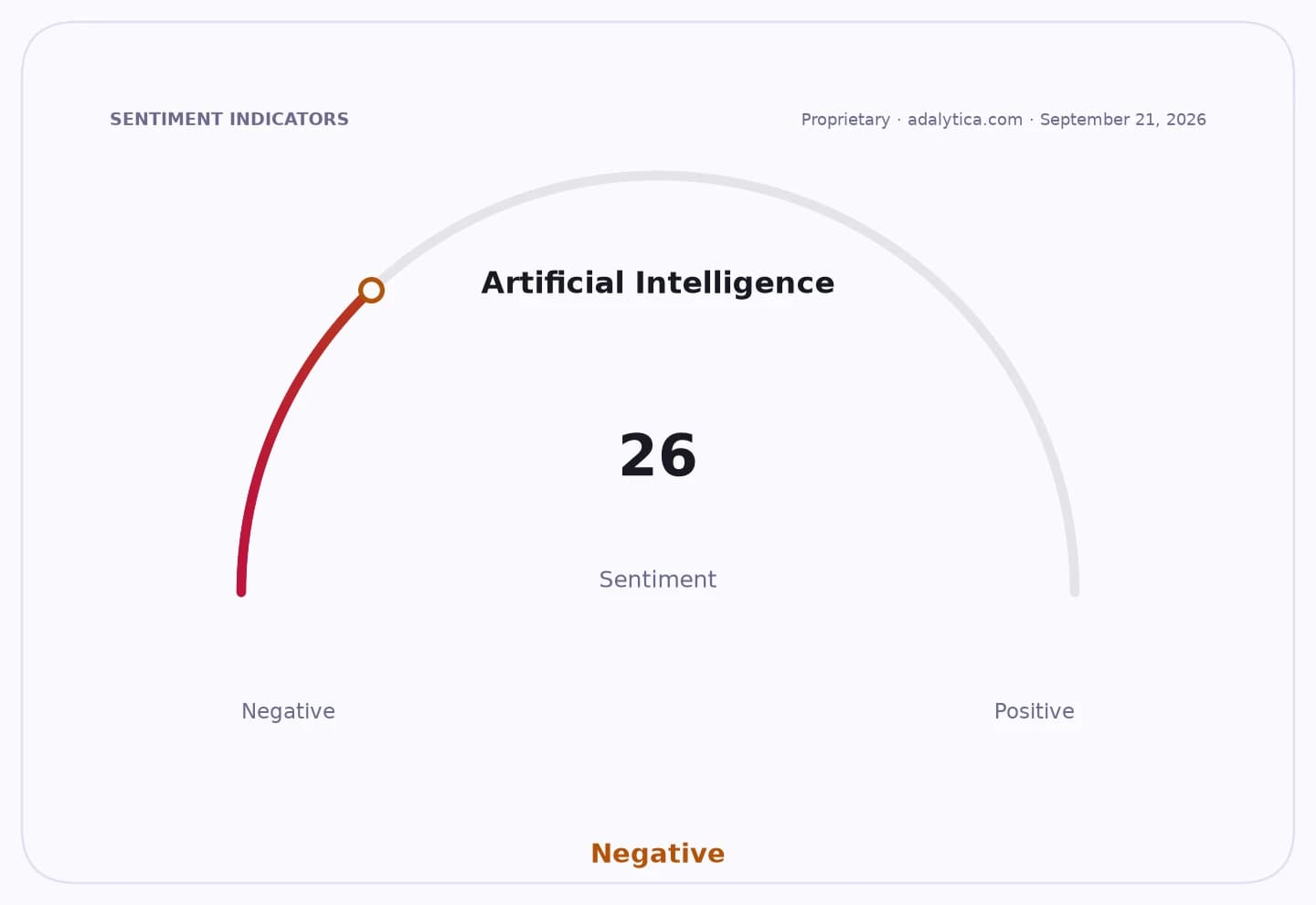
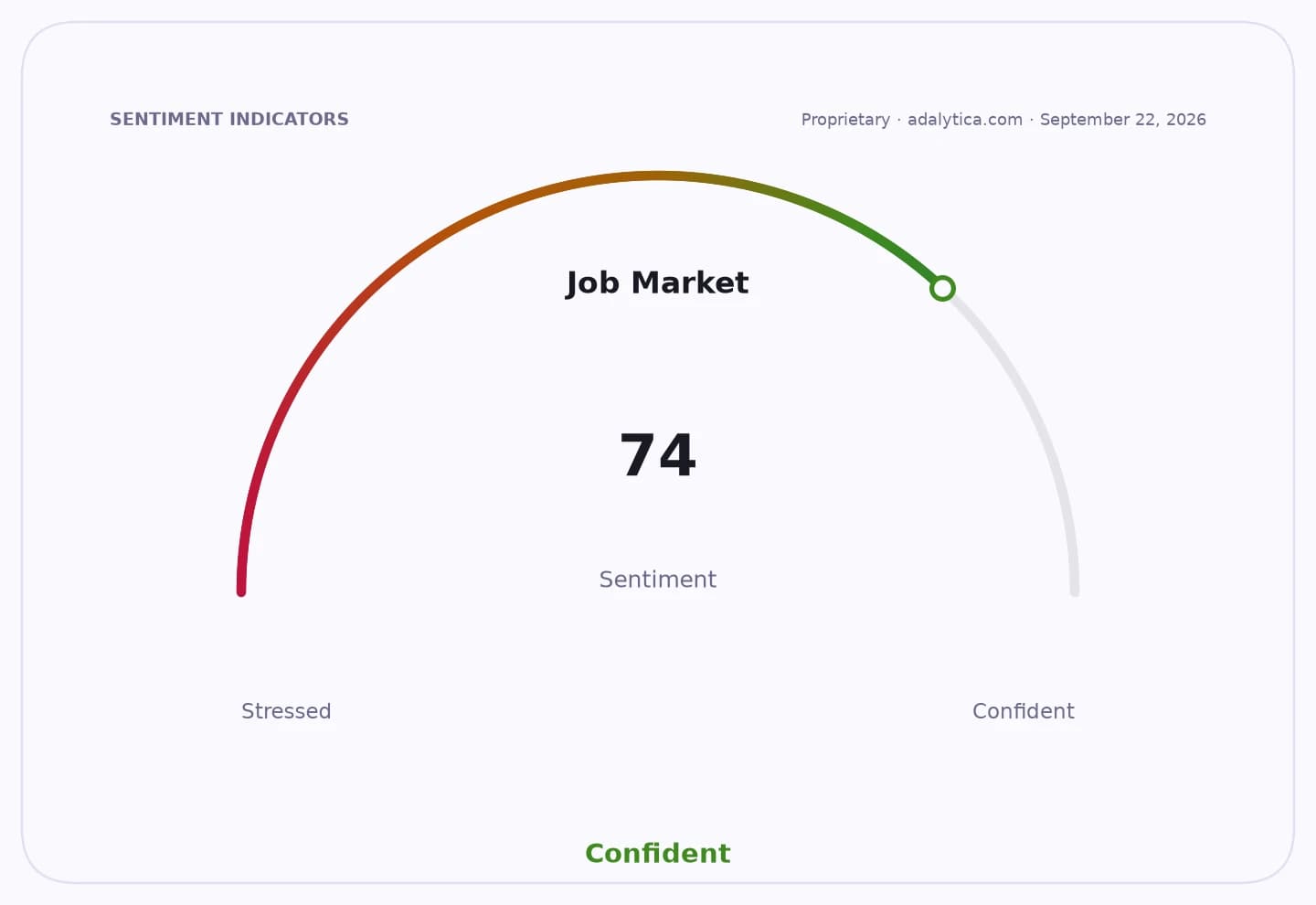
Gen Z is forcing employers to redesign work around flexibility and AI, a shift that could reshape staffing costs, productivity and the balance of power between workers and companies.
Gen Z pushes employers toward AI and flexibility
A survey of 400 Italian managers by Ipsos-Doxa for Asus found that nearly half believe Gen Z’s values and expectations differ sharply from older generations, with 68% saying young workers expect advanced technology in the workplace, starting with artificial intelligence. The same managers said Gen Z wants flexible hours, less bureaucracy and fewer repetitive tasks — preferences that are moving from cultural talking points to operating requirements for employers.
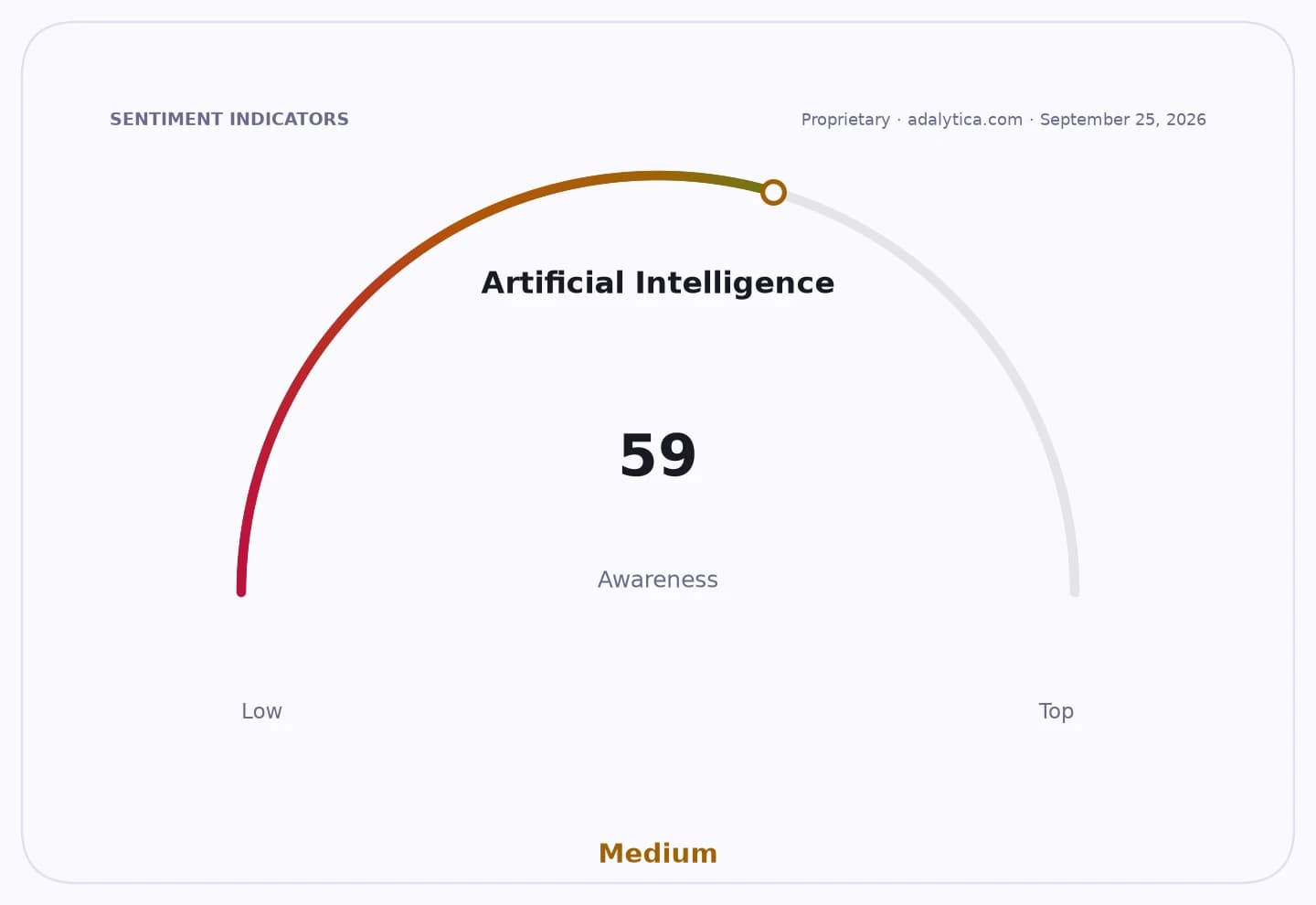
Sentiment IndicatorsⓘProprietary · adalytica.com · September 25, 2026
This is a snapshot — live sentiment, awareness and momentum for 130+ markets update continuously in the dashboard.Open AlphaPulse
That matters economically because it suggests the labor market’s next wave of entrants is not just asking for higher pay, but for a different production model. Firms that can automate routine work, streamline approvals and offer more adaptable schedules may be able to retain talent more easily, especially in a tight hiring environment where skilled labor remains scarce and worker expectations continue to rise. Companies that cannot adapt risk slower hiring, weaker retention and higher training costs.
For employers, the immediate implication is that AI is no longer only a back-office efficiency tool. It is becoming part of the employee value proposition. Asus Business director Alessandro Passadore said the company has developed MyExpert, a proprietary software offered free on business devices to help users summarize documents, translate text or record meeting minutes — functions meant to cut out repetitive work that younger employees are least willing to tolerate. In other words, workplace AI is being sold not only as a cost saver, but as a way to make jobs more attractive.
The survey also points to a generational bridge rather than a clean break. About 31% of managers said Gen Z is changing corporate culture, turning the cohort into a catalyst for wider digital adoption. That could be particularly important for small and medium-sized companies, where the research said Gen Z’s existing digital skills are viewed as their biggest contribution. For smaller firms, that can mean faster uptake of software, less dependence on legacy processes and a cheaper path to modernization.
Investors should read the trend as supportive for enterprise software, device makers and workplace-tech vendors that can package AI as a productivity and retention tool. It is also a reminder that human resources, payroll and workforce-management providers may need to keep reinventing their platforms as employee expectations evolve. ADP, for example, has said AI is reshaping work at the task level, while Salesforce has flagged competition for AI talent and the need for more investment in governance and compliance.
The bull case is that Gen Z’s preference for flexibility and AI accelerates efficiency gains and raises demand for tools that automate low-value work. The bear case is that employers may face a costly transition period as they invest in software, redesign workflows and manage tensions between generations. Either way, the direction is clear: the future of work is being shaped less by office policy and more by how quickly companies can turn AI and flexibility into a standard part of the job.
| Entity | Gains | Losses |
|---|---|---|
| Gen Z workers | ▲More flexibility, less repetitive work | ▼Rigid corporate structures |
| Employers using AI | ▲Higher productivity, easier retention | ▼Legacy processes |
| Software and device vendors | ▲Stronger workplace-tech demand | ▼Low-automation incumbents |
| Older work models | ▲— | ▼Relevance in hiring and culture |