Germany’s long-standing political firewall against the far-right Alternative for Germany is starting to crack, and that matters far beyond Berlin because a weaker center raises the odds of policy paralysis in Europe’s biggest economy.
Germany AfD Politics Raise Policy Risk
The immediate trigger was a secret-ballot vote in Saxony-Anhalt, where lawmakers from mainstream parties appear to have helped the AfD secure its first regional assembly speaker despite party instructions to abstain. Chancellor Friedrich Merz’s warning that extremism is entering parliament now looks less like rhetoric and more like an early signal that the postwar consensus protecting Germany’s democratic center is under strain.
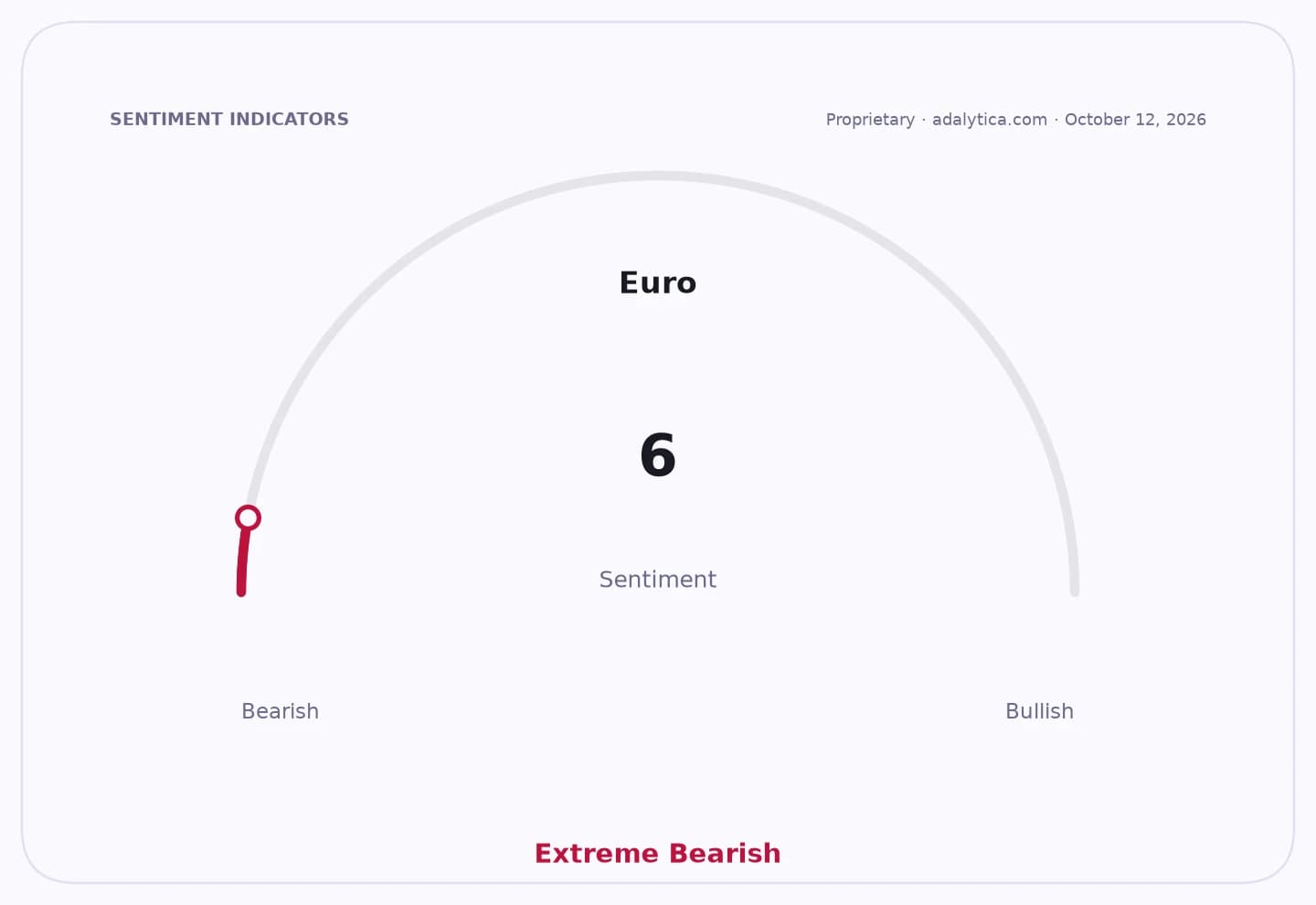
Sentiment IndicatorsⓘProprietary · adalytica.com · October 12, 2026
This is a snapshot — live sentiment, awareness and momentum for 130+ markets update continuously in the dashboard.Open AlphaPulse
For investors, the significance is not the AfD itself so much as what its rise says about Germany’s policy capacity at a moment when the country needs it most. The AfD has led national polls for more than a year and is now being treated by rivals as a realistic contender for power by 2029. That is a problem because Germany is already wrestling with the economic legacy of the Ukraine war, the loss of cheap Russian energy, fading industrial competitiveness against China and a public debate over pensions and taxes that has gone unreformed for years.
That combination is toxic for market confidence. Germany needs credible reforms to restore growth, improve energy security and stabilize public finances as its population ages. Instead, the political system is fragmenting, with mainstream parties losing trust and the east-west divide still shaping voting behavior nearly four decades after reunification. The more the center splinters, the harder it becomes to deliver the fiscal and structural changes that investors want to see.
Geopolitical Risk vs EWGadalytica.com
Explore this data interactively — full history, time series and cross-market comparisons.Open AlphaPulse
There is also a direct market read-through. The iShares MSCI Germany ETF, EWG, has been stuck well below its 50-day moving average and recent technical readings show weak momentum, with RSI still signaling a tired tape. That fits a broader picture of investor caution rather than outright panic: Europe is not pricing a crisis, but it is not rewarding Germany for political stability either.
The euro is sending the same message. Adalytica’s Euro Trade Signals show extreme fear in the currency, even as awareness remains elevated, underscoring how political and policy uncertainty can keep pressure on the single currency when investors are looking for clearer growth and reform catalysts. That is not a call to dump Europe wholesale, but it is a warning that Germany’s domestic politics are becoming a macro variable again.
The investment takeaway is straightforward: the market is underestimating how much Germany’s political drift can delay the kind of capex, energy and industrial reforms needed to re-accelerate growth. Until the center regains control, the safer trade is to favor businesses and assets less exposed to German policy inertia and to stay selective on Europe’s domestic cyclicals. If the firewall keeps weakening, the next move will be higher political risk premia, not better valuation support.
| Entity | Gains | Losses |
|---|---|---|
| AfD | ▲Greater legitimacy | ▼Political isolation |
| CDU/SPD mainstream | ▲Short-term anti-extremist unity | ▼Internal discipline, voter trust |
| German exporters | ▲None immediately | ▼Policy clarity, reform momentum |
| EWG / German cyclicals | ▲Defensive value only | ▼Political risk premium |