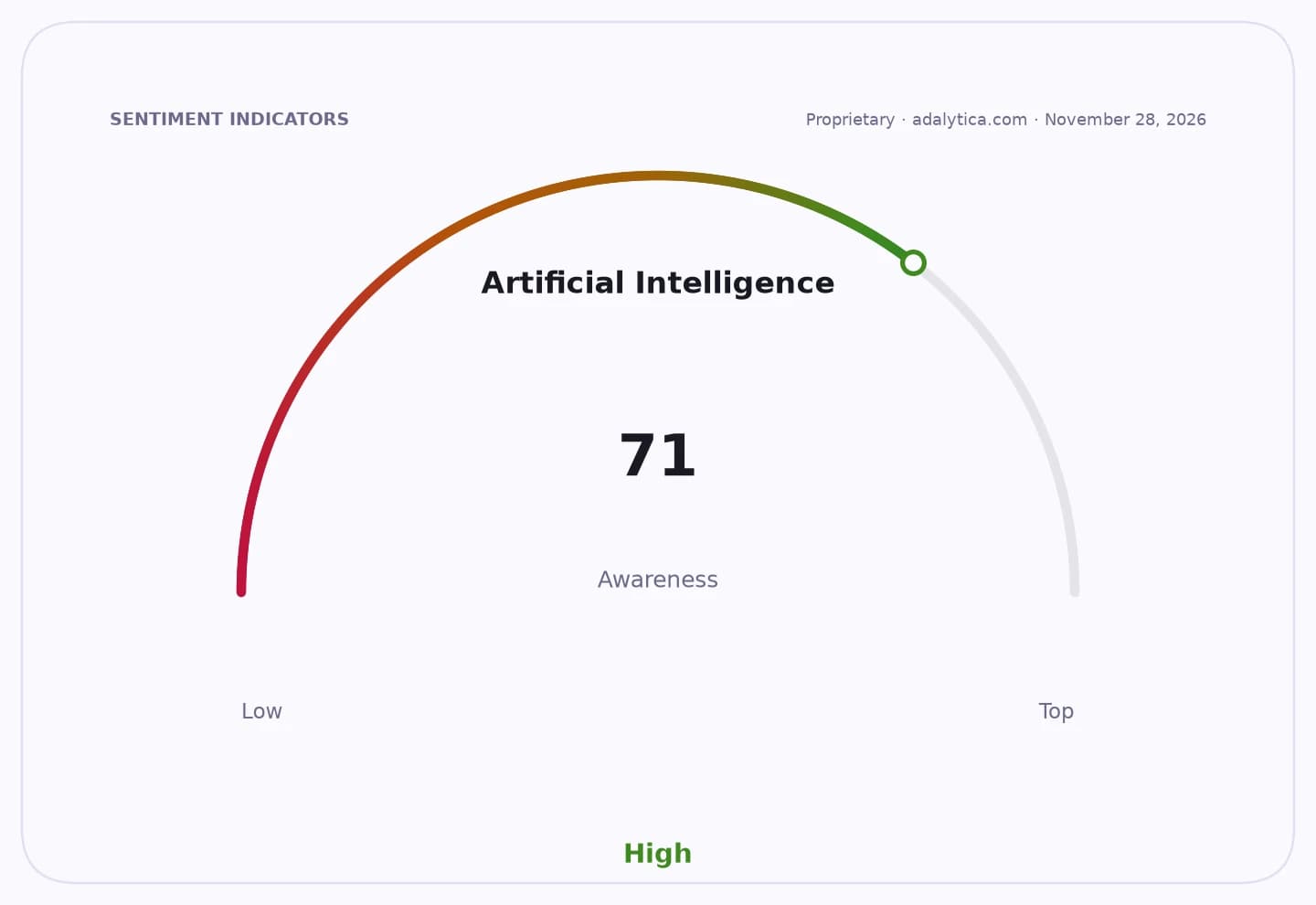
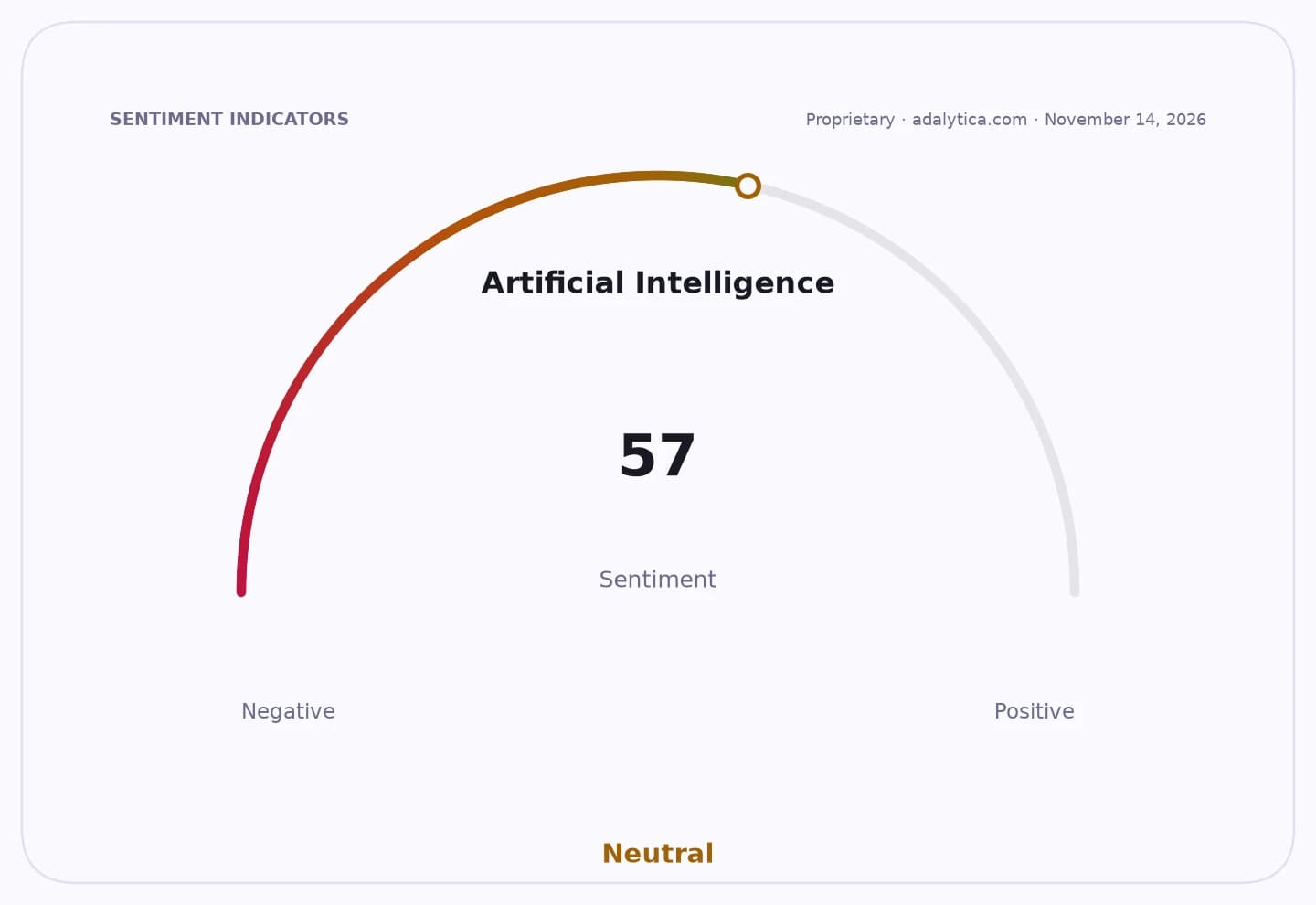
Artificial intelligence has moved from novelty to daily habit in Germany, and that matters because it is no longer just consumers experimenting with chatbots — companies are now being pushed to deploy AI at scale or risk falling behind.
Germany AI adoption rises in consumers and companies
A new study by the TÜV association found that 81% of people in Germany aged 16 and older have used generative AI tools such as ChatGPT, Google Gemini or Microsoft Copilot, up from 65% a year earlier and 53% in 2024. That kind of adoption is striking on its own. Even more important for investors, 37% of German companies now say they use AI in their processes, up 11 percentage points year on year, according to the Federal Statistical Office.
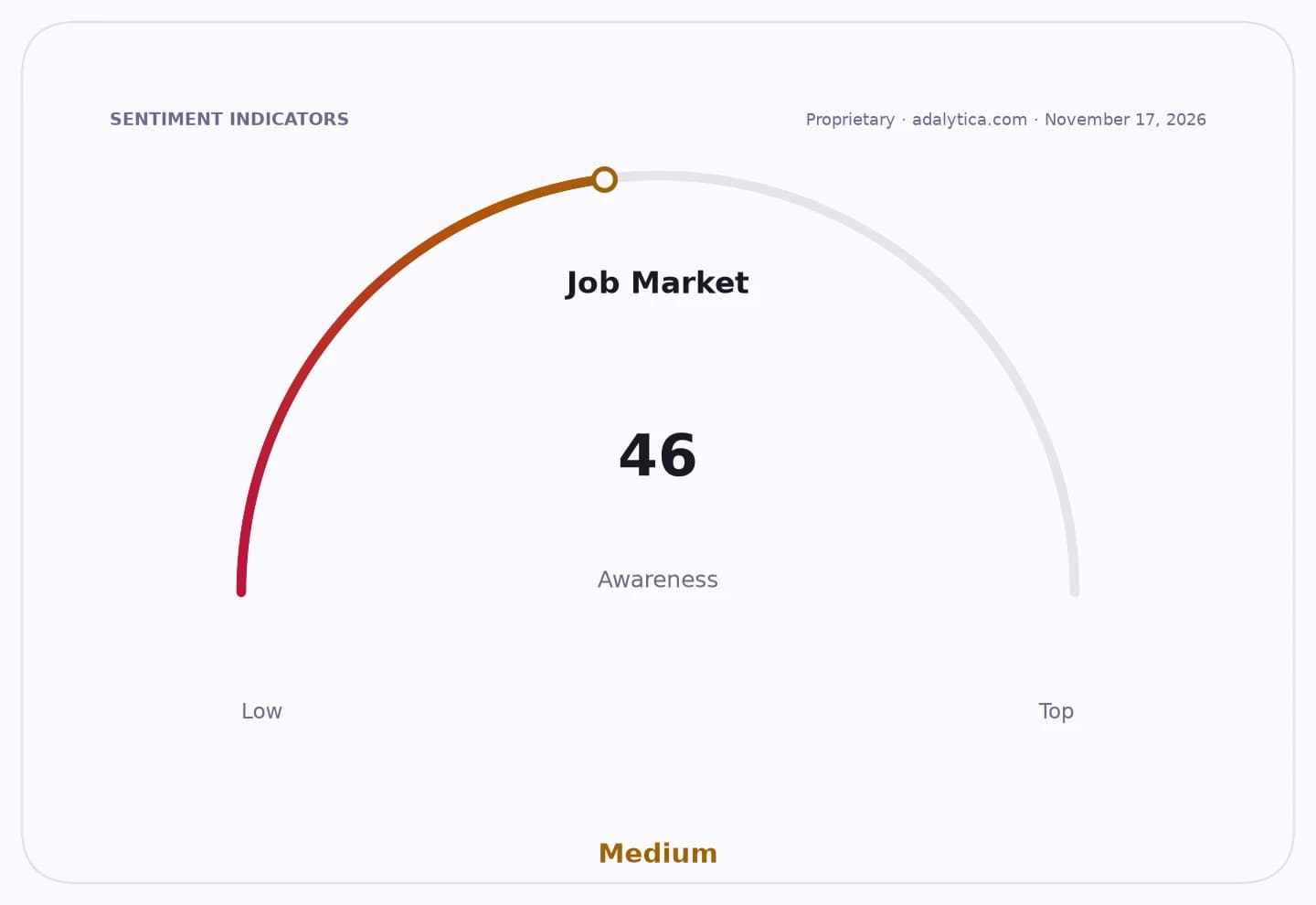
Sentiment Indicators
Artificial Intelligence
The gap between large and small firms shows where the real economic pressure sits. Among companies with more than 250 employees, 73% are already using AI. Among smaller firms with 10 to 49 workers, the figure is only 33%. That suggests the biggest productivity gains — and the biggest competitive advantages — are likely to accrue first to large enterprises with the capital, data and IT systems to plug AI into marketing, administration and finance.
That is exactly where the technology is already showing up. German firms most often use AI in marketing and sales, corporate administration, and bookkeeping or controlling. In other words, this is not just about flashy consumer tools; it is about automating routine work, speeding up decisions and squeezing more output from existing staff. For a country wrestling with sluggish growth, labor shortages and high costs, that can be economically meaningful.
The consumer side of the story is just as important because it explains why AI adoption is accelerating so quickly. Germans are increasingly using AI for search, writing and idea generation, and 87% now access it via smartphone. Daily use is becoming normal, with nearly a third of users turning to AI at least once a day. That kind of behavioral shift usually precedes broader commercial adoption, because workers bring the tools they trust into the office — and managers eventually build processes around them.
For investors, that is the key narrative: AI is leaving the “future promise” stage and becoming a utility layer across business software, cloud platforms, productivity tools and hardware. Companies like Microsoft and Alphabet stand to benefit as AI becomes embedded in office workflows, while chipmakers such as Nvidia remain the picks and shovels supplier to the whole ecosystem. But the winners will not be limited to the biggest names. Any software or infrastructure company that can make AI easier, cheaper and safer to deploy should find a growing market.
The catch is that enthusiasm is running ahead of trust. More than 85% of Germans say they have major concerns about entering personal data into AI systems, and 94% support mandatory independent checks for risky AI tools. Privacy, security and regulation are now part of the investment case, not an afterthought. That is one reason adoption may be slower in smaller companies: they face the same fears, but with less in-house expertise and fewer resources to manage them.
Still, the direction is clear. AI use among Germans has already become mainstream, and company adoption is following. That makes this less a passing tech craze than a multi-year investment theme tied to productivity, software spending and data-center buildouts. For long-term investors, the right question is not whether AI matters anymore. It is which businesses can turn this broad adoption into durable earnings power.
| Entity | Gains | Losses |
|---|---|---|
| Large enterprises | ▲Faster productivity gains | ▼Smaller rivals with less capital |
| Microsoft, Alphabet | ▲More AI-driven software use | ▼Standalone legacy workflows |
| Nvidia | ▲Ongoing AI infrastructure demand | ▼Hardware buyers facing higher costs |
| Small firms | ▲Easier access to cloud AI tools | ▼Compliance burden, slower adoption |