Global artificial intelligence software revenue is set to exceed $200 billion in 2026, a doubling from 2024 that underscores how quickly generative and agentic AI are moving from experimental tools into core enterprise spending.
Global AI software revenue to exceed $200B in 2026
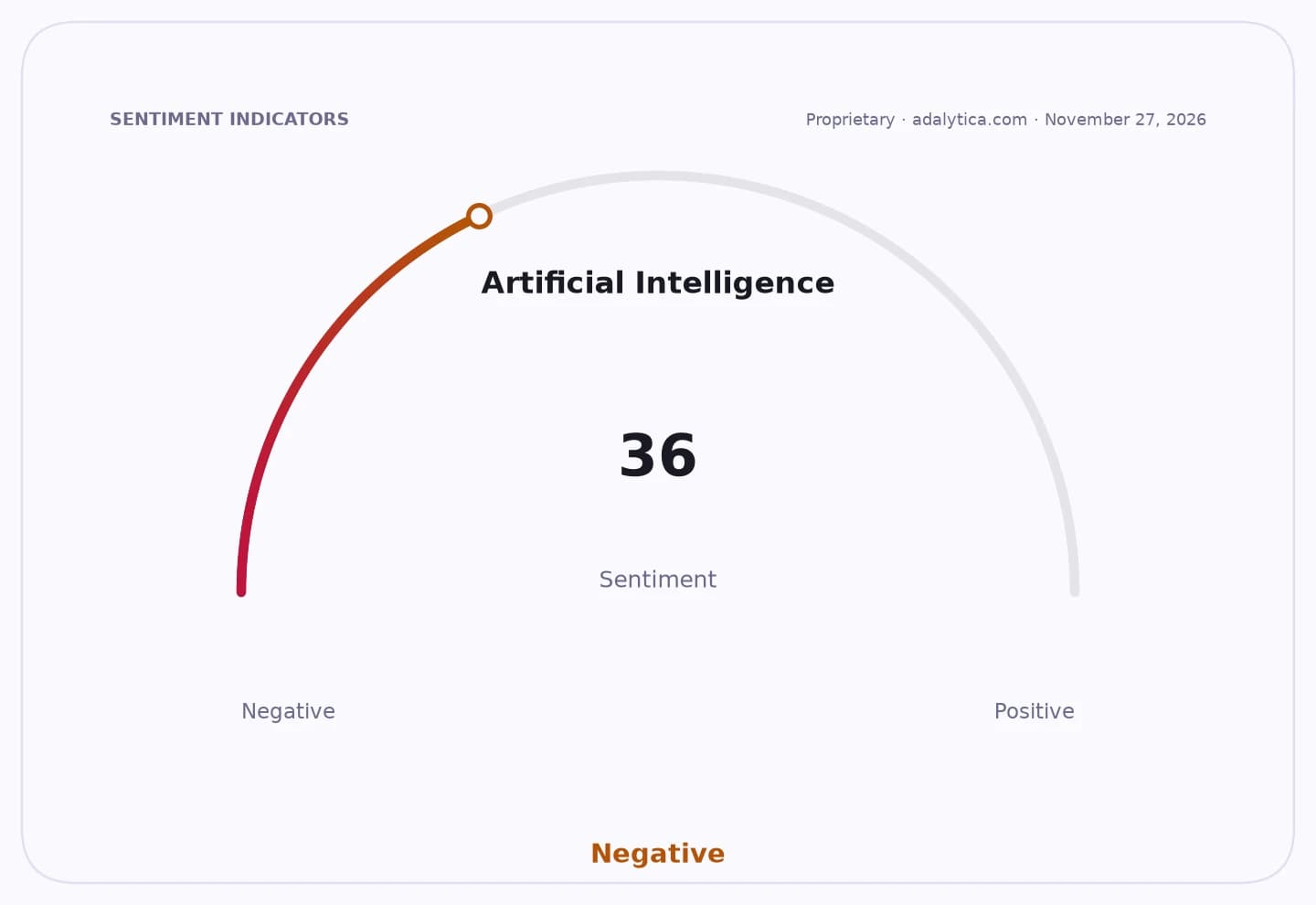
Artificial Intelligence
The forecast matters because it shows the AI boom is no longer confined to chipmakers and cloud providers. Software vendors, foundation model developers and enterprise application makers are now seeing revenue accelerate at a pace that is unusual even by Silicon Valley standards, with Omdia calling its latest outlook the biggest upward revision to its twice-yearly forecast since the pandemic.
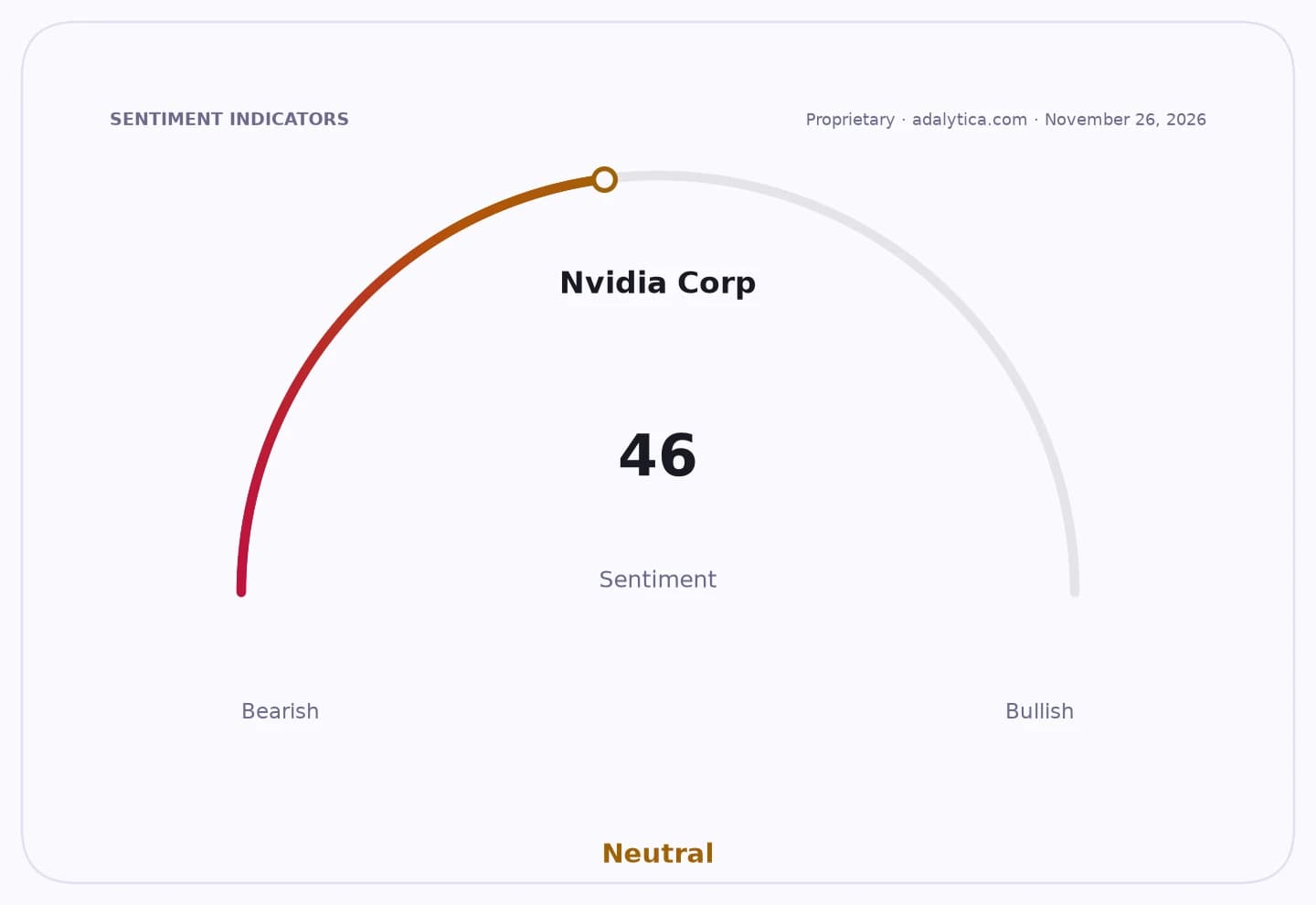
Sentiment Indicators
The numbers imply a larger and more durable commercial market than many investors had priced in. Omdia expects generative AI revenue to rise 139% in 2026, while agentic AI — systems that can execute tasks and workflows with limited human supervision — is expanding from a smaller base at a much faster clip. The broader AI software market is then projected to grow at a 30% compound annual rate from 2025 through 2031.
That growth is already reshaping the economics of the technology stack. Foundation model providers are seeing annual revenue gains of threefold to tenfold, while hyperscalers are reporting triple-digit growth in their AI cloud businesses. For Microsoft, Nvidia and other companies tied to the AI infrastructure build-out, the outlook supports the case that spending has not yet peaked, even if valuations have already absorbed a strong growth narrative.
For investors, the key point is that the opportunity is broadening. The revenue pool is spreading from compute-heavy infrastructure into software layers where margins can eventually be higher and customer relationships stickier. That is good news for companies able to package AI into enterprise workflows, coding tools and business applications. It also raises the stakes for incumbent software firms that risk losing pricing power if customers favor newer AI-native products over traditional offerings.
The forecast also highlights a competitive shift. As more vendors embed AI into existing products and launch applications built around autonomous workflows, the distinction between generative and agentic AI is starting to blur. Omdia said the market may increasingly be defined not by product labels, but by levels of autonomy. That would favor companies with strong distribution, data access and integration across enterprise systems, rather than those selling only one-off AI features.
The bull case is straightforward: faster adoption, bigger addressable markets and a longer runway for enterprise monetization. The bear case is that growth normalizes quickly, competition intensifies and customer spending migrates toward a handful of platforms, pressuring smaller software players. Omdia itself expects the exceptional 2026 pace to moderate in later years as adoption matures, even if that slowdown begins from a much larger base.
For markets, the message is that AI remains a real earnings engine, not just a theme trade. The next phase of the rally will likely depend less on hype around model launches and more on which companies can convert usage into recurring software revenue at scale.
| Entity | Gains | Losses |
|---|---|---|
| Foundation model providers | ▲Faster revenue growth | ▼Higher competition |
| Hyperscalers | ▲Triple-digit AI cloud growth | ▼Capital intensity |
| Enterprise software vendors | ▲Larger AI monetization pool | ▼Pricing pressure |
| Legacy software incumbents | ▲AI upsell opportunities | ▼Product disruption |