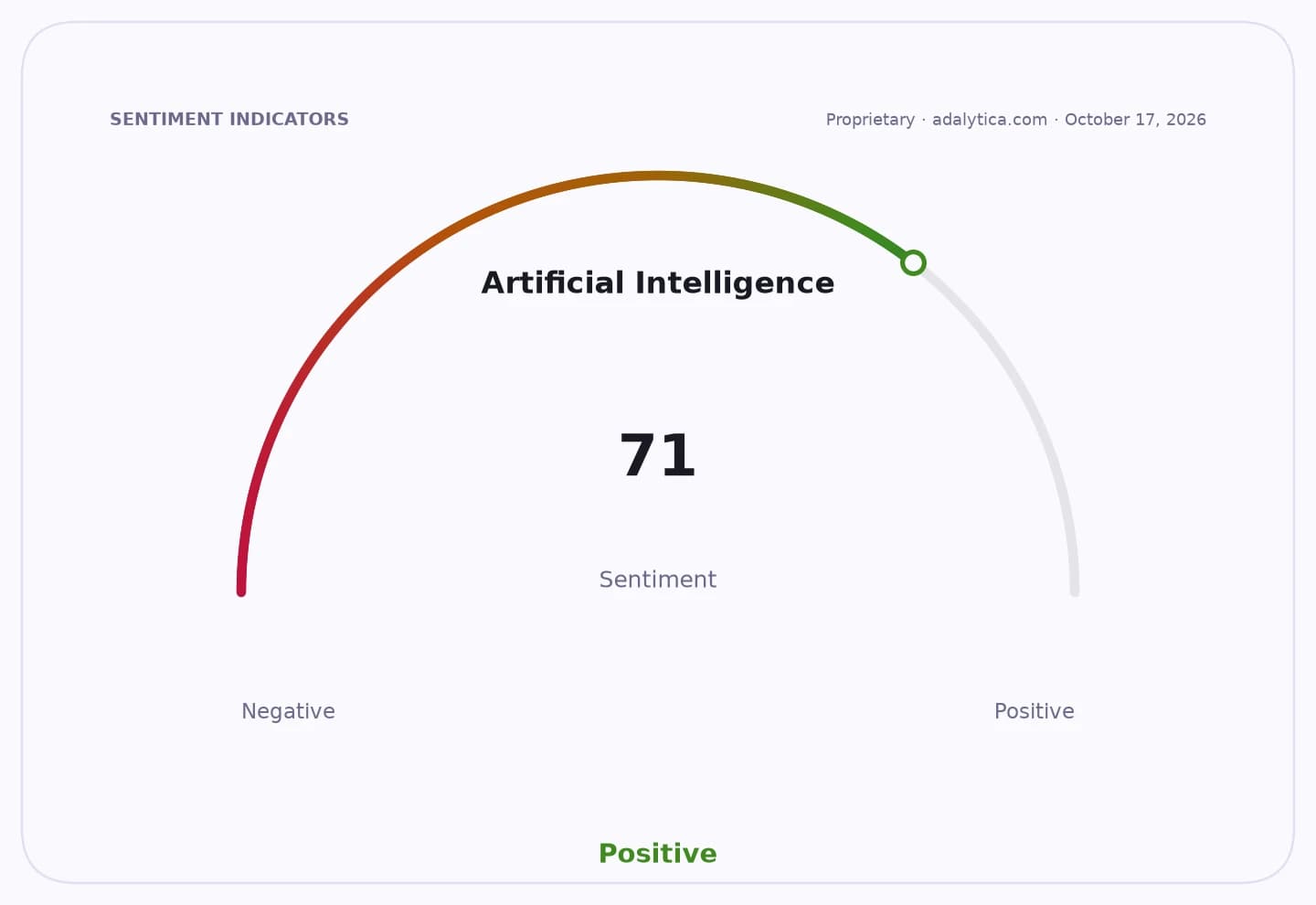
Germany’s new AI minister is under mounting pressure to do more than talk up artificial intelligence: he has to help build the compute, financing and industrial links that could keep Europe’s largest economy from falling further behind the US and China.
Germany AI policy focuses on compute and industry
That is the core message from the post-digital-summit debate in Germany, where policymakers are being urged to prioritize a few areas that can realistically scale — above all cloud and data-center capacity, applications for the Mittelstand, and tighter links between AI, machinery and robotics. The fear is that Berlin could repeat past industrial-policy mistakes and spread public money too thinly, without the long-term strategy needed to create competitive ecosystems.
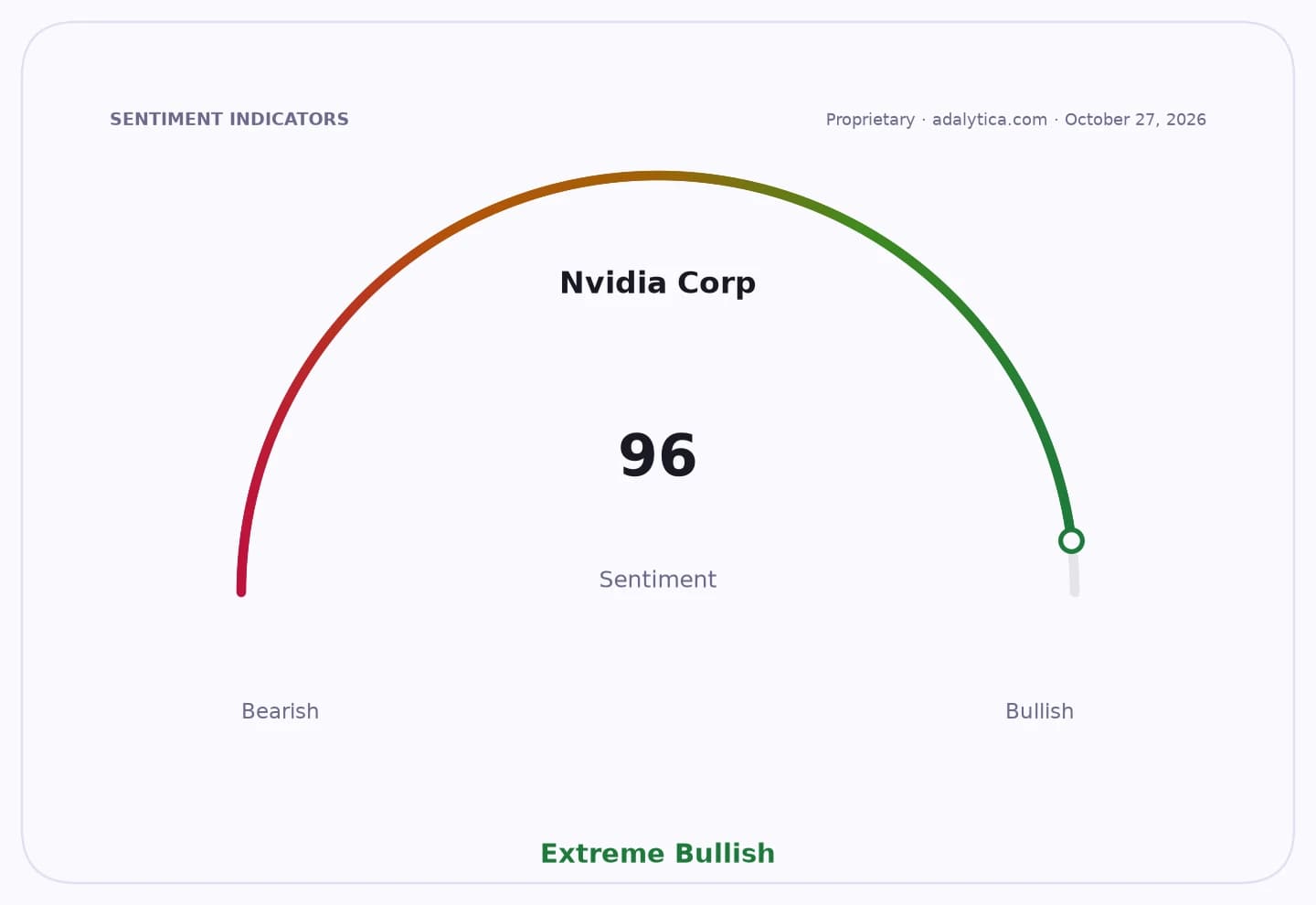
Sentiment Indicators
The economic stakes are significant. Germany is already contending with weak growth, and the data backdrop underscores why productivity-enhancing technology matters now. US GDP is still expanding at an annualized pace of about 1.3% in the latest forecast, while unemployment sits near 4.1%, leaving policymakers little room to rely on a broad cyclical rebound. For Germany, the bigger challenge is structural: if AI adoption stalls in manufacturing and export industries, the country risks losing efficiency gains that could help offset higher energy costs, aging demographics and tighter labor markets.
That is why the call to build domestic compute infrastructure matters. Access to compute has become a bottleneck in AI development, and Europe remains heavily dependent on US-led cloud and chip ecosystems. If Germany can create capacity that medium-sized companies can actually use, it could lower the barrier to adoption for the industrial base that defines its economy. The alternative is a two-speed market in which only large firms and foreign platforms capture the productivity gains.
The industrial argument is equally important. Germany’s best chance to compete may not be in frontier foundation models but in embedding AI into machine tools, factory automation and robotics, where the country already has technical depth and proprietary data. That would play to German strengths and could support higher-value exports, while also helping manufacturers automate around labor shortages. It is also a route for startups: easier access to capital would allow private investment to follow public funding, rather than leaving promising firms stranded after early-stage support.
Investors will read this as a policy signal, not just a political talking point. A more focused German AI strategy could benefit domestic industrial software, automation and semiconductor-adjacent suppliers, while also supporting demand for data-center infrastructure and enterprise cloud services. It could be a tailwind for firms that can convert AI spending into recurring industrial use cases, rather than speculative model training.
The bear case is that Germany remains slow-moving, fragmented and overly cautious on regulation, allowing the US to extend its lead and China to deepen its scale advantage. The bull case is that Berlin uses the current political momentum to concentrate capital where the country has a comparative advantage: industrial AI, robotics and applied compute. What happens next will depend on whether Wildberger can turn broad ambitions into a few bankable priorities — and do it fast enough to keep Germany in the race.
| Entity | Gains | Losses |
|---|---|---|
| German industrial firms | ▲Lower adoption barriers | ▼Missed productivity gains |
| AI startups in Germany | ▲Better access to capital | ▼Funding gap persists |
| US cloud/chip providers | ▲Continued market dominance | ▼German compute build-out |
| Germany’s economy | ▲Higher productivity potential | ▼Further loss of competitiveness |