Germany’s housing market has started to turn again, with apartment prices falling year on year for the first time in more than two years as high borrowing costs continue to squeeze buyers and slow transactions.
Germany apartment prices fall as borrowing costs bite
Housing (Real Estate)
The clearest sign of the shift is in the Greix purchase-price index compiled by the Kiel Institute for the World Economy with local valuation boards, which showed condominium prices across Germany down 0.2% in the third quarter from a year earlier. That was the first annual decline since the second quarter of 2024 and comes after a brief recovery that ran through late 2024 and much of 2025.
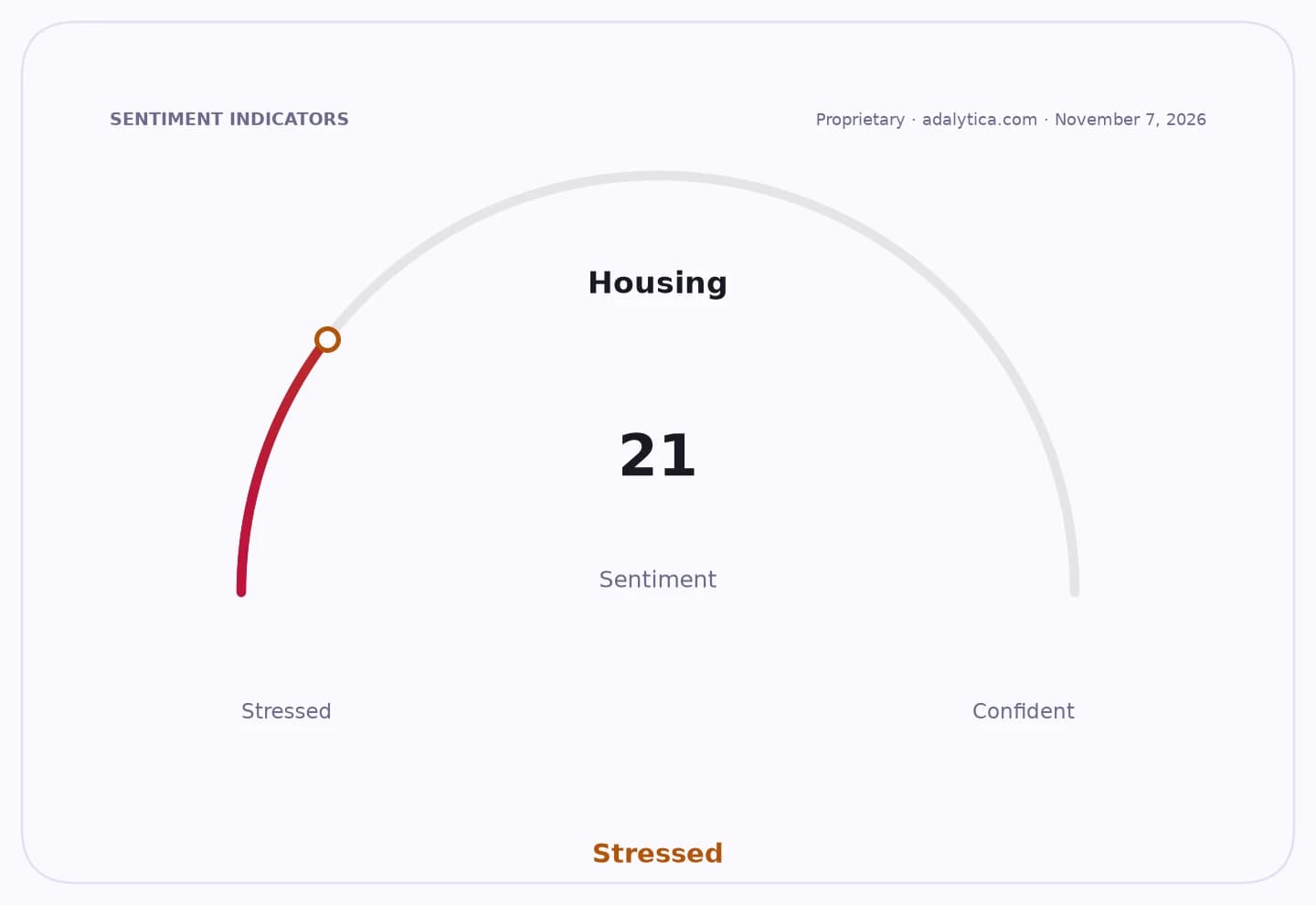
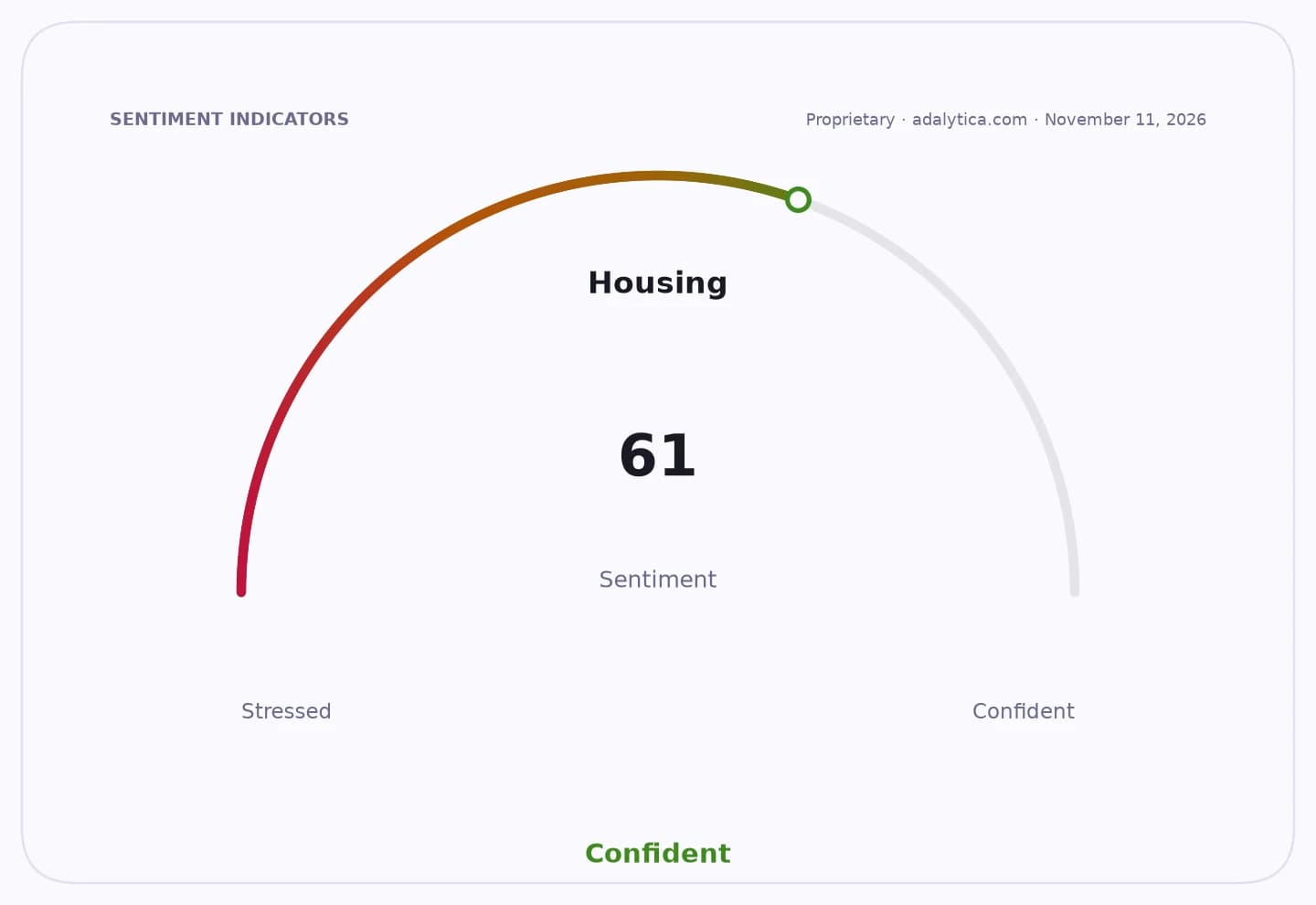
Sentiment Indicators
Greix is based on notarized transactions rather than asking prices, making it one of the more reliable gauges of what is actually happening in the market. On a quarterly basis, condominium prices still rose 0.5%, but the pace has slowed sharply. Earlier in 2025 they were up 3.3% year on year; by the second quarter of 2026, that figure had dwindled to 0.1%.
Jonas Zdrzalek, who leads the Greix project at IfW Kiel, said apartment price growth has “practically come to a halt,” arguing the first annual drop in more than two years may mark the start of a broader reversal even if the decline remains modest for now.
The economic significance is straightforward: Germany’s housing correction is no longer just a post-rate-shock hangover, but a sign that affordability pressures are still overpowering any recovery in demand. For the broader economy, that matters because housing is a key transmission channel for interest rates. Higher mortgage costs reduce mobility, delay household formation and dampen spending on renovations, furnishings and related services.
Berlin is bearing the brunt of the slowdown. Apartment prices in the capital fell 0.9% from the previous quarter and 2.9% from a year earlier, the third straight annual decline. That contrasts with Cologne, where apartment prices rose 2.8% quarter on quarter and 4.6% year on year, and Frankfurt, where they increased 2.4% over the quarter. Düsseldorf also posted a 0.8% quarterly gain.
The divergence underlines a market that is no longer moving in one direction. Stuttgart was flat on the quarter, while Leipzig barely budged and saw annual price growth slow from 3.9% to 0.6%. In other words, some large cities are still seeing selective demand, but the broad national trend is flattening and in some cases rolling over.
Other residential segments are also softening. Single-family home prices fell 0.5% quarter on quarter, while multifamily buildings slipped 0.2%. Year on year, single-family homes were still up 0.9%, but multifamily properties were down 2.4%. IfW said transaction volumes in the latter segment were relatively low, limiting the representativeness of that reading.
For investors, the message is less about a sudden crash than about a more prolonged squeeze on pricing power. Sellers are taking longer to find buyers and increasingly have to cut asking prices to close deals. Adjusted for inflation, the decline is steeper: real condominium prices fell 3% year on year, single-family homes 2%, and multifamily buildings 5.2%.
That means the apparent stability in nominal prices is misleading. In real terms, German property owners are losing value even where headline prices are only edging lower, which matters for household wealth, bank collateral values and the investment case for residential real estate owners.
Vonovia finance chief Philip Grosse said the sales market remains difficult and that many customers are still delaying apartment purchases. That is consistent with the key constraint in the market: mortgage rates remain elevated, leaving monthly payments well above the levels seen during the era of ultra-low borrowing costs. Even with prices leveling off or falling, many households still cannot meet lenders’ affordability tests.
The backdrop suggests Germany’s housing market is entering a new adjustment phase rather than completing a one-off correction. If borrowing costs stay high and the economy remains soft, pricing pressure is likely to persist, though not evenly across the country. For buyers, that could open selective opportunities. For owners, developers and lenders, it raises the risk that the rebound seen in 2025 was only temporary.
| Entity | Gains | Losses |
|---|---|---|
| Homebuyers | ▲More room to negotiate | ▼Higher mortgage payments |
| Sellers/owners | ▲Faster sales only if prices cut | ▼Lower nominal and real prices |
| Berlin homeowners | ▲None | ▼Sharpest price declines |
| Banks and property lenders | ▲Collateral still mostly stable in nominal terms | ▼Higher credit and valuation risk |