Germany’s conservative bloc is being pulled into a defensive fight against the far right just as Friedrich Merz tries to position himself as the country’s next chancellor, making a regional election a test of both his authority and the durability of the mainstream center-right.
Germany CDU Faces AfD Pressure Ahead of Election
The immediate market relevance is limited, but the political stakes are not. A stronger showing by the Alternative for Germany would underline how migration, stagnant growth and voter frustration are reshaping Germany’s policy debate ahead of the next federal contest. For investors, that matters because it can affect the outlook for fiscal policy, industrial support and the broader pace of reform in Europe’s largest economy.
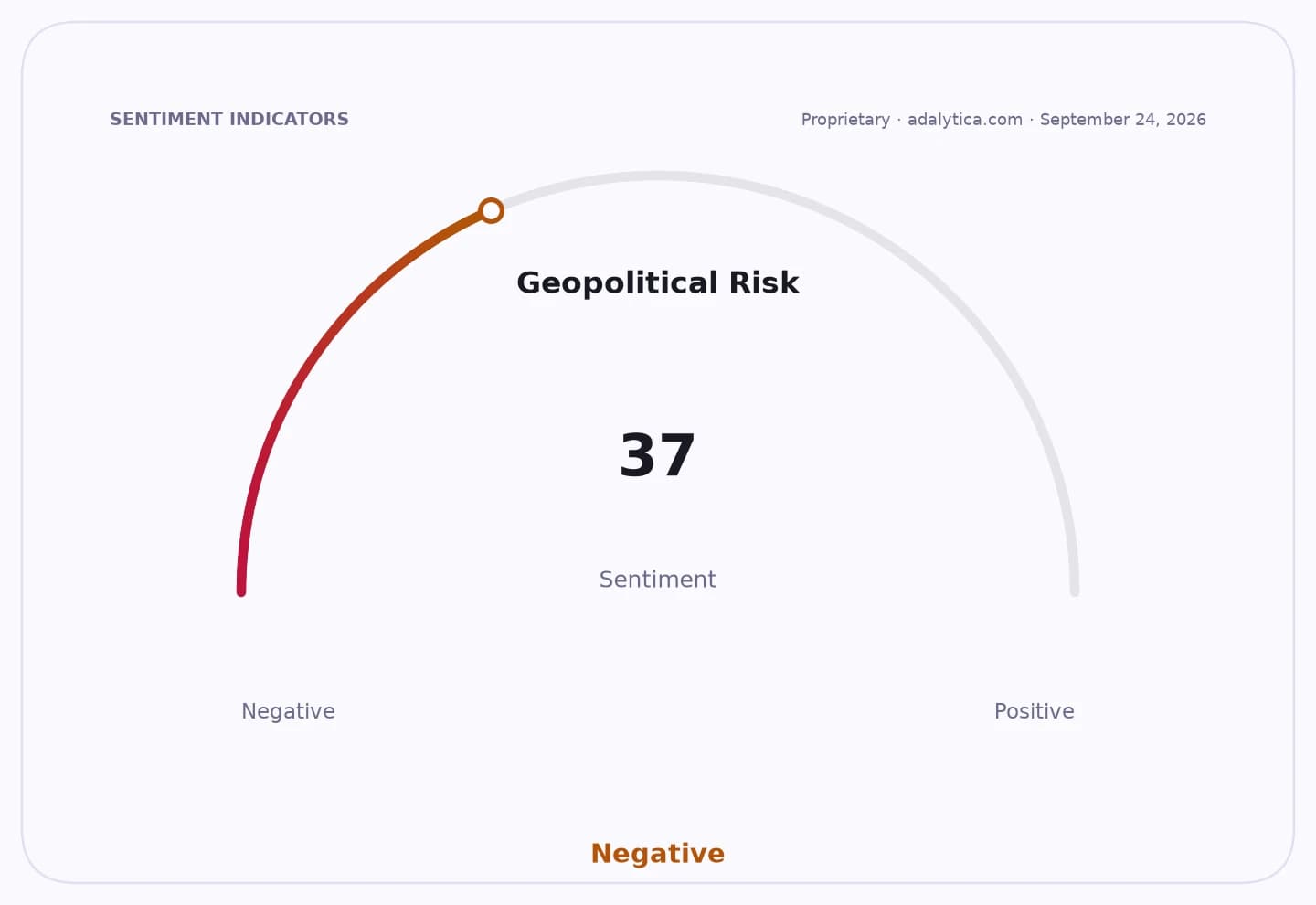
Sentiment IndicatorsⓘProprietary · adalytica.com · September 3, 2026
This is a snapshot — live sentiment, awareness and momentum for 130+ markets update continuously in the dashboard.Open AlphaPulse
Merz’s problem is not only the rise of the AfD. It is that regional campaigning exposes how easily the CDU’s national message can be crowded out by hard-right rhetoric on immigration and security. If the party spends more time reacting to the AfD than defining its own agenda, it risks looking tactical rather than presidential — a liability for a leader who needs to appear in control of the centrist vote.
That dynamic lands against a weak economic backdrop. German growth has been sluggish, manufacturing remains under pressure and the country’s export model is facing heavier competition from China and a more fragmented global trade environment. In that setting, political drift has economic costs: delayed investment decisions, slower reform of labor and energy policy, and less certainty over how aggressively Berlin will back infrastructure and defense spending.
The bond market is not pricing a sudden German political shock, but investors do watch the broader signal from regional votes: whether Germany is becoming more polarized, and whether any future coalition will have the room to act. The 10-year U.S. Treasury yield at around 4.82% and the German policy debate both point to a world in which fiscal credibility, growth support and political stability are all being reassessed at the same time. In Europe, that makes German elections more than domestic events — they are tests of whether the euro area’s anchor economy can still produce governable policy.
For the CDU, the bullish case is that Merz can still consolidate conservatives by emphasizing competence, economic repair and tougher migration control without giving the AfD room to own the debate. The bearish case is that every regional contest normalizes the far right a little more and forces the center-right further onto terrain it does not fully control. If that happens, the next federal government could enter office with less authority to push through the pro-growth policy mix investors want.
The immediate focus will be on whether the CDU can contain the AfD’s advance without narrowing its own appeal. For markets, the real question is whether Germany is heading toward a more fragmented political landscape that complicates reform just when Europe needs its largest economy to do more, not less.
| Entity | Gains | Losses |
|---|---|---|
| AfD | ▲higher protest vote | ▼mainstream isolation |
| CDU/CSU | ▲tougher migration stance may mobilize base | ▼Merz’s authority |
| German economy | ▲if reform pressure rises | ▼if policy paralysis deepens |
| Investors in Europe | ▲clarity if CDU regains footing | ▼uncertainty if far right gains ground |