Germany’s call for a monetary policy dialogue with China matters because it points to a deeper effort by Europe to manage yuan volatility, trade competitiveness and the spillovers from a structurally stronger dollar.
Germany Seeks China FX Dialogue Amid Dollar Strength

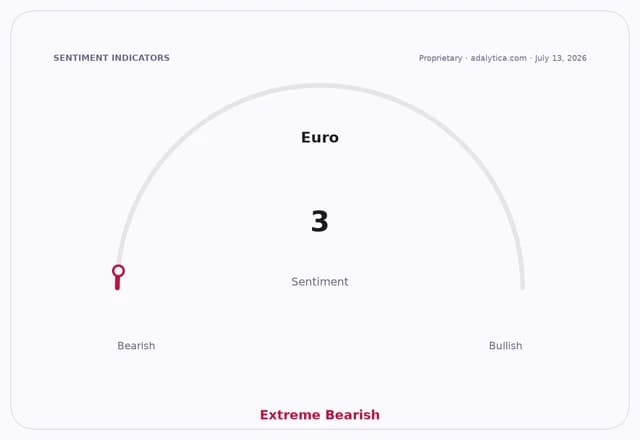
Friedrich Merz’s appeal lands at a time when the foreign-exchange backdrop is already favoring the US dollar and pressuring the euro. The euro trade signal snapshot from Adalytica.com shows extreme fear, while the dollar signal remains in fear territory, underscoring how policy uncertainty and rate differentials continue to dominate currency markets. FXE, the euro trust, has drifted to $105.01, below both its 50-day and 200-day moving averages, while UUP, the dollar fund, has climbed to 28.50 and remains above both of those trend gauges. That combination suggests investors are still positioning for dollar strength rather than a durable euro rebound.
Sentiment IndicatorsⓘProprietary · adalytica.com · July 13, 2026
This is a snapshot — live sentiment, awareness and momentum for 130+ markets update continuously in the dashboard.Open AlphaPulse
For Europe, the economic significance is immediate. A dialogue with China over monetary policy would not just be diplomatic theater; it could become a channel for discussing exchange-rate stability, capital flows and the consequences of a weaker yuan for European exporters. Germany, as the euro area’s industrial anchor, is exposed to imported price pressures and competitive strain when China allows its currency to soften against the dollar. China’s median yuan fixing has been set at 6.8077 per dollar, highlighting the continuing need for policy management as the US currency stays firm and Beijing tries to balance growth support with currency credibility.
That matters because the currency channel now sits alongside broader trade and growth concerns. China’s economy has remained resilient, with June inflation steady and the GDP deflator expected to turn positive for the first time in three years, but the outlook still leaves room for more stimulus. If Beijing leans further toward easing, the yuan could face renewed depreciation pressure, making it harder for European policymakers to protect exporters without seeing the euro strengthen too much against other currencies. A German push for dialogue suggests Berlin would prefer coordination over a disorderly adjustment.

Investors should read the move as part of a larger attempt to reduce FX friction in a market where interest-rate expectations remain the main driver. US Treasury yields are still elevated, with the 10-year at 4.56% and the 2-year at 4.21%, keeping the dollar supported and limiting the euro’s upside. At the same time, the European Central Bank policy sentiment gauge remains neutral, implying little immediate relief from Frankfurt. In that environment, any sign of improved China-Europe communication could matter for FX volatility, bond spreads and the earnings outlook for exporters.
The bull case is that dialogue could lower the risk of competitive currency moves and support trade flows between Europe and China at a time when global growth is fragile. The bear case is that talk alone will not change the underlying drivers: higher US yields, slower European growth, and China’s own need to defend demand. For now, Merz’s intervention suggests Germany wants a seat at the table before currency shifts become another headwind for the euro area.
| Entity | Gains | Losses |
|---|---|---|
| Germany/Euro exporters | ▲Better FX coordination | ▼Yuan-driven competition |
| China | ▲Diplomatic flexibility | ▼Pressure to stabilize yuan |
| US dollar | ▲Safe-haven support | ▼Less upside if dialogue calms markets |
| Euro / FXE longs | ▲Potential relief from volatility | ▼Continued dollar strength |