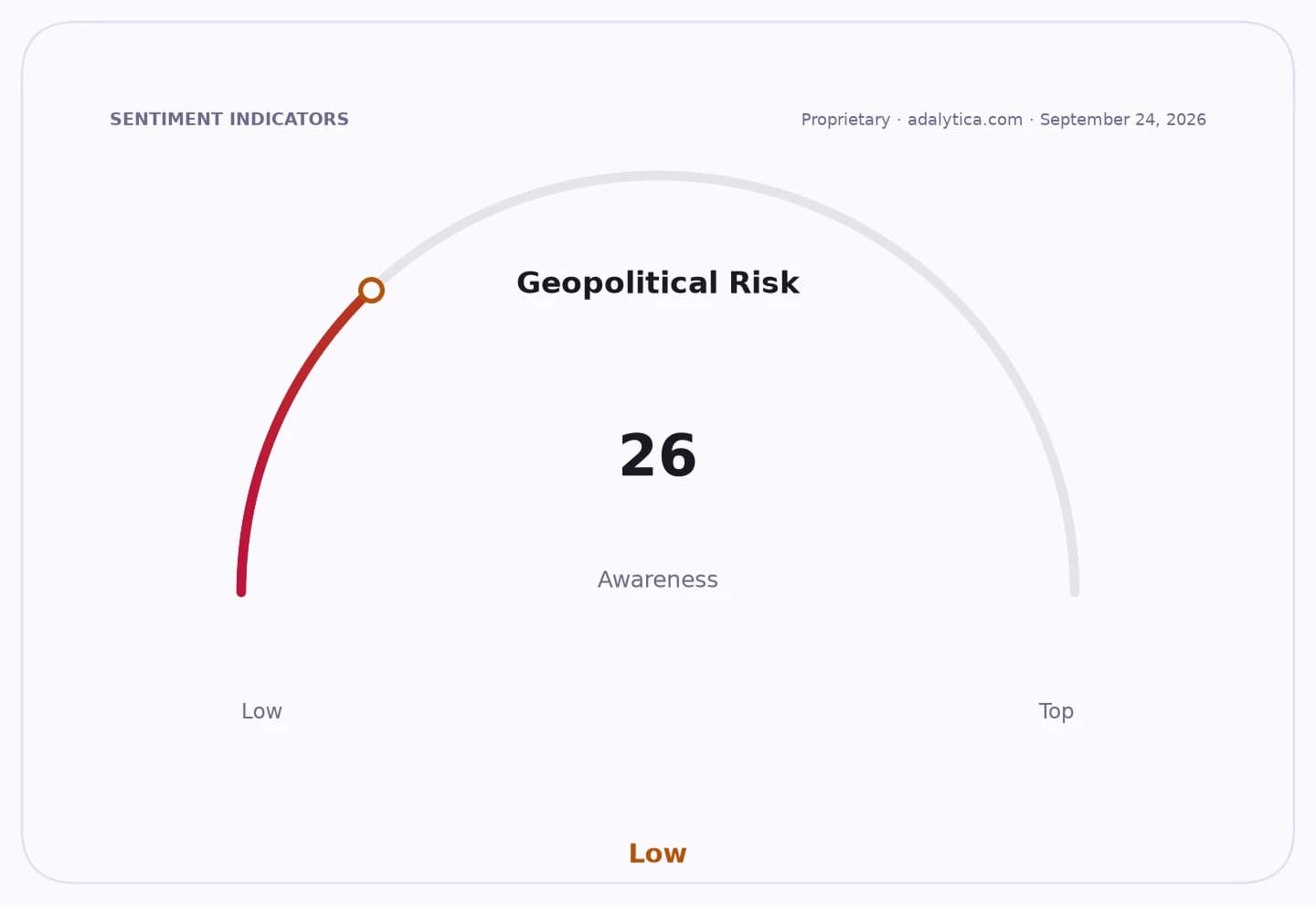
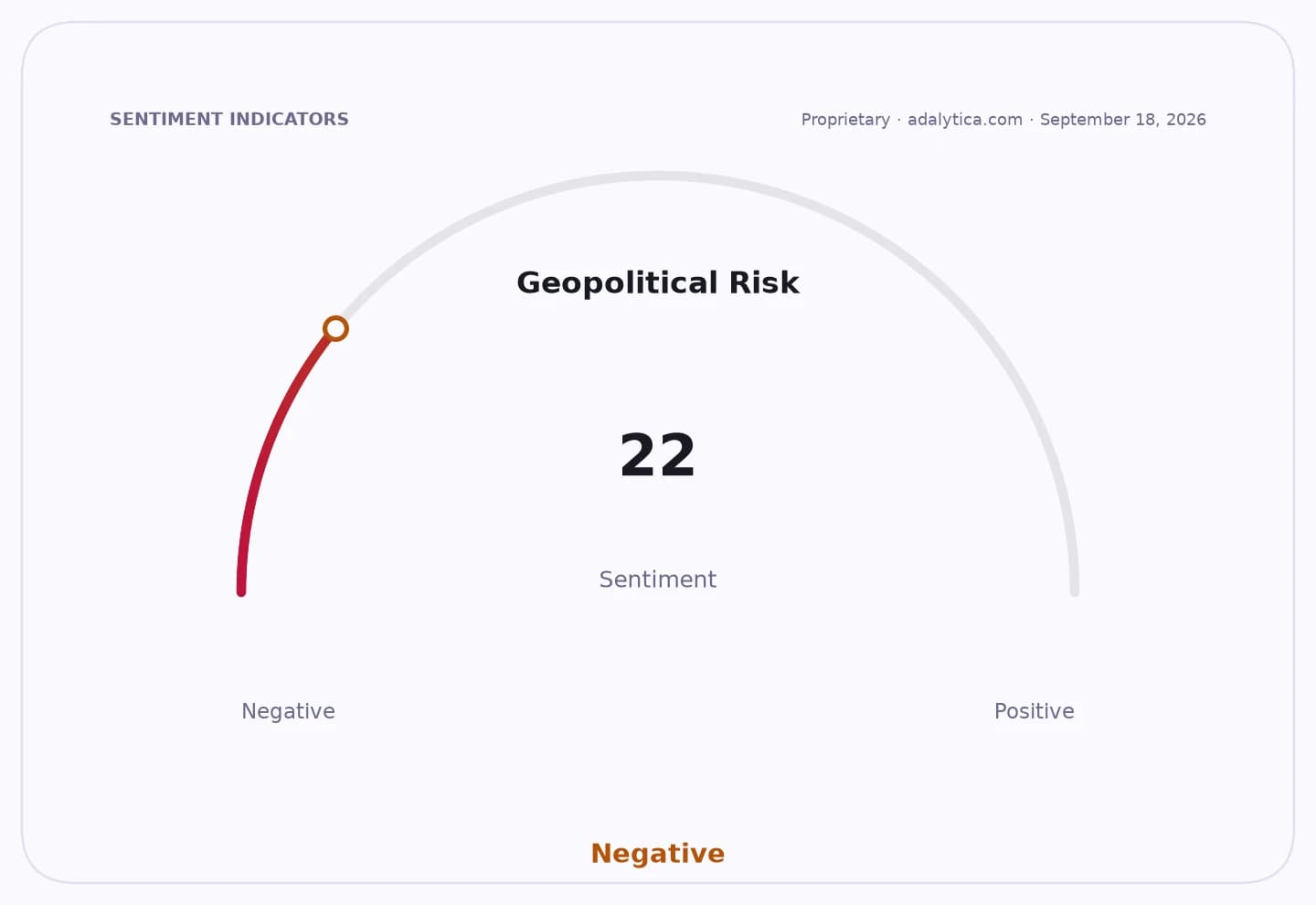
Germany’s gas storage facilities could be completely emptied by early February if the winter turns very cold, a warning that underscores how fragile Europe’s energy security still is and why gas, LNG and pipeline import capacity remain a live market trade.
Germany Gas Storage Could Run Low by February
The estimate from storage group Ines matters because Germany is the region’s industrial engine, and its gas balance sets the tone for power prices, factory costs and, ultimately, inflation across the euro area. In a warm or normal winter, the storage cushion would be enough. But in a severe cold snap like 2010, the model shows stored gas would not last, forcing buyers back into the spot market for expensive incremental supply.
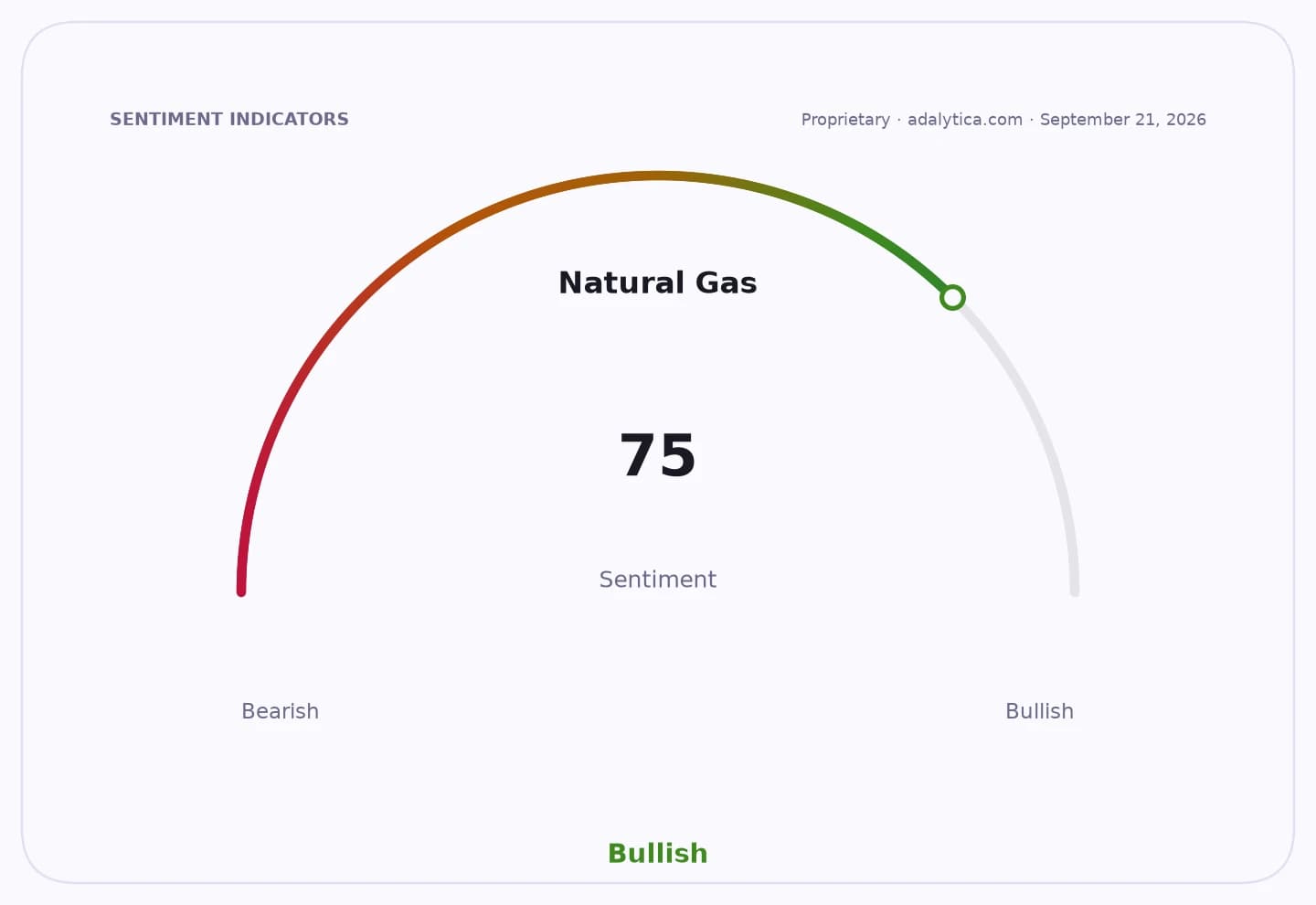
Sentiment IndicatorsⓘProprietary · adalytica.com · September 8, 2026
This is a snapshot — live sentiment, awareness and momentum for 130+ markets update continuously in the dashboard.Open AlphaPulse
That would likely lift European gas prices just when the old summer-winter storage arbitrage no longer works. Ines says the economics have deteriorated so much that firms have booked 83% of storage capacity but are leaving part of it unused, because summer gas prices are already too high to make traditional seasonal stocking profitable. In other words, the market is failing to incentivize the very inventory build Europe needs most.
The implications go well beyond utilities. Germany entered September with storage only about 54% full, roughly 19 percentage points below a year earlier, and the industry sees only 77% fill possible by Nov. 1 even if injections accelerate. That leaves a thin margin of safety heading into winter and raises the odds that traders, shippers and governments will have to pay up for LNG cargoes, Norwegian pipeline gas and any other marginal molecule available on the global market.
Investors should read this as a bullish setup for gas-linked assets and a warning sign for energy-intensive sectors. Exchange-traded funds tracking U.S. natural gas such as UNG have already been volatile, and the broader energy complex — including XLE and exploration names like XOP — can benefit if Europe’s buying wave tightens global balances. Adalytica’s trade signals for natural gas show sentiment turning firmer even as the market remains neutral, reflecting how quickly a cold-weather narrative can reprice the whole complex.
The bigger message is that Europe’s gas market is still operating with a geopolitical risk premium after the shock of Russia’s war in Ukraine and the loss of cheap pipeline assumptions. If winter turns harsh, the market underestimates how fast Germany could be forced into emergency procurement, and that is the kind of catalyst that can move prices sharply higher before consensus catches up. For investors, the actionable takeaway is to stay positioned for a winter squeeze in gas and the beneficiaries of higher LNG demand, not the complacent assumption that storage alone will save the season.
| Entity | Gains | Losses |
|---|---|---|
| LNG exporters | ▲Higher cargo demand | ▼ |
| German gas consumers | ▲ | ▼Higher heating and input costs |
| Energy traders | ▲Volatility, price spikes | ▼Inventory risk |
| Gas storage operators | ▲Policy support, stronger incentives | ▼Weak arbitrage economics |