Germany has opened the first trial over the 2022 sabotage of the Nord Stream gas pipelines, putting the destruction of a key piece of European energy infrastructure back at the center of the continent’s geopolitical risk picture.
Germany opens first Nord Stream sabotage trial
The case matters because Nord Stream was not just a pipeline blast; it was an attack on a route that once tied Russian gas to Germany and wider European industry. Any judicial finding on who planned and carried out the operation could sharpen political tensions between Berlin, Kyiv and Moscow while also shaping how Europe thinks about the security of energy assets in wartime.
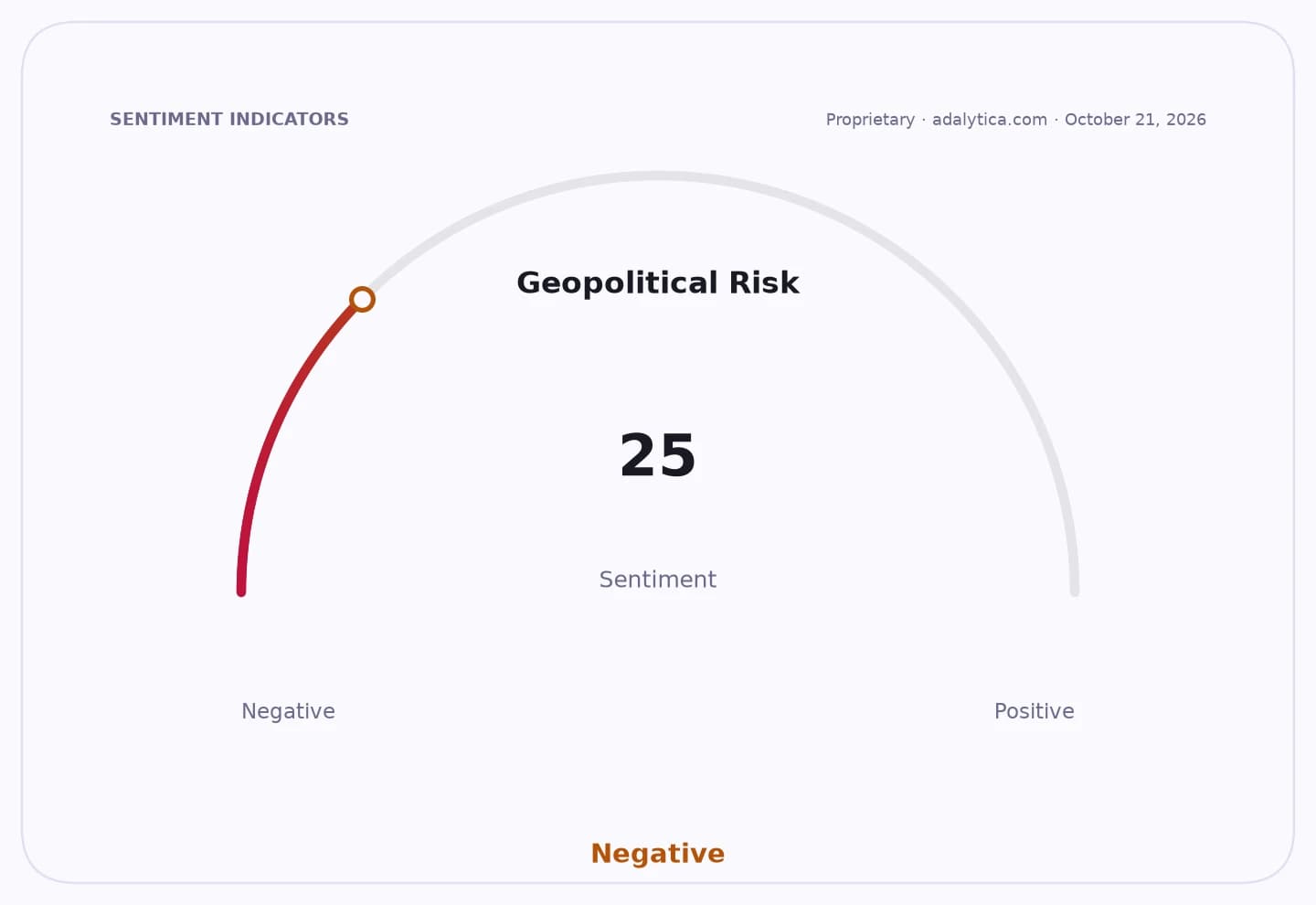
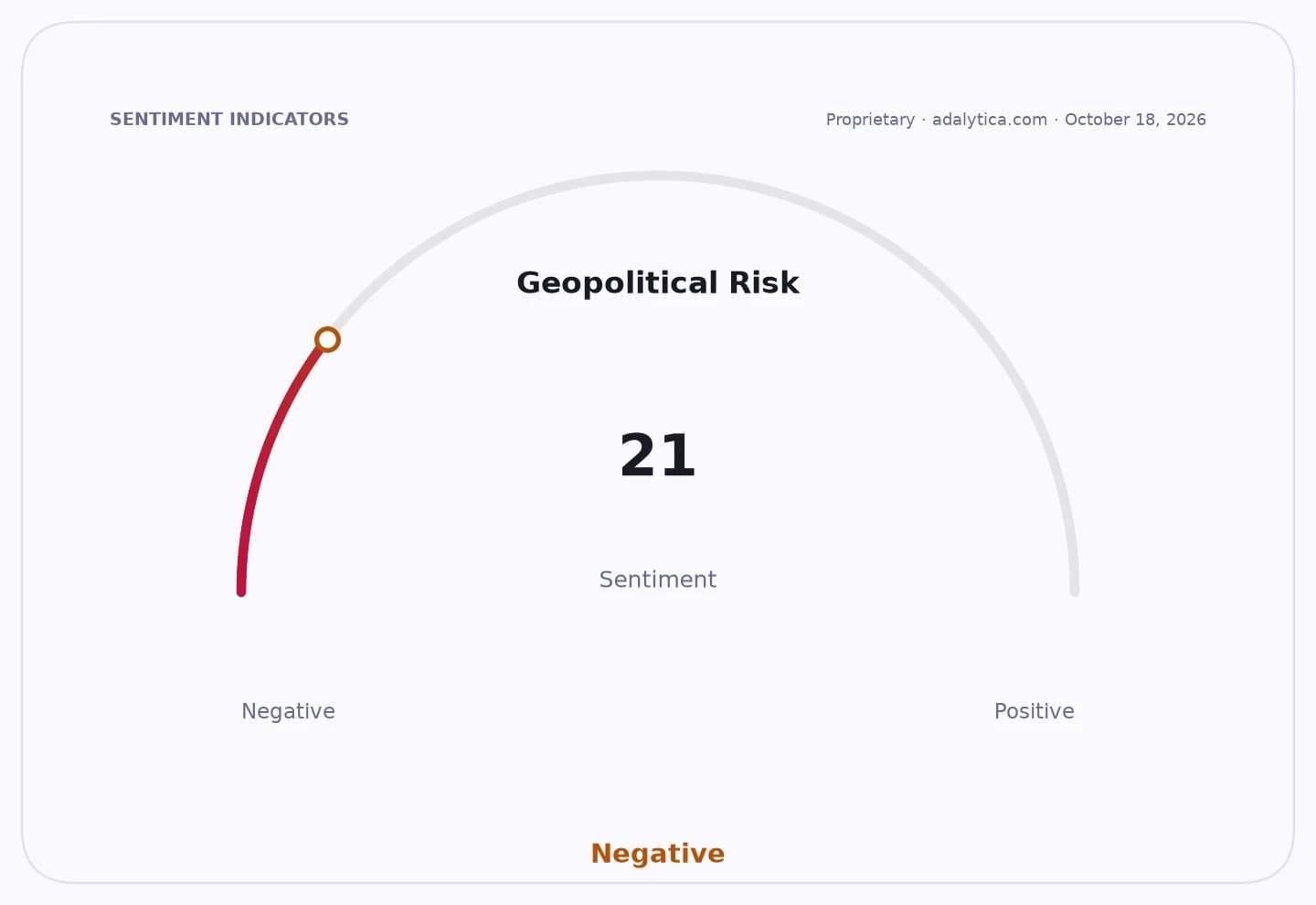
Sentiment IndicatorsⓘProprietary · adalytica.com · October 18, 2026
This is a snapshot — live sentiment, awareness and momentum for 130+ markets update continuously in the dashboard.Open AlphaPulse
Hamburg prosecutors accuse Serhii Kuznietsov, a Ukrainian national and former officer, of participating in a group that placed explosives on the seabed near Denmark’s Bornholm island and destroyed the pipelines in September 2022. He has denied the allegations by remaining silent, while his lawyers have argued the war-crimes charge should be dismissed because he is barred from speaking about his military role.
The indictment, spanning 136 pages, says the attack targeted civilian infrastructure and was carried out by Ukrainians acting on behalf of the Ukrainian state. Kuznietsov is the first person to face trial in the case, making the proceeding a test of whether investigators can turn a politically explosive sabotage episode into a courtroom verdict.
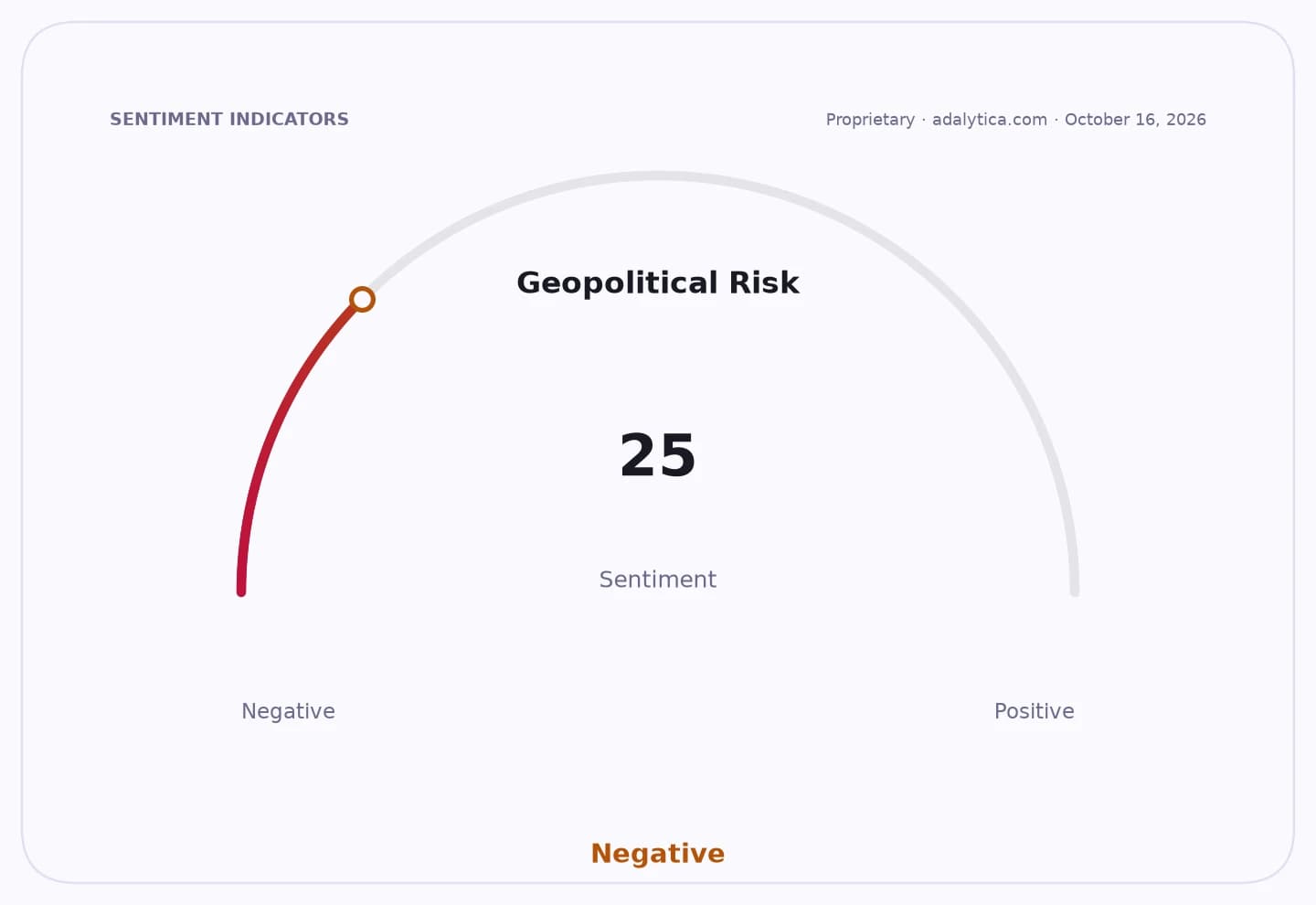
Geopolitical Risk vs XLEadalytica.com
Explore this data interactively — full history, time series and cross-market comparisons.Open AlphaPulse
For investors, the direct market impact is limited, but the broader implications are not. The case keeps a focus on European energy security at a time when oil and gas markets remain sensitive to geopolitical shocks, and it reinforces the premium investors place on infrastructure resilience, especially across power, pipeline and LNG systems.
Energy shares are not reacting to a single legal hearing, but the backdrop is relevant for the sector. The XLE energy ETF closed at $68.24 on Oct. 16, above its 50-day and 200-day moving averages, while the OIH oilfield services ETF ended at $382.18, still below its 50-day average, suggesting traders continue to favor producers over some service names even as geopolitical risk persists.
Oil itself remains firm enough to keep the issue relevant. WTI was last at $101.91 before an Oct. 15 forecast of $102.53, underscoring that supply risks remain a live market variable even if the Nord Stream case is primarily a legal and diplomatic story.
The proceedings are likely to draw outsized attention in Germany and across Europe because they could revive questions about state involvement, wartime sabotage and how much protection critical energy infrastructure really has. Any new arrests, evidence disclosures or rulings on the war-crimes charge could renew pressure on governments and ripple through energy-security planning.
| Entity | Gains | Losses |
|---|---|---|
| German prosecutors | ▲Legal leverage | ▼Political ambiguity |
| Ukraine | ▲Potential vindication if charges fail | ▼Scrutiny over alleged state role |
| Russia | ▲Diplomatic pressure on rivals | ▼Narrative control over pipeline attack |
| Energy infrastructure operators | ▲Focus on security spending | ▼Higher perceived sabotage risk |