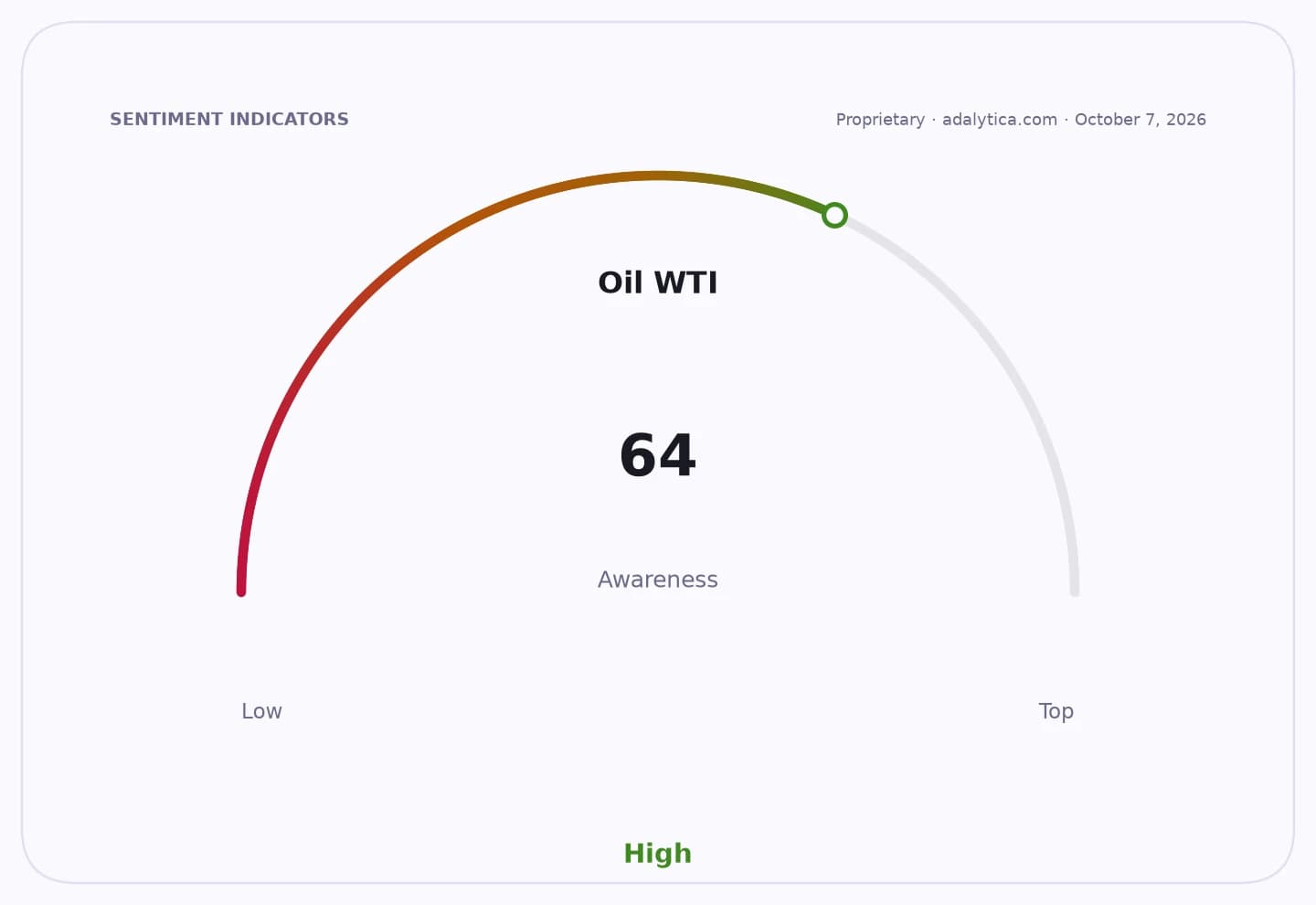
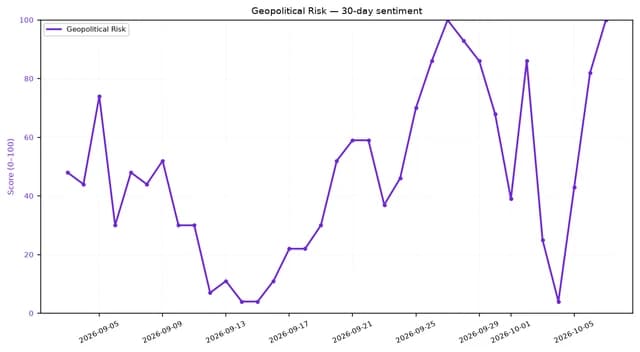
Ukraine President Volodymyr Zelenskiy says intelligence indicates Russia is preparing a “massive” new attack, a warning that keeps geopolitical risk elevated for energy and defense markets even as oil and gold trade with mixed signals.
Ukraine warns of new Russian attack, oil and gold mixed

The comment matters because any escalation in the war can quickly ripple through crude, shipping, European gas flows and risk assets, especially if the attack targets energy infrastructure or broadens pressure on Ukraine’s allies. Traders have already been pricing in a higher-stakes backdrop: USO, the U.S. oil ETF, was last at $144.91 on Oct. 6 after surging earlier this year, while gold ETF GLD closed at $382.27, well below its March peak but still reflecting demand for crisis hedges.
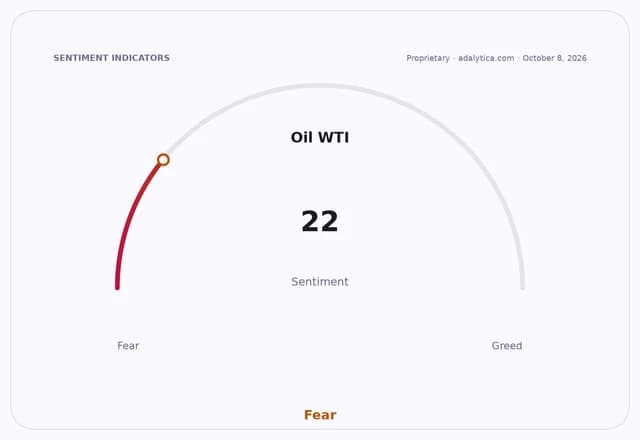
Sentiment IndicatorsⓘProprietary · adalytica.com · October 8, 2026
This is a snapshot — live sentiment, awareness and momentum for 130+ markets update continuously in the dashboard.Open AlphaPulse
Oil’s technical setup remains constructive despite a recent pullback. USO is trading above both its 50-day moving average of $137.92 and 200-day average of $115.95, and its MACD remains positive, though the RSI has cooled to 38.2 from overbought levels in September, suggesting momentum has eased rather than reversed.
Gold is weaker on a relative basis, with GLD below its 50-day average of $396.60 and its 200-day average of $415.99. Its RSI of 41.3 and negative MACD point to softening haven demand, even as Adalytica’s Global Stability Sentiment reads “Extreme Greed” at 100, a sign markets are not yet fully pricing a wider shock.
For investors, the key is whether Zelenskiy’s warning translates into damage to oil supply, transport routes or European energy security. If it does, crude-linked names, defense stocks and shipping insurers could benefit, while airlines, refiners and import-sensitive industries would face higher input costs.
The next catalyst is any confirmation from Kyiv or Western intelligence about the scope and timing of the expected Russian assault, along with any retaliation that raises the risk of broader energy disruption.
| Entity | Gains | Losses |
|---|---|---|
| Oil producers | ▲Higher crude prices | ▼Demand shock if escalation widens |
| Energy importers | ▲— | ▼Higher fuel costs |
| Defense contractors | ▲More spending urgency | ▼— |
| Gold holders | ▲Safe-haven bids if crisis deepens | ▼Less support if risk premium fades |