Dmitry Medvedev has tightened Moscow’s terms for ending the war in Ukraine while reaffirming Russia’s strategic alignment with Iran, underscoring how two of the world’s most volatile geopolitical flashpoints remain intertwined for energy markets, sanctions risk and investor sentiment.
Oil and defense stay bid as Russia hardens Ukraine terms
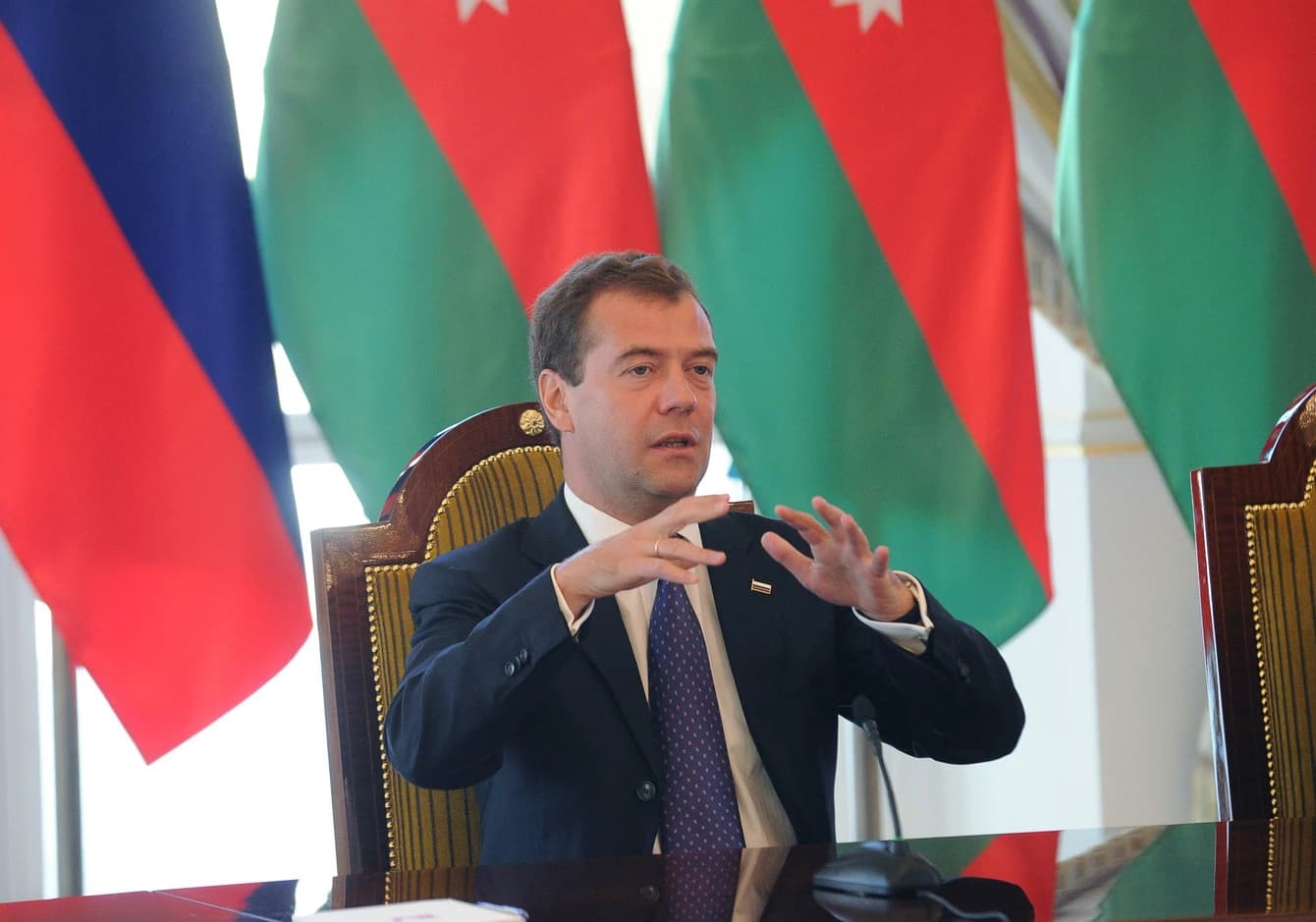
The former Russian president and deputy chairman of the Security Council said in an interview with Iran’s IRIB that any long-term settlement in Ukraine would require Kyiv to accept neutrality and non-nuclear status, reverse what Moscow calls nationalist policies and restrictions on Russia, and restore Russian sovereignty over territories it has already written into its constitution, including Donbas and other occupied areas. He warned that if Ukraine rejects those terms, Russia would pursue a military solution.
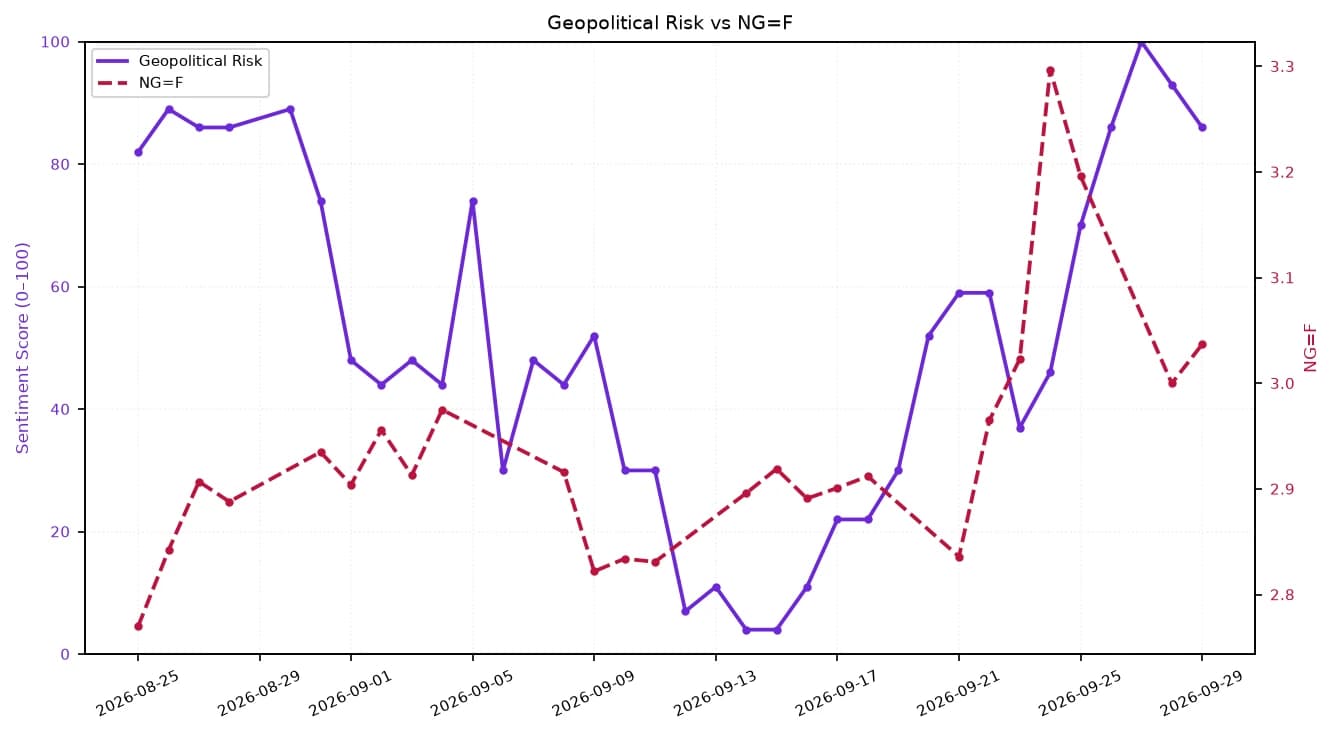
Sentiment IndicatorsⓘProprietary · adalytica.com · October 4, 2026
This is a snapshot — live sentiment, awareness and momentum for 130+ markets update continuously in the dashboard.Open AlphaPulse
The significance for markets is not the rhetoric itself but the hardening of Russia’s negotiating position at a moment when investors are already weighing a conflict that is feeding into global energy prices and broader risk premia. A durable peace would have been deflationary for oil, supportive of European industry and broadly positive for risk assets. Medvedev’s comments move the opposite way, reinforcing the view that the war is unlikely to end through diplomacy soon and that sanctions, supply-chain disruption and defense spending will remain part of the economic backdrop.
Crude oil has stayed near levels that still reflect a meaningful geopolitical premium. U.S. benchmark futures were around $91 a barrel on Oct. 2, well above the 50-day moving average near $88.6 and the 200-day moving average around $82.4, even after a recent pullback. The energy sector ETF XLE was also holding above its longer-term trend line, with the fund near $62.82 compared with a 200-day average around $55.88. That keeps producers, refiners and other hydrocarbon-linked names in a relatively favorable position, while consumers, airlines and importers continue to absorb higher input costs.
DGS10 vs DCOILWTICO — macro contextadalytica.com
Explore this data interactively — full history, time series and cross-market comparisons.Open AlphaPulse
The dollar and Treasury markets are signaling the same underlying caution. Adalytica’s U.S. dollar trade signals show “Extreme Fear,” while U.S. Treasury bond signals point to heightened demand for safety. That combination usually reflects investors hedging against geopolitical escalation and policy spillovers rather than pricing in a clean resolution.
Medvedev also used the interview to emphasize that Moscow’s ties with Tehran are at “an unprecedented level,” particularly in defense cooperation, and said Russia would never sacrifice its relationship with Iran. He accused Washington of acting recklessly toward Iran and argued that pressure on Tehran is pushing more countries to consider nuclear weapons. The remarks matter because they highlight a widening axis of cooperation among U.S. adversaries at a time when Iran’s role in regional energy security is already feeding through to commodity risk premiums.
For investors, the linkage between Ukraine and Iran matters most in oil, defense and sanctions-sensitive assets. The longer both conflicts persist, the harder it becomes to justify lower risk premiums in crude, shipping, insurers and companies exposed to the Middle East or Eastern Europe. It also keeps a floor under defense spending and supports contractors and suppliers tied to munitions, air defense and battlefield logistics.
The bear case is that Medvedev’s comments are mainly political signaling, not a change in operational reality. Markets have often shrugged off similar statements from Moscow. But the bull case for oil and defense remains intact as long as the war in Ukraine continues, Iran remains in confrontation with Washington and the prospect of a negotiated settlement stays remote.
What investors will watch next is whether the rhetoric is matched by fresh battlefield escalation, further attacks on Russian energy infrastructure, or any step-up in Russia-Iran military coordination. Until then, the market message is that geopolitical risk has not gone away — it has broadened.
| Entity | Gains | Losses |
|---|---|---|
| Oil producers | ▲Higher risk premium | ▼Consumers |
| Defense contractors | ▲Sustained demand | ▼Diplomats |
| Russia and Iran | ▲Strategic alignment | ▼Western policymakers |
| Airlines and importers | ▲Lower fuel costs if peace emerges | ▼Margin pressure from high crude |