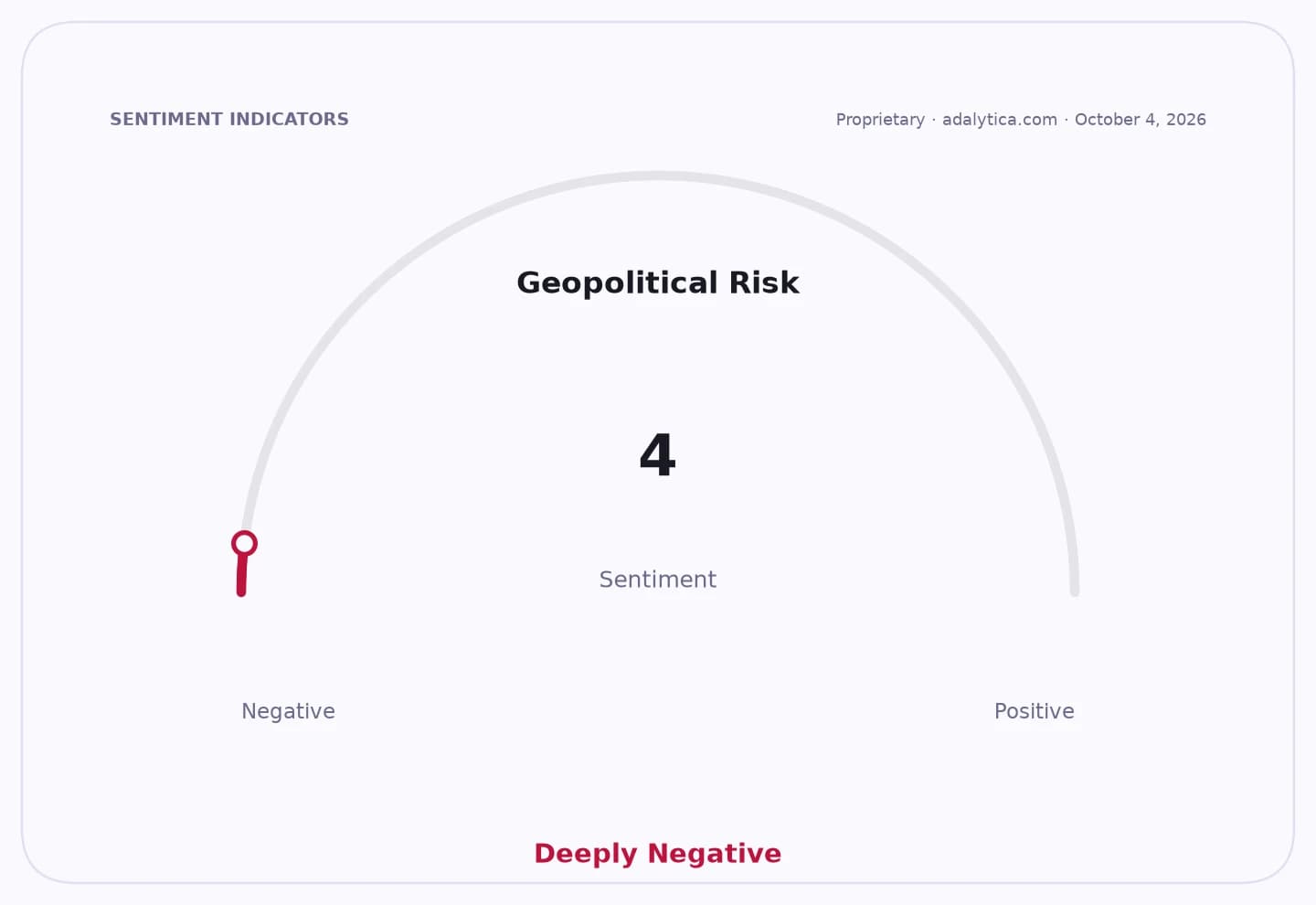
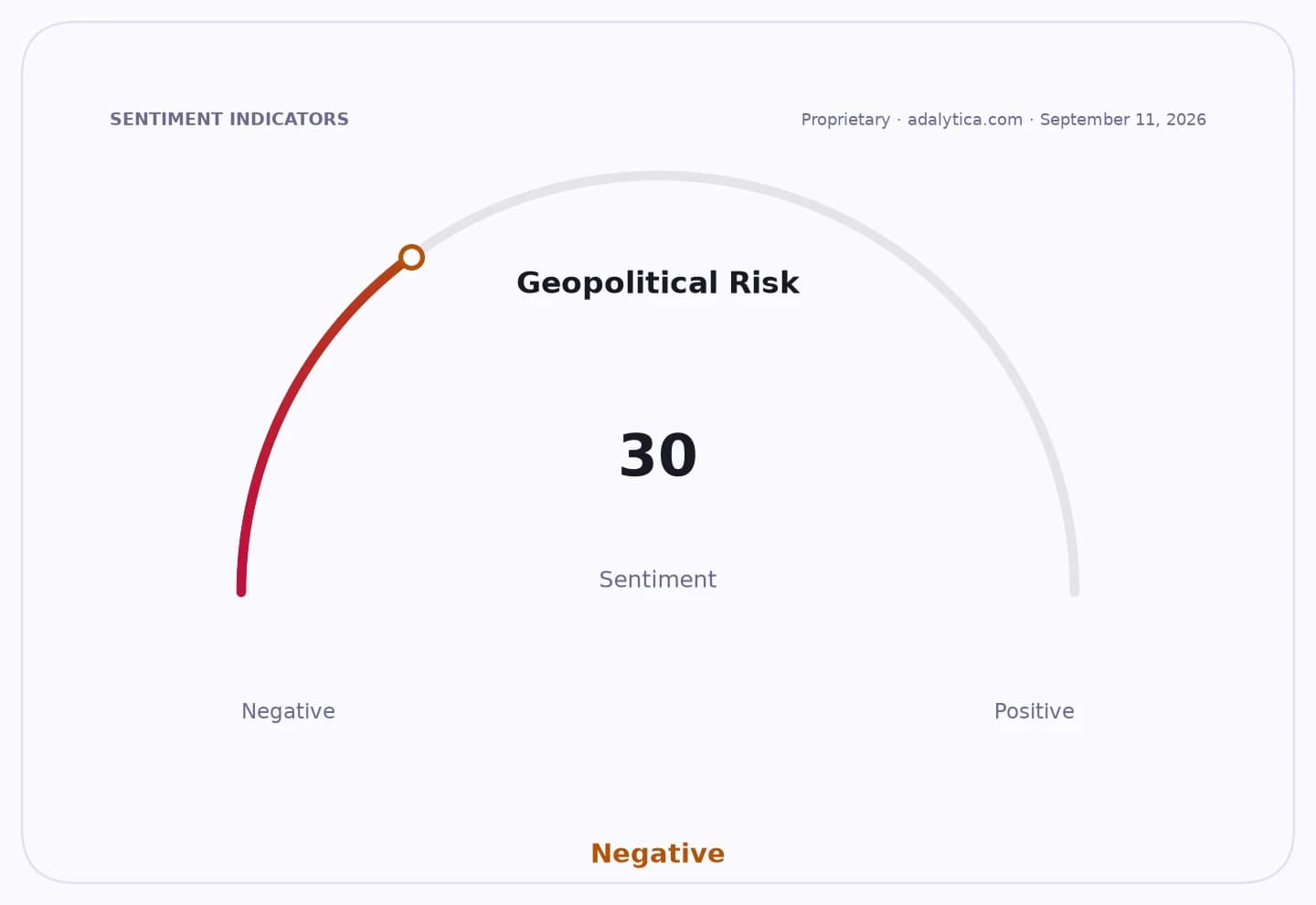
Russia’s denial that it threatens Ukraine’s nuclear facilities does little to ease the market’s real concern: the war is still the biggest geopolitical tail risk hanging over European energy, defense and risk assets.
Ukraine nuclear risk keeps Europe energy markets on edge
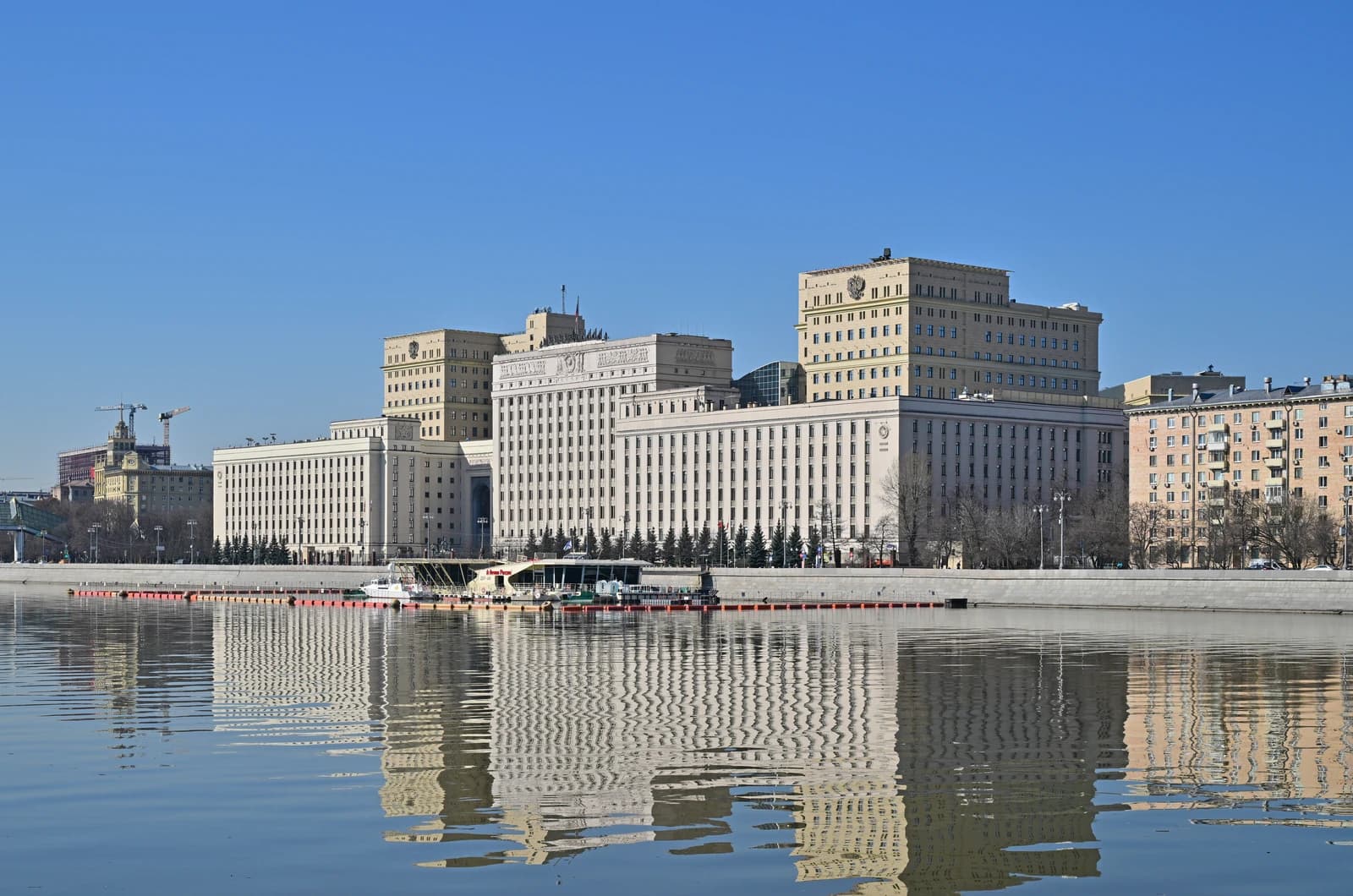
Moscow’s envoy in Vienna, Mikhail Ulyanov, rejected accusations that Russia has attacked or endangered Ukraine’s nuclear plants after the International Atomic Energy Agency passed a resolution urging Russia to stop actions at and against those sites. He called the measure “shameful,” said Canada had been pushing a nearly unchanged version for four years, and argued the text unfairly casts Russia as the sole source of nuclear risk.
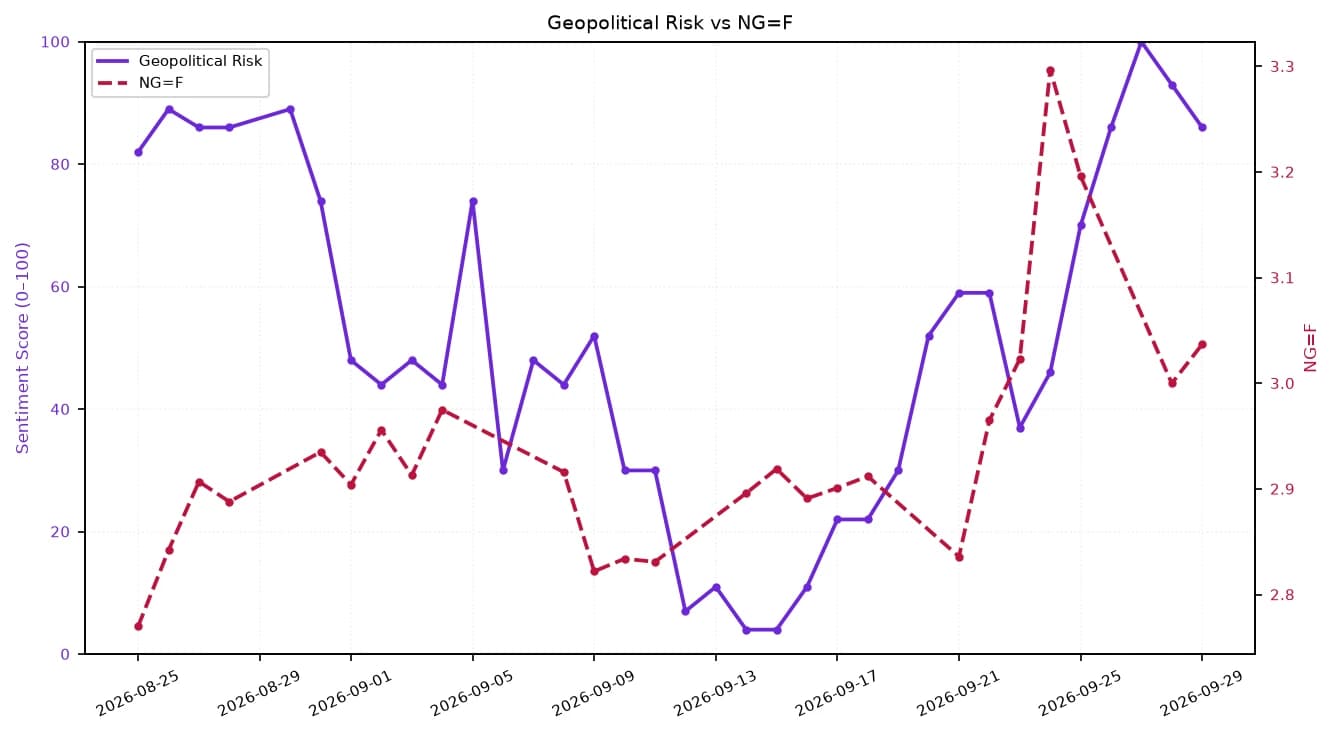
Sentiment IndicatorsⓘProprietary · adalytica.com · September 29, 2026
This is a snapshot — live sentiment, awareness and momentum for 130+ markets update continuously in the dashboard.Open AlphaPulse
The vote matters because nuclear safety in Ukraine remains one of the clearest escalation channels in the conflict. Any incident at a plant would instantly raise the stakes for Kyiv, Moscow and NATO, while forcing investors to price in a sharper hit to regional power markets, insurance costs, industrial activity and broader European risk sentiment. Even without direct attacks, repeated air-raid alerts around nuclear sites keep that premium alive.
That is why the market still treats the war as a pricing engine, not just a diplomatic story. The latest IAEA resolution split the room: roughly a third of member states supported it, the United States abstained, and Russia, China and Iran voted no. That division underscores how difficult it will be to build any consensus around de-escalation, especially after Washington expanded sanctions pressure on Moscow and the Kremlin warned the measures will complicate peace talks.
For investors, the message is straightforward: the conflict is not fading into the background. It remains a catalyst for defense spending, a support for energy security trades, and a source of intermittent spikes in crude and gas volatility. The clearest beneficiaries are companies exposed to military rearmament, uranium supply chains and non-Russian energy infrastructure, while European importers, utilities and peace-sensitive cyclicals remain vulnerable to headline risk.
The price action in energy-linked funds shows how quickly this risk can reassert itself. Brent-linked exposure has already been sensitive to every fresh escalation, and uranium stocks have stayed bid as the market keeps assigning value to nuclear fuel security and alternative generation. The broader lesson is that geopolitical stress is now a durable part of the investment backdrop, not a temporary shock.
With sanctions tightening, diplomacy fraying and the IAEA still publicly focused on Ukraine’s nuclear sites, the war premium is likely to remain embedded in energy and defense markets. The best positioning is to stay overweight the security and infrastructure winners of this conflict while remaining wary of assets that still depend on a clean geopolitical exit.
| Entity | Gains | Losses |
|---|---|---|
| Defense contractors | ▲Higher rearmament demand | ▼Peace dividend |
| Uranium and nuclear fuel suppliers | ▲Energy-security demand | ▼Policy complacency |
| Brent-linked energy assets | ▲Geopolitical risk premium | ▼Stable supply expectations |
| European importers and utilities | ▲— | ▼Higher volatility and cost pressure |