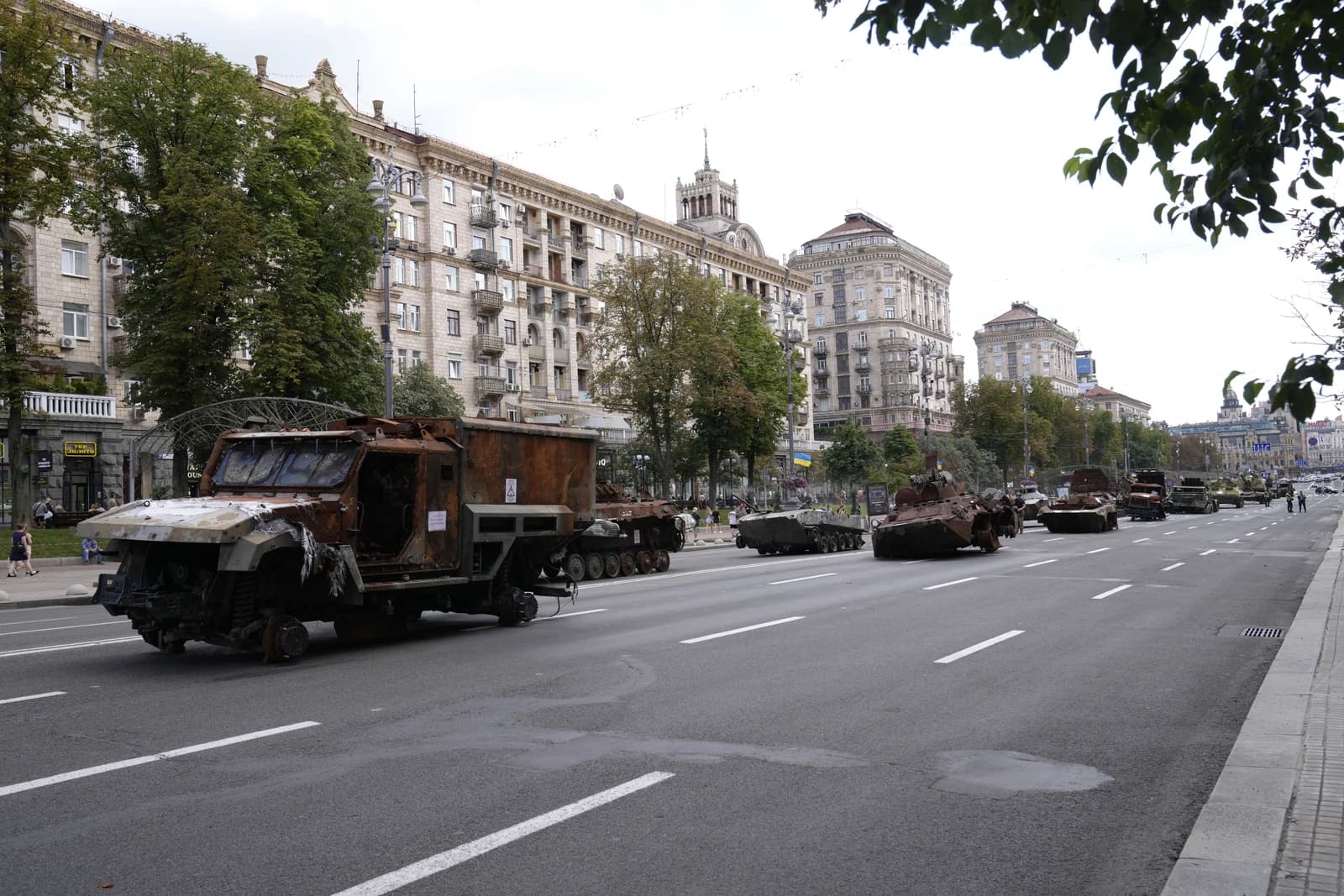
Russia’s defense ministry said it will intensify strikes on military and industrial targets in Kyiv and across Ukraine after President Volodymyr Zelensky’s latest public comments about ramping up attacks on Russia, a warning that underscores how quickly the war can spill into harder asset-price and security risk for Europe.
Russia says it will intensify strikes in Ukraine
For investors, the immediate issue is not just battlefield volatility. It is the second-order hit to European risk appetite, defense spending, energy security and transport routes if Moscow follows through with a broader campaign against Ukraine’s military-industrial base and supporting logistics. That keeps a premium under regional risk assets and reinforces demand for defense exposure even as traders continue to treat the conflict as a headline-driven event.
The ministry said Russian forces would increase “the intensity” of strikes on defense enterprises and army positions in the Ukrainian capital and in other regions, along with “all the accompanying logistics and support base” of the adversary. Moscow framed the escalation as a response to Zelensky’s statements, arguing that responsibility for the stronger attacks lies with Kyiv’s leader.
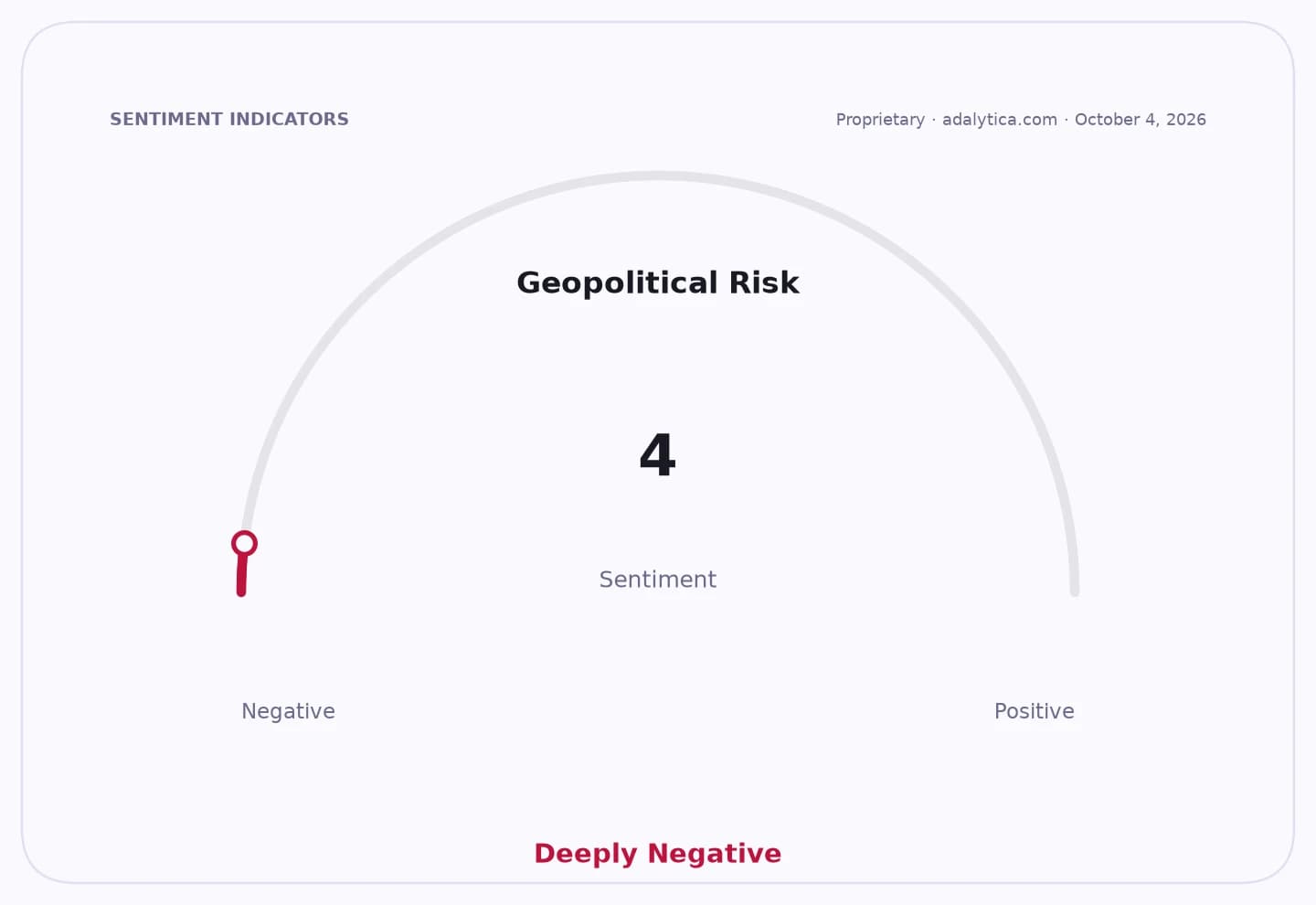
The market backdrop is already wary. Adalytica’s Global Stability Sentiment gauge shows “Extreme Fear,” with the latest reading collapsing to 4 from 86 just two days earlier, a sign that geopolitical stress is once again overwhelming risk tolerance. That kind of shock does not stay confined to the front line; it feeds directly into volatility in European defense names, energy traders, shipping routes and broad emerging-market sentiment.
Geopolitical Risk — 30-day sentimentadalytica.com
Explore this data interactively — full history, time series and cross-market comparisons.Open AlphaPulse
Ukraine-focused equities are likely to remain hostage to that dynamic. EWU, the iShares MSCI United Kingdom ETF, has held above its 200-day moving average, but the recent pullback and softer momentum readings show how quickly geopolitical anxiety can dent risk assets even outside the war zone. By contrast, broad emerging-market exposure through EEM has regained altitude and remains above both its 50-day and 200-day moving averages, but that resilience could be tested if the conflict deepens and drives another round of sanctions, supply disruptions or energy shocks.
The trade here is straightforward: the market still underprices how persistent this war can be and how often it can force capital back into defense, cybersecurity, energy infrastructure and other geopolitical hedge themes. If Russian strikes broaden further, the next beneficiaries are likely to be the same companies and funds tied to munitions, air defense, satellite intelligence and military logistics, while the losers remain Ukrainian assets, Europe-sensitive cyclicals and any portfolio positioned for a fast normalization in regional risk.
For investors, the actionable takeaway is to stay long the defense-and-security complex and keep a disciplined underweight on assets most exposed to Eastern Europe escalation. The war is not fading into the background; Moscow is telling the market the opposite.
| Entity | Gains | Losses |
|---|---|---|
| Defense contractors | ▲Higher procurement demand | ▼None directly |
| Energy and security hedges | ▲Safe-haven inflows | ▼Risk-off pressure elsewhere |
| Ukrainian assets | ▲— | ▼More strike risk |
| Europe-sensitive cyclicals | ▲— | ▼Geopolitical premium, volatility |