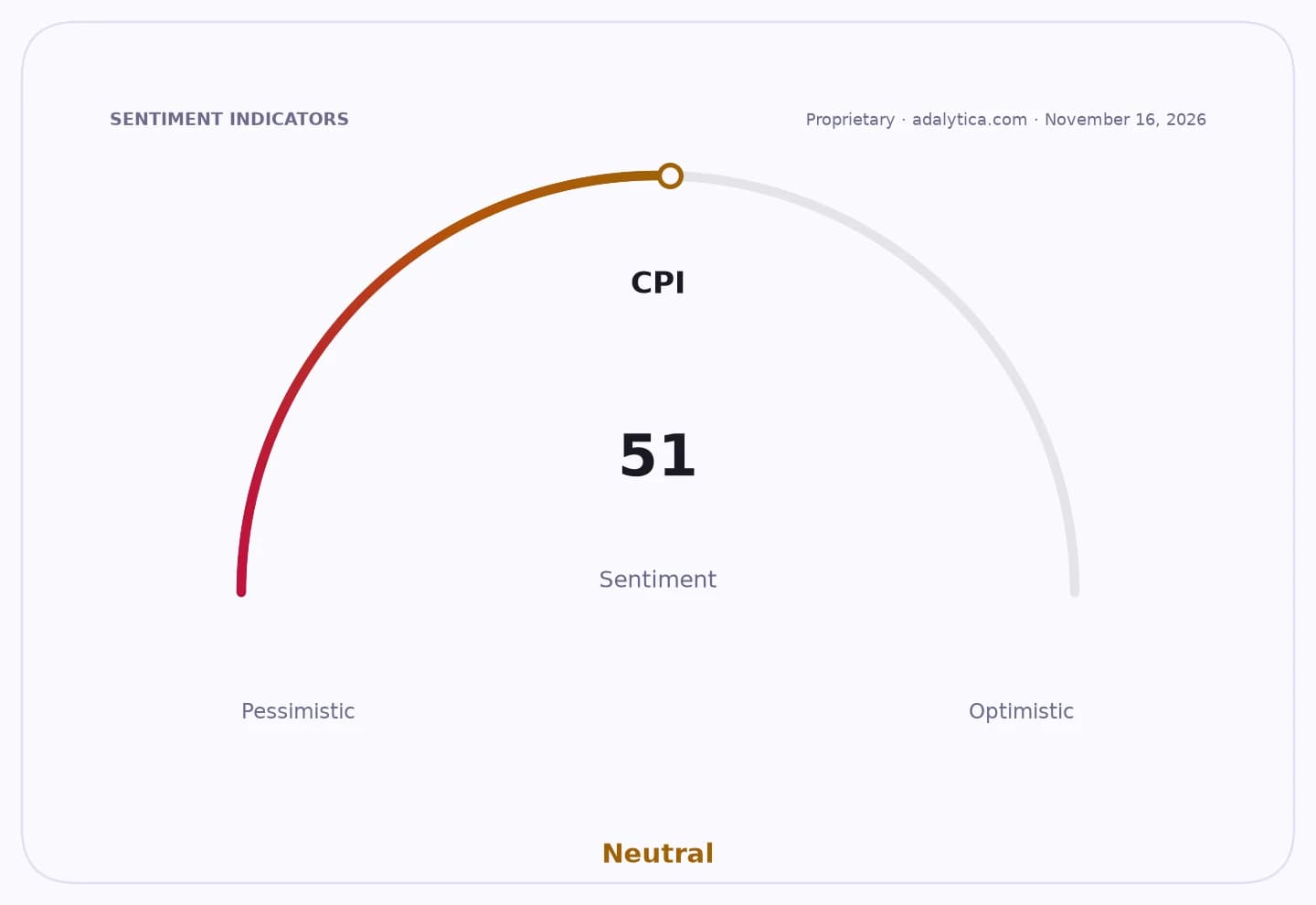
Germany’s producer prices surged 8.1% in October from a year earlier, a far hotter reading than expected and a warning that the next wave of inflation may already be building inside Europe’s largest economy.
Germany Producer Prices Rise 8.1% in October
That matters because producer prices tend to feed through to consumer prices with a lag, especially when energy and raw-material costs are doing the heavy lifting. October’s increase was the biggest since February 2023 and followed a 1.4% rise from September, suggesting pricing pressure is not a one-off spike but a renewed trend that could keep the European Central Bank on guard longer than markets want.
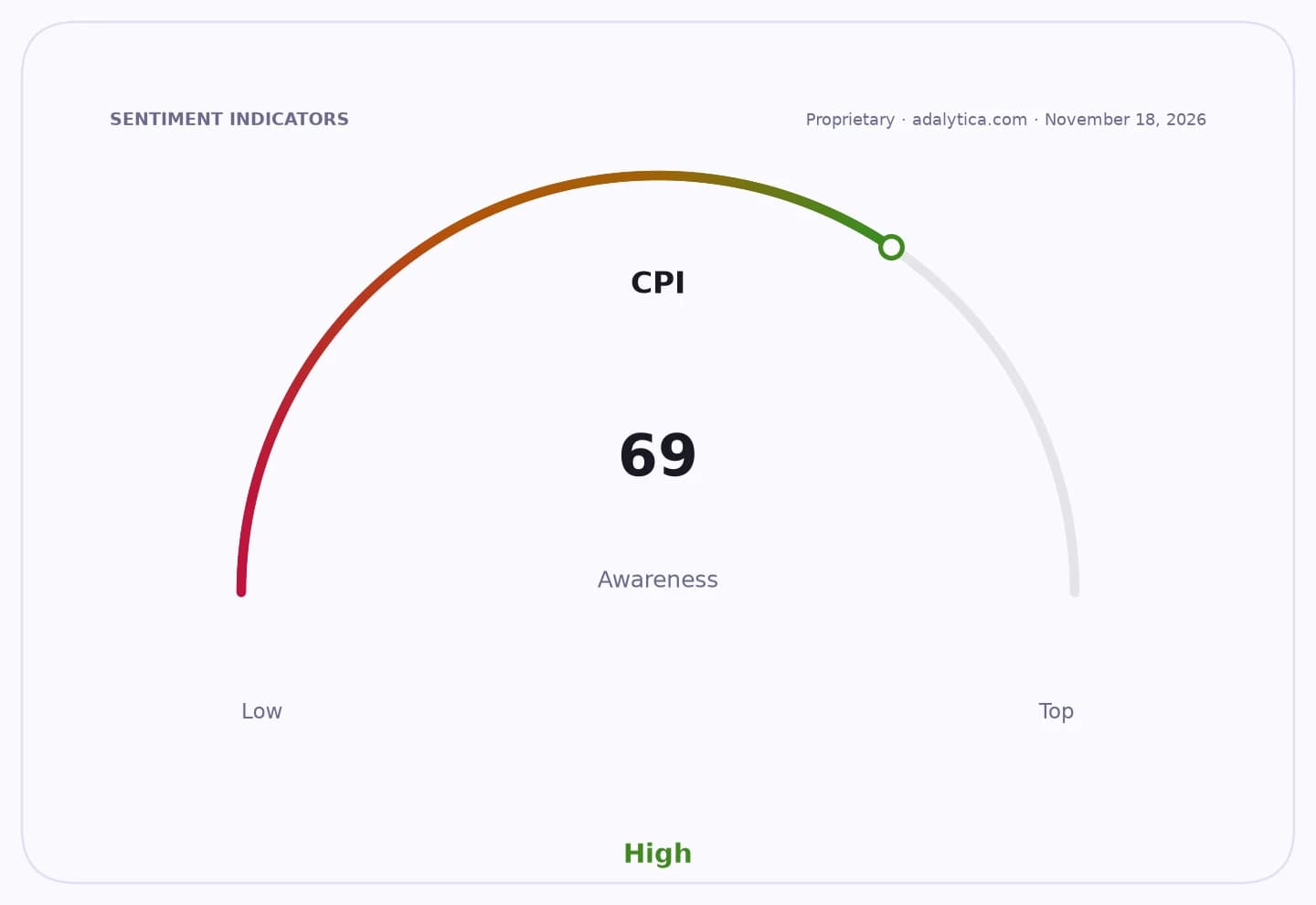
Sentiment Indicators
Economists had expected only a 7.3% annual gain, so the surprise is not just the level but the direction. The data point to a supply-side inflation impulse rather than a demand-driven rebound, with energy and commodities once again squeezing industrial margins and raising the odds that firms pass those costs on to households in the months ahead. For policymakers, that complicates any argument for faster easing. For investors, it raises the risk that the inflation trade stays alive well into 2027.
The market implications are immediate. Higher inflation expectations tend to support shorter-duration inflation hedges and keep pressure on nominal yields, while also making inflation-linked assets more attractive. In the U.S. market, the recent firmness in Treasury Inflation-Protected Securities has already reflected that concern: TIPS ETF flows and pricing have been stabilizing as traders reassess how sticky inflation may be. Meanwhile, the dollar has also shown renewed strength, a sign global investors are still reaching for safety when inflation surprises upward.
What the market may be missing is that this is not just a German story. Germany sits at the core of Europe’s industrial pricing system, and when input costs climb there, the effects can spread through supply chains across the region. That is especially important for energy-intensive manufacturers, retailers and transport firms that have less room to absorb costs if consumer demand weakens. If producer inflation keeps accelerating, central banks will have to choose between growth and credibility — and in a late-cycle world, that is rarely a benign trade-off.
For investors, the asymmetric opportunity is in owning assets that benefit from sticky inflation and higher-for-longer rates, while being selective on rate-sensitive growth and margin-compressed cyclicals. Inflation-linked bonds, commodity-linked equities and quality energy and materials names are the natural hedges. The risk is that the consensus is still too optimistic about how quickly inflation rolls over. If producer prices are re-accelerating now, 2027 may not bring the disinflation relief many are pricing in today.
| Entity | Gains | Losses |
|---|---|---|
| TIPS / inflation-linked bonds | ▲Higher inflation protection | ▼Nominal bonds |
| Energy and materials producers | ▲Pricing power | ▼Industrial consumers |
| Central banks | ▲Less credible if they delay | ▼Growth-sensitive borrowers |
| Retailers and manufacturers | ▲— | ▼Margin compression |