Italian inflation-linked government bonds remain the key portfolio defense as inflation is still running above the European Central Bank’s target and long-dated yields have climbed back toward levels that can punish the unprepared.
Italy inflation-linked bonds and yield risk
The central issue for investors is not whether inflation risk has vanished, but which part of the sovereign curve offers the best trade-off between price protection, carry and duration. US consumer prices were still projected to rise 0.35% in November, while the latest CPI reading showed annual price levels at 337.476, up from 333.979 in May, underscoring that disinflation is uneven rather than decisive. At the same time, the 10-year US Treasury yield has moved to around 5.1%, a reminder that nominal rates can stay restrictive even as growth cools. The 10-year/2-year spread, meanwhile, has only barely turned positive, at 0.27 percentage point, signaling a market that still prices slower growth and a possible policy pivot rather than a clean landing.
Sentiment Indicators
For BTp holders, that mix matters because inflation-linked bonds can lose appeal when real yields rise faster than inflation expectations. In Europe, the same forces that lifted global sovereign yields — sticky services inflation, resilient labor markets and heavy debt issuance — also raise the hurdle for inflation-linked debt to outperform. Investors buying BTp inflation protection are therefore making a relative-value decision: they are paying up for certainty on purchasing power, but they must still absorb duration risk if yields keep climbing.
That is why selection matters more than the label “inflation bond.” Shorter-dated links offer less sensitivity to rate volatility and tend to be better suited for investors worried about near-term inflation persistence. Longer-dated securities give greater convexity to surprise inflation, but they are also far more exposed to a further rise in real yields. In other words, the best hedge against inflation erosion is not necessarily the bond with the highest indexation, but the one whose maturity profile matches the investor’s liability and risk budget.
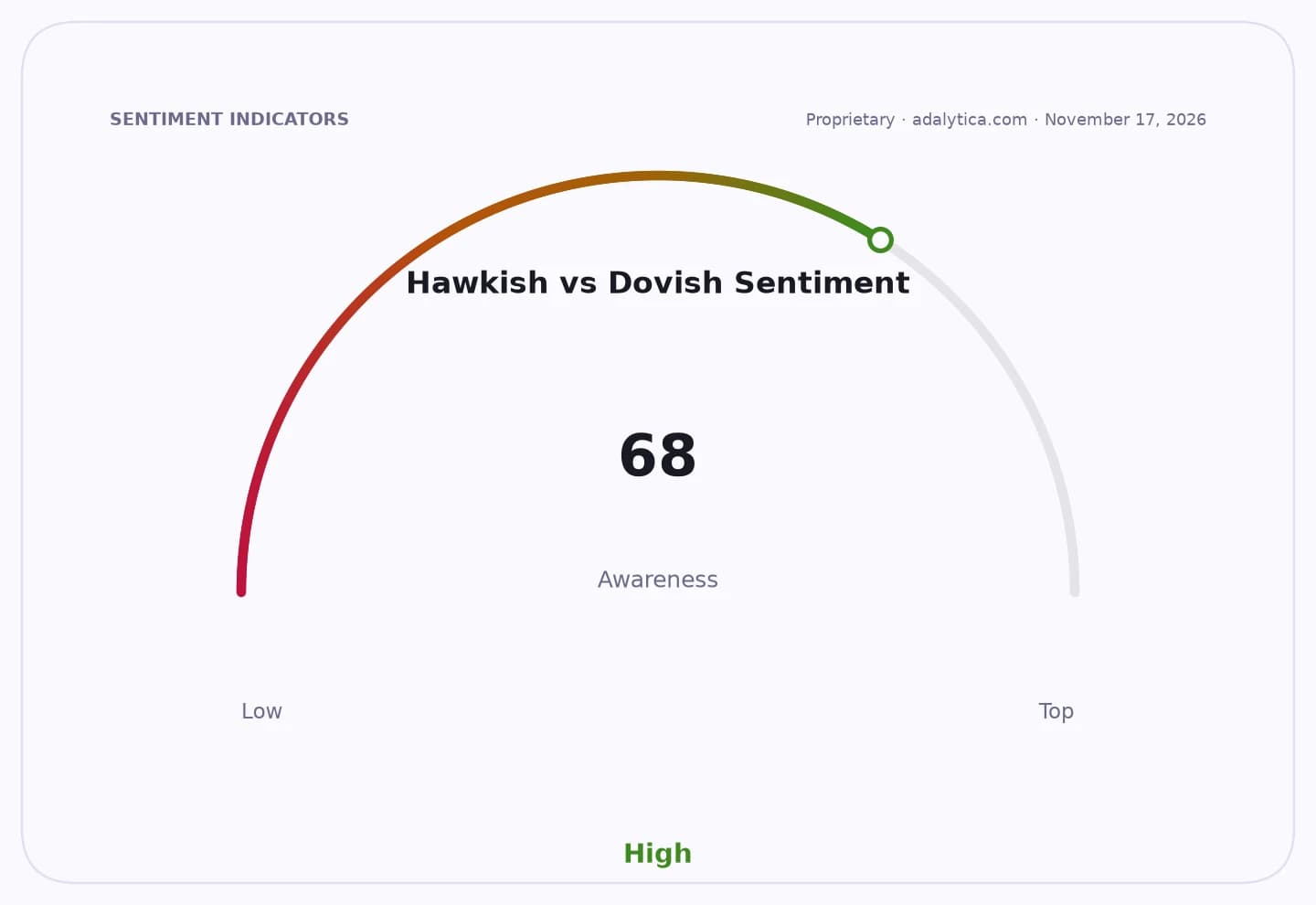
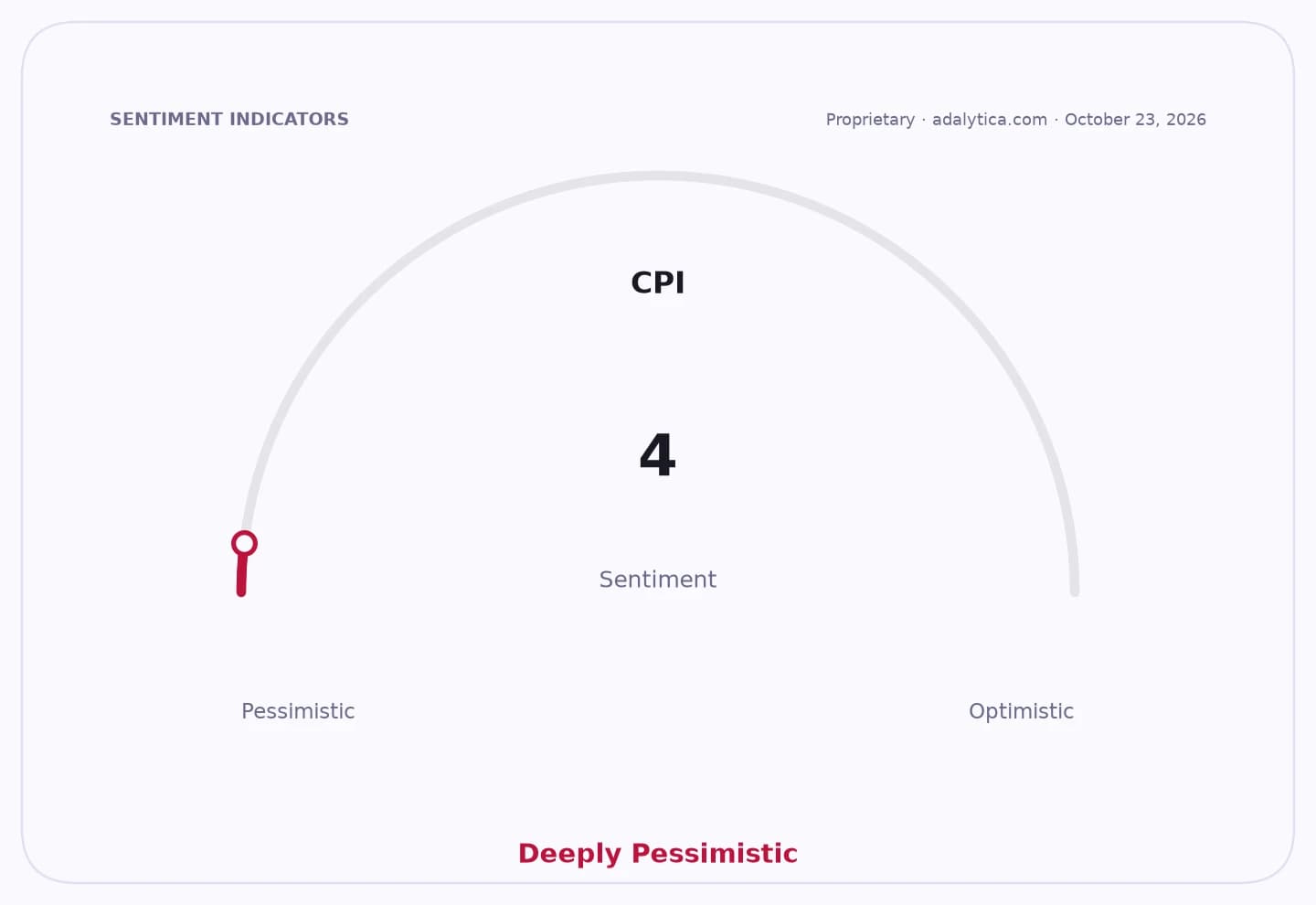
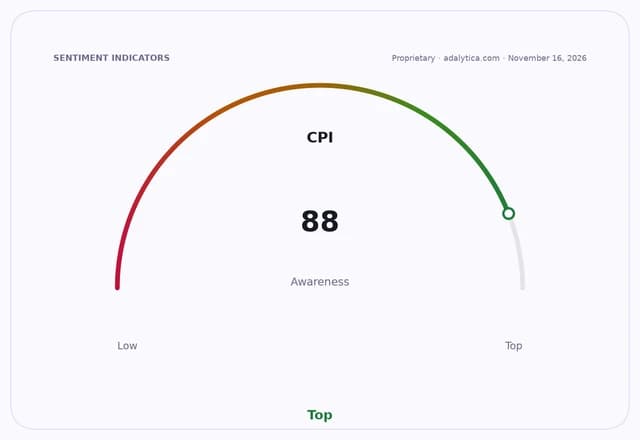
Adalytica’s CPI sentiment gauge is neutral at 51, but its awareness reading is at an extreme 88, suggesting inflation remains a heavily watched macro theme even as consensus sentiment cools. Consumer spending sentiment has collapsed to 4, in extreme fear territory, which points to a demand backdrop that could eventually damp price pressure. That combination leaves a split case for inflation-linked sovereigns: bulls can argue that sticky price dynamics and still-elevated nominal yields support the hedge value, while bears can point to weakening consumption and the risk that real yields stay punitive.
For investors, the message is straightforward: BTp inflation protection is still relevant, but it is no longer a simple buy-and-forget trade. Portfolio construction should favor the part of the curve that balances inflation linkage with duration discipline, because the main risk now is not only inflation erosion, but also mark-to-market losses if sovereign yields remain elevated.
| Entity | Gains | Losses |
|---|---|---|
| BTp inflation-linked buyers | ▲Protection from price erosion | ▼Higher duration risk |
| BTp nominal bondholders | ▲Potentially higher carry if yields fall | ▼Inflation erosion |
| Short-dated linkers | ▲Lower rate sensitivity | ▼Less upside from surprise inflation |
| Long-dated linkers | ▲Stronger inflation convexity | ▼Greater mark-to-market volatility |