Beth Hammack is signaling that the Federal Reserve should keep the option of another rate increase on the table, arguing that companies appear increasingly willing to pass higher costs on to customers — a sign inflation risks may still be sticky enough to justify a cautious, gradual tightening bias.
Fed Hammack Keeps Rate Hike Option Open
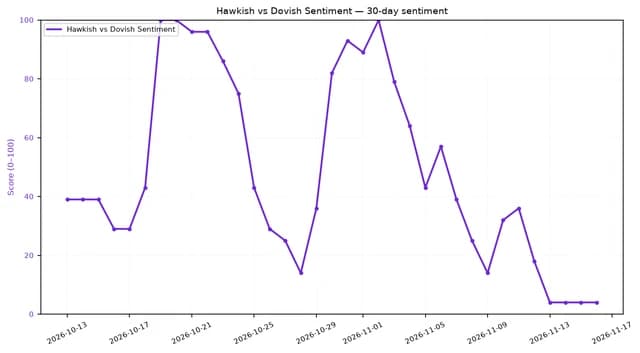
Hawkish vs Dovish
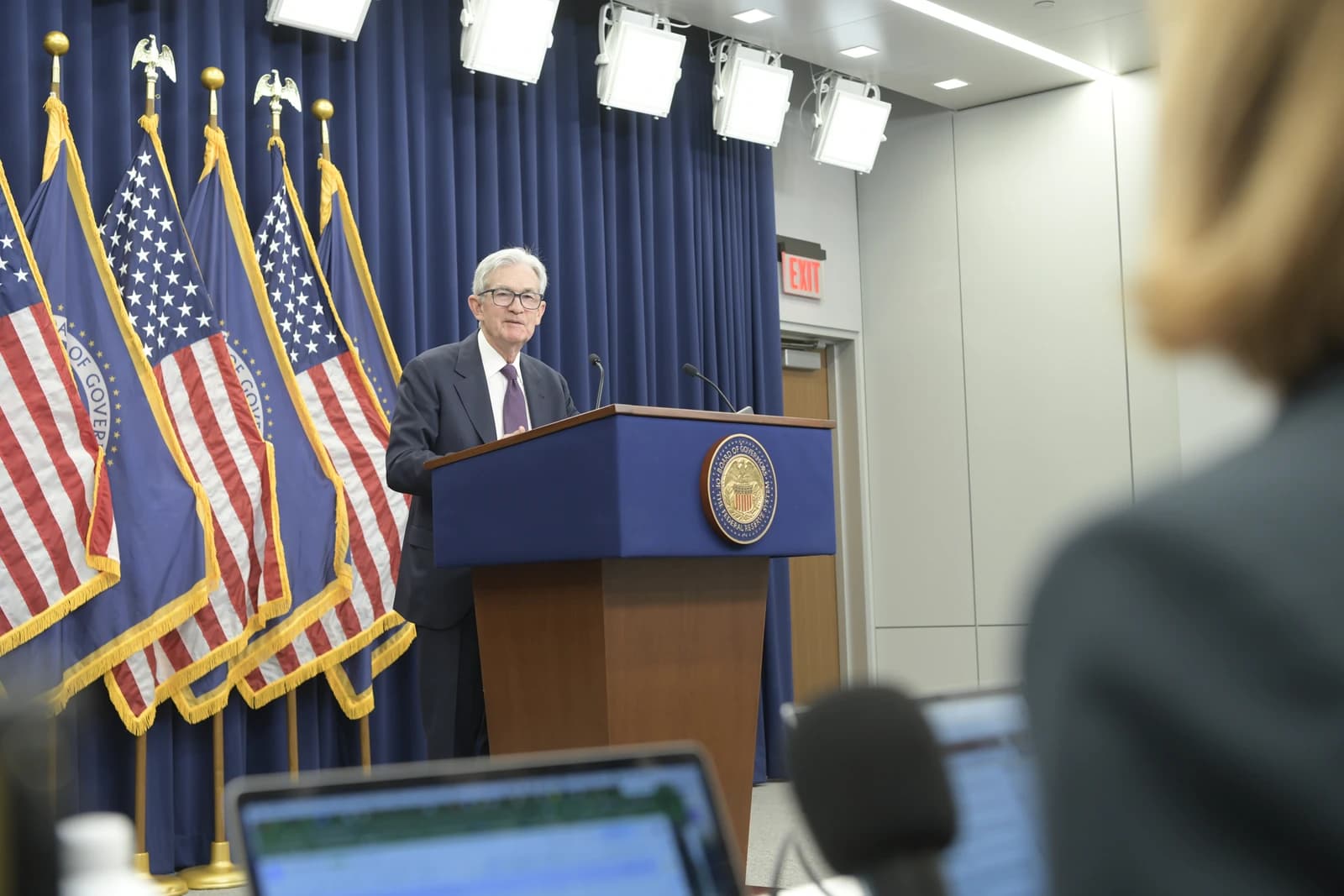
The Cleveland Fed president, who dissented at the Oct. 28 policy meeting in favor of a quarter-point hike, said in a Bloomberg Television interview that businesses were showing greater inclination to raise prices. Her comments matter because they suggest some Fed officials still see insufficient evidence that inflation is fully contained, even after the central bank held its target range at 3.75% to 4.00%.
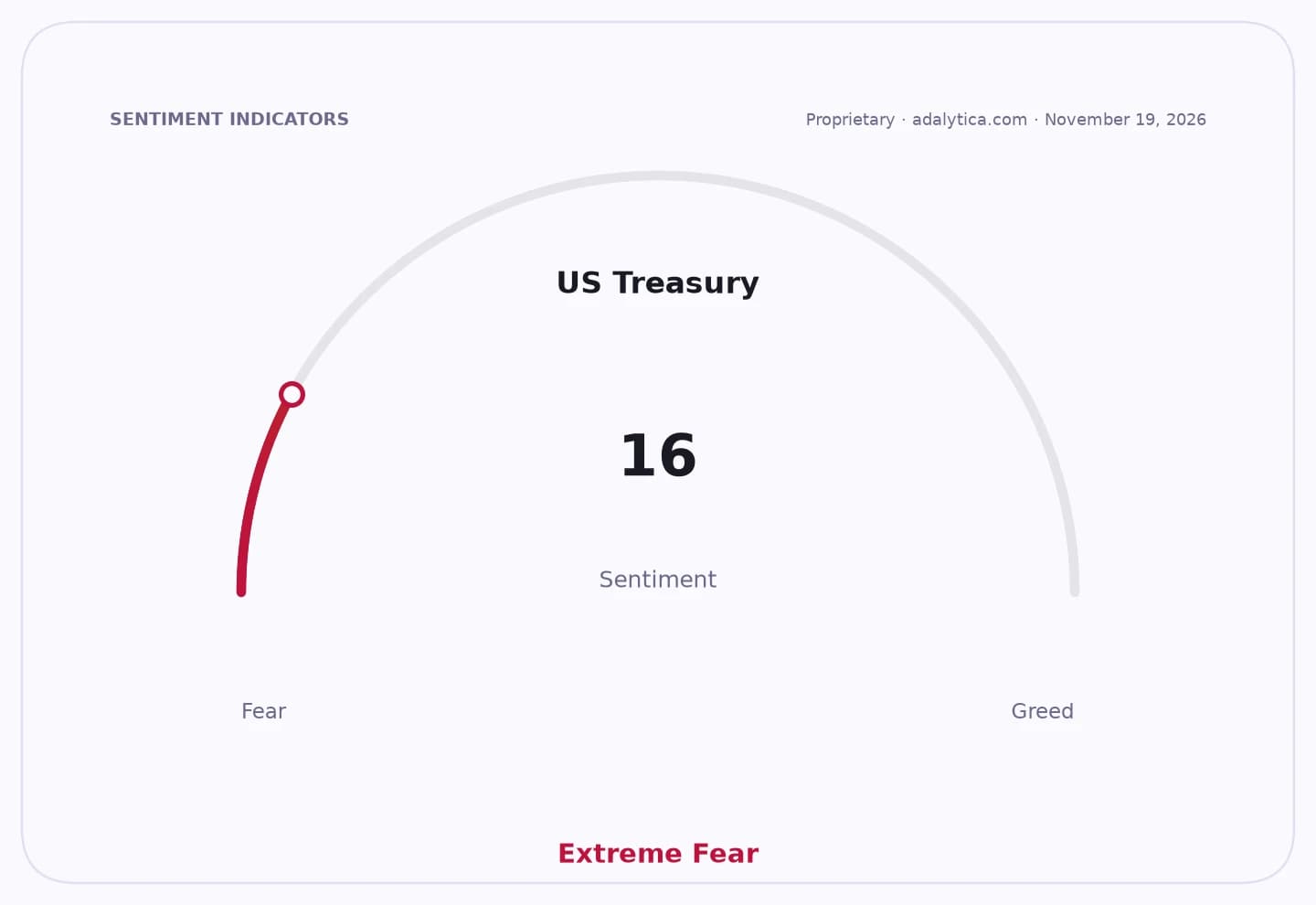
Sentiment Indicators
Hammack’s stance is economically significant because it goes to the heart of the Fed’s next step: whether policy is restrictive enough to keep inflation on a path back to 2% without choking growth. The October consumer price index rose 0.4% from September, after a 0.6% increase the prior month, while core CPI climbed 0.3% for a third straight month. Though the CPI is not the Fed’s preferred gauge, the readings reinforce the view that price pressures have not vanished and that businesses may still have room to defend margins by lifting prices.
That dynamic matters for the broader economy because wage growth, services inflation and firms’ pricing behavior tend to feed on each other. If companies can continue to raise prices without losing customers, the disinflation process slows and the Fed faces a harder trade-off between restraining demand and protecting the labor market. Hammack also said last week that policy should move into restrictive territory to bring inflation back toward target, underscoring that her argument is not for aggressive action, but for keeping pressure on inflation with measured hikes.
For investors, the implications are straightforward: a more hawkish tilt from even a regional Fed president supports higher-for-longer rate expectations, which can keep Treasury yields elevated and limit upside in duration-sensitive assets. Long-end government bonds have already reflected that risk, with the 10-year Treasury yield trading around 5.15% in recent sessions, while the iShares 20+ Year Treasury Bond ETF has weakened and remains below both its 50-day and 200-day moving averages. Equity markets have also been vulnerable to rate volatility, with the SPDR S&P 500 ETF slipping and its relative strength cooling after a strong run earlier this year.
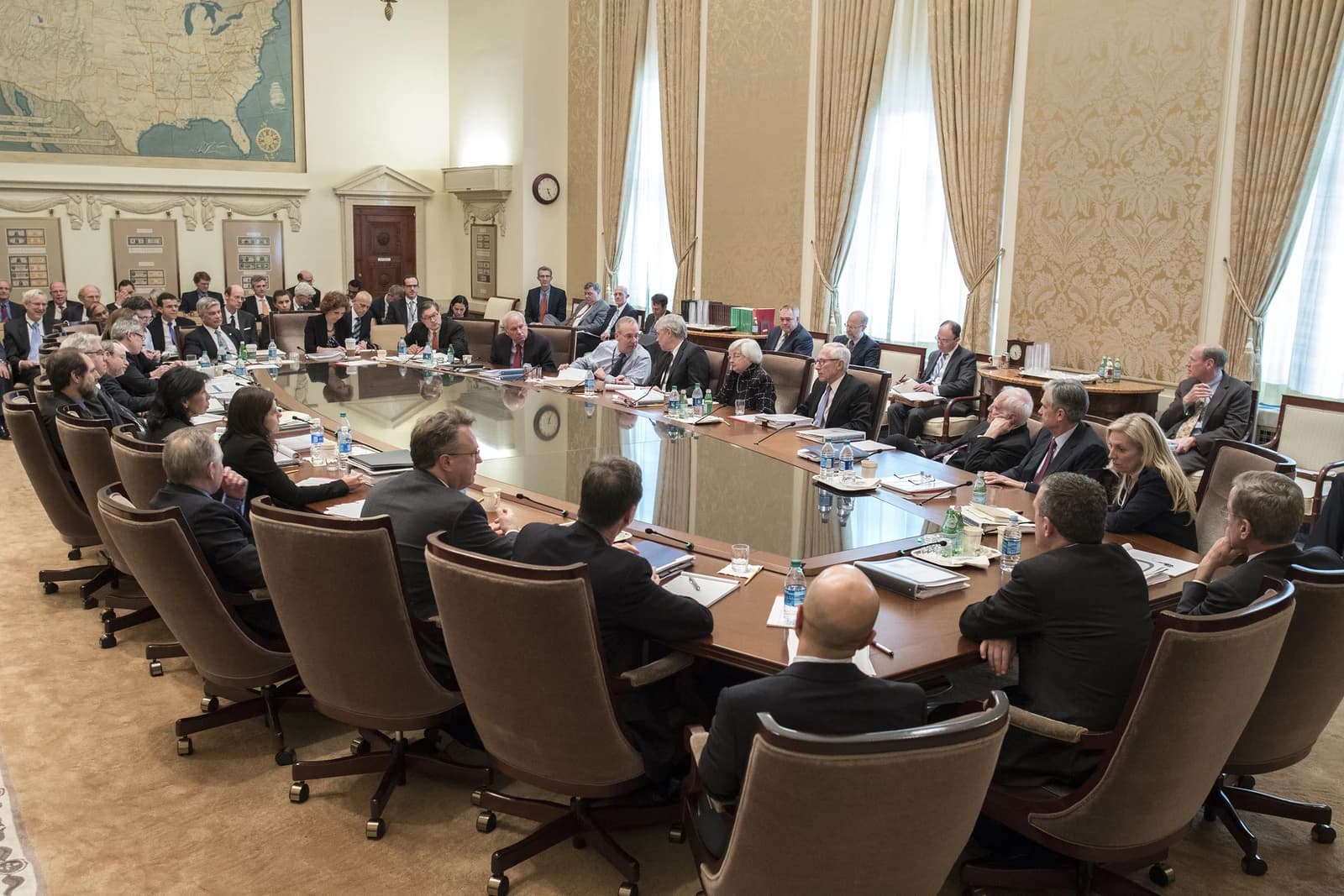
The split inside the FOMC also matters. Hammack and Governor Lisa Cook both dissented at the latest meeting in favor of a 25-basis-point increase, even as the majority held steady. That 10-2 vote does not signal a committee ready to accelerate tightening, but it does show that some policymakers remain uncomfortable with the pace of disinflation. The Fed’s next meeting on Dec. 8-9 will therefore be watched for any shift in the balance of opinion, especially if upcoming inflation data continue to show firms retaining pricing power.
For now, Hammack’s message is that the Fed should not declare victory too early. If companies keep pushing through price increases, gradual hikes could remain on the table longer than markets want to price in.
| Entity | Gains | Losses |
|---|---|---|
| Fed hawks | ▲Credibility on inflation fight | ▼Risk of tighter financial conditions |
| Borrowers | ▲Slower risk of abrupt shock | ▼Higher-for-longer rates |
| Treasury bond holders | ▲Some price support if growth slows | ▼More yield pressure in near term |
| Companies with pricing power | ▲Better margin protection | ▼Consumers facing higher prices |