Germany’s industrial heavyweights are forming a joint raw-materials trading house as Berlin pushes companies to reduce their exposure to China and secure supplies for autos, electronics and defense.
Germany industry plans raw materials trading house
The initiative, announced in Berlin with Foreign Minister Johann Wadephul, is designed to let 45 companies buy and trade raw materials together, with the German government expected to play a role. The group plans to formally establish the Deutsche Rohstoffhandelshaus, or DRH, in mid-2027.
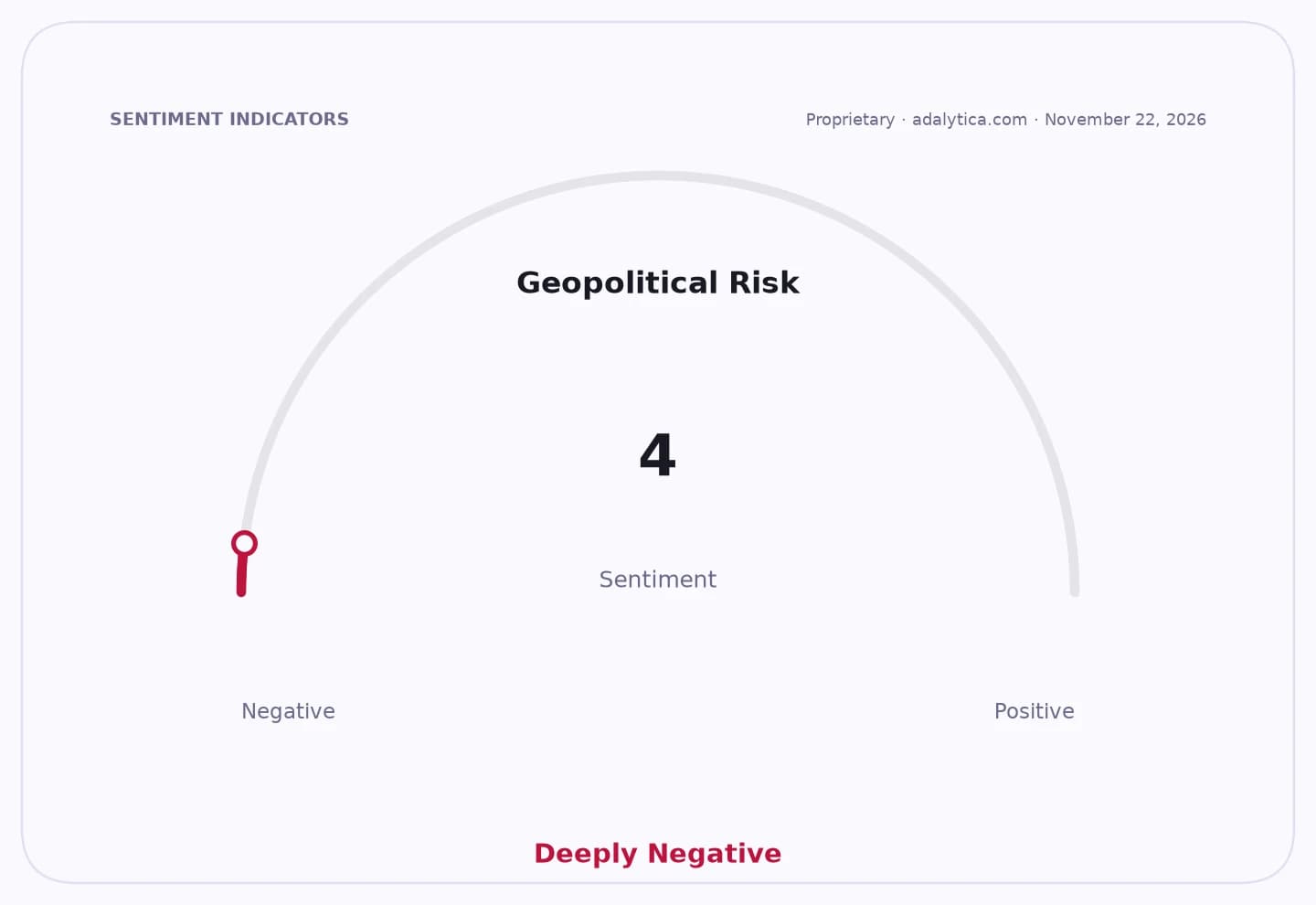
Sentiment Indicators
That matters because raw-material access has become a strategic and financial vulnerability for European manufacturers. China dominates supply chains for a wide range of critical inputs, and disruptions can quickly hit production, raise costs and force companies to carry more inventory or pay up for alternative sources.
By pooling demand, the participating companies want to strengthen bargaining power, reduce procurement risk and eventually coordinate stakes, offtake agreements and storage for strategically important materials. The model could also help German industry lock in longer-term supply at a time when geopolitical frictions are turning commodity access into a boardroom issue.
Wadephul said economic dependence had been “instrumentalized” and that it must be reduced “as quickly as possible,” underscoring how supply-chain resilience has moved from a corporate efficiency goal to an industrial policy priority. The initiative spans sectors including auto, electrical equipment and defense, all of which rely on secure access to metals and other critical inputs.
For investors, the move is a sign that Europe’s industrial base is preparing for a more protectionist raw-materials era. That could support non-China supply chains, storage operators and producers of strategic minerals, while pressuring buyers that remain exposed to spot-price spikes, logistics bottlenecks and policy shocks.
The plan is still months away from launch, but it adds momentum to Europe’s broader push to diversify critical supply chains. The main risk for markets is execution: building a credible buying consortium, securing state backing and negotiating supply contracts in a tight global market will be far harder than announcing the framework.
| Entity | Gains | Losses |
|---|---|---|
| German industry | ▲Better supply security | ▼Higher coordination costs |
| BMW and peers | ▲Stronger buying power | ▼Less flexibility in sourcing |
| Germany / Berlin | ▲Industrial resilience | ▼Fiscal and policy exposure |
| China-linked suppliers | ▲Lower leverage | ▼Lost demand concentration |