Germany’s economy is leaning harder on business and professional services than the market seems to appreciate, and that shift matters because it points to a more resilient, more scalable growth model than one tied only to manufacturing.
Germany's services shift favors enterprise infrastructure
The clearest signal is that the country’s Treasury-linked activity is now supported 70% by businesses and services, underscoring how much of the economic base is being carried by recurring corporate demand rather than one-off industrial cycles. That is important for investors because services-led growth tends to be stickier, less capital intensive and more supportive of earnings quality across payroll, payments, consulting, software and outsourced operations.
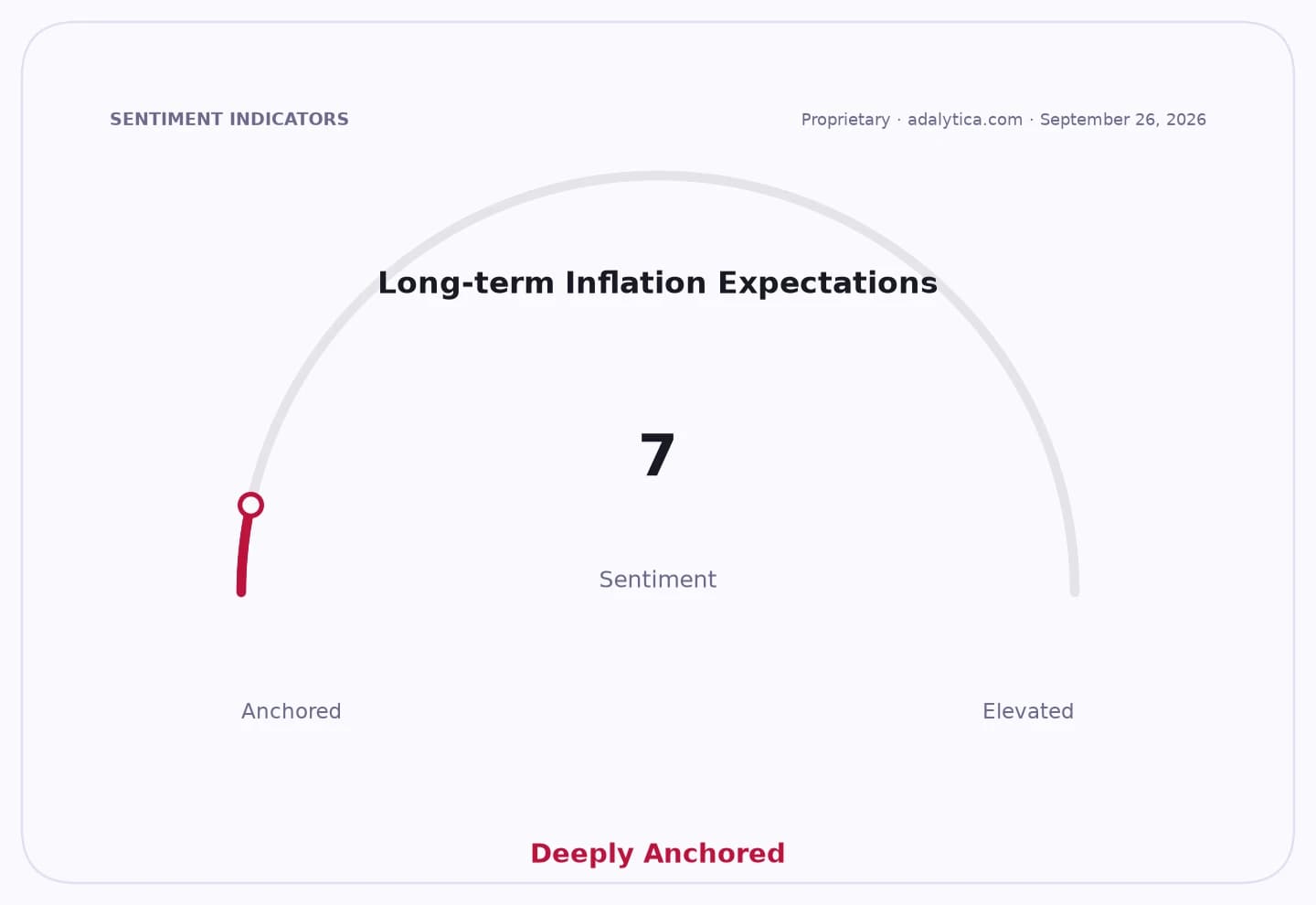
Sentiment IndicatorsⓘProprietary · adalytica.com · July 26, 2026
This is a snapshot — live sentiment, awareness and momentum for 130+ markets update continuously in the dashboard.Open AlphaPulse
The macro backdrop reinforces the thesis. Germany is rolling out roughly 150 measures to help startups and scale-ups, a policy push that should feed the same ecosystem of service providers, fintechs, HR software vendors and enterprise IT firms that benefit when entrepreneurship accelerates. At the same time, the wider European backdrop is still producing new-company formation in scale, with the Netherlands alone posting more than 56,000 new companies in the second quarter and particularly strong growth in specialist business services and ICT.
That kind of activity is exactly where the investable opportunity sits. Business services are the toll roads of the modern economy: every new company needs payroll, compliance, cloud migration, cybersecurity, payments and back-office support before it can scale. That makes names tied to enterprise services, staffing, digital payments and systems integration the most direct beneficiaries of Germany’s shift toward a more diversified growth model.
The market is already hinting at that rotation. Industrial stocks, tracked by XLI, have been volatile but remain above their 50-day and 200-day moving averages, while health care, through VHT, has been stronger on a technical basis. But the more interesting signal is in financials and service infrastructure: XLF has stabilized after a sharp spring selloff, and that matters because better business formation and higher service activity eventually flow through to credit demand, transaction volumes and fee income.
Adalytica’s S&P 500 Trade Signals still show extreme fear, which is exactly the kind of backdrop that can create the best entry points when the underlying economic story is turning constructive. Adalytica’s Treasury Purchase Sentiment Outlook also sits in fear territory, suggesting investors have not yet fully priced the durability of public-sector and corporate demand supporting Europe’s service economy.
I believe the market is underestimating how powerful this transition can be over the next several years. If Germany’s startup push translates into sustained business formation, the beneficiaries are not just the obvious venture-backed names — they are the picks-and-shovels providers: payroll processors, enterprise software platforms, IT consultants, cloud integrators and payment networks. That is where asymmetric upside lives.
For investors, the message is straightforward: buy the infrastructure of business creation, not just the headline growth stocks. In practice, that means favoring broad financial and industrial ETFs such as XLF and XLI for cyclical exposure, while selectively looking through to enterprise-service leaders and business-process beneficiaries that will compound as Germany’s service-heavy economy deepens.
The next catalyst will be whether the startup package converts into actual formation, hiring and spending rather than policy headlines alone. If it does, the winners will be the service providers that monetize each new company from day one, and the losers will be investors still waiting for old-economy industrial cycles to do all the heavy lifting.
| Entity | Gains | Losses |
|---|---|---|
| Business services firms | ▲Recurring demand | ▼Cyclical slowdowns |
| Startup ecosystem | ▲Easier scaling | ▼Higher barriers to entry |
| Payroll/IT/payment providers | ▲More customer volume | ▼Legacy industrials |
| Investors in old-economy cyclicals | ▲Less dependence on one sector | ▼Missed services-led upside |