Germany moved tanks and other armored vehicles to NATO drills in Lithuania by rail instead of by road, highlighting how closely Western militaries are managing the optics and risks of reinforcing the alliance’s eastern flank amid heightened tension with Russia.
Germany moves tanks to Lithuania by rail
The last-minute shift underscores the economic and security cost of Europe’s standoff with Moscow: even routine troop movements now require planning around potential escalation, logistics and political sensitivities inside NATO territory. German broadcaster Bild said the change was made to avoid unnecessarily provoking Russia with highly visible armored columns traveling through Poland toward Lithuania.
Sentiment Indicators
Sources cited by Spiegel said the original plan called for the 10th Armored Division to move by road, but the Bundeswehr opted for rail after consultations with NATO. The maneuver comes as the alliance steps up exercises to test rapid deployment and logistics in a real-world conflict scenario, while still trying to avoid actions that could be read as provocation.
The episode also reflects friction inside Europe over Germany’s military footprint in the east. Bild reported that some Polish right-wing lawmakers recently opposed the presence of German troops in Poland, adding another layer of political sensitivity to a deployment already shaped by the war in Ukraine and fears of miscalculation with Russia.
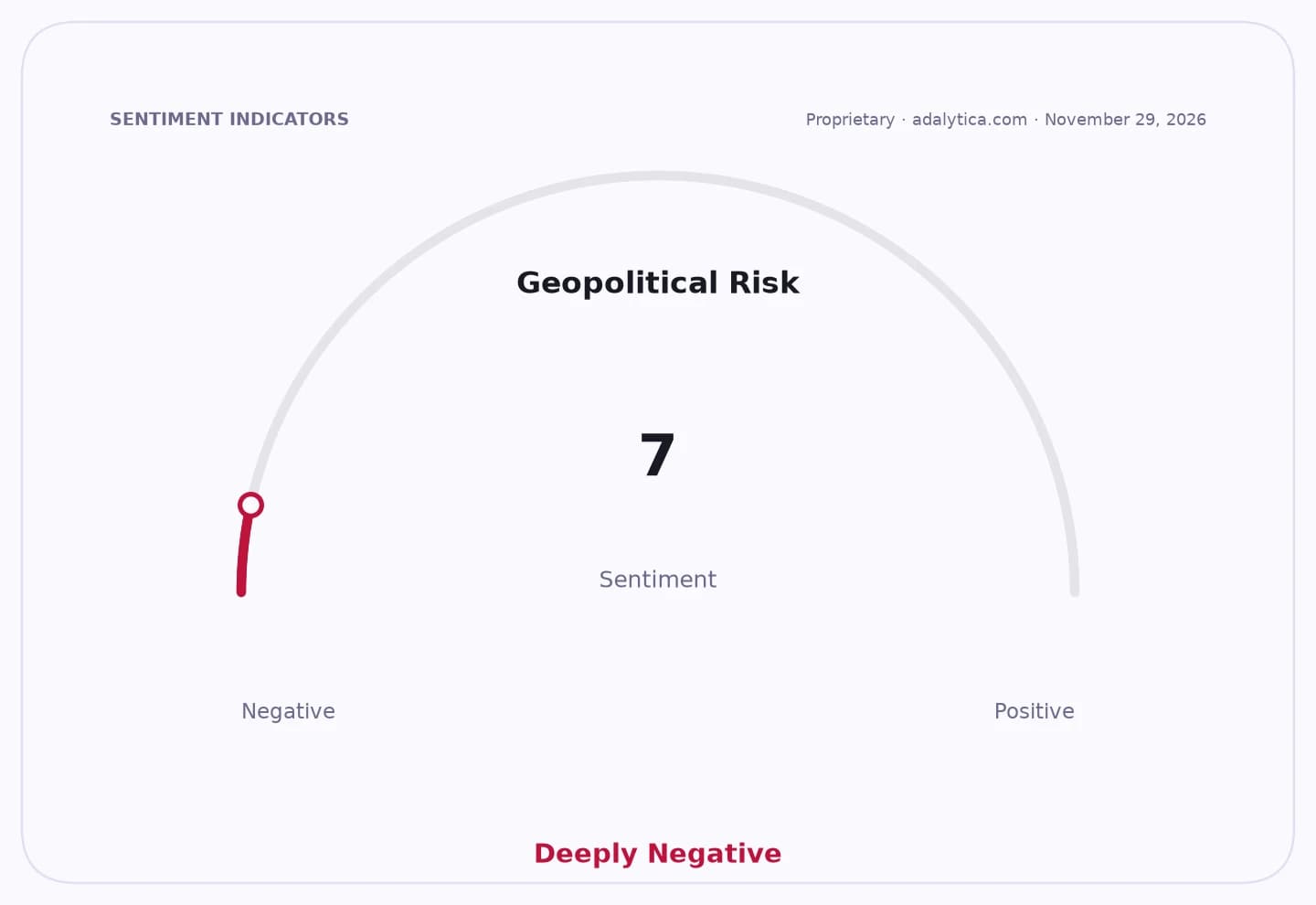
Geopolitical Risk — 30-day sentimentadalytica.com
Explore this data interactively — full history, time series and cross-market comparisons.
For investors in defense and security stocks, the broader message is that NATO rearmament is not easing. Companies such as Rheinmetall, which supplies armored vehicles and other military systems, remain tied to a long-running buildup in Europe, even if day-to-day headlines can move sentiment sharply. Rheinmetall shares were last around 791.1 euros, far below their 50-day moving average of 919.96 and 200-day average of 1,174.04, reflecting recent volatility in the sector despite sustained defense spending demand.
The geopolitical backdrop remains the dominant driver. Adalytica’s Global Stability Sentiment gauge shows “Extreme Fear” at 7, down sharply from levels earlier this year, signaling that markets are still pricing a high risk of further escalation in Europe. Any fresh NATO-Russia incident, more troop movements, or new defense procurement orders could keep that risk premium elevated.
| Entity | Gains | Losses |
|---|---|---|
| NATO | ▲stronger deterrence posture | ▼lower room for missteps |
| Germany/Bundeswehr | ▲smoother deployment logistics | ▼visibility of eastward buildup |
| Russia | ▲justification for propaganda | ▼strategic surprise from NATO mobility |
| Defense contractors | ▲support for rearmament demand | ▼headline-driven volatility |