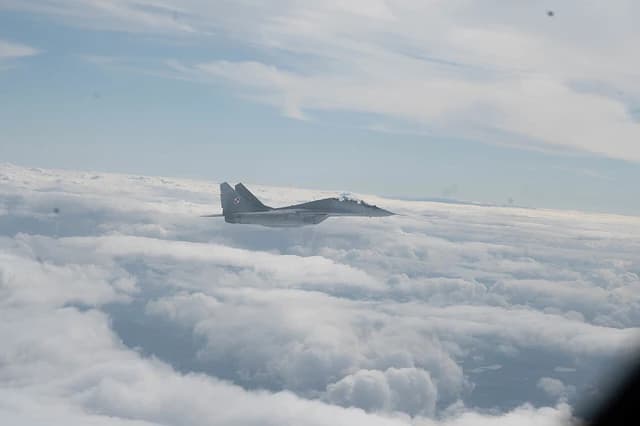
Poland has again accused Russia of violating its airspace, raising the risk of a sharper NATO response and keeping Eastern European risk assets under pressure.
Poland Accuses Russia of Airspace Violation
Warsaw said the latest breach follows earlier incursions by missiles and a drone, prompting it to summon the Russian ambassador and deepen scrutiny of its eastern border. Poland has also said it plans to create a no-fly zone along that frontier, underscoring how quickly the incident is turning into a broader security issue for the alliance.
Sentiment Indicators
The economic stakes are less about immediate damage than about the premium investors assign to regional stability. Repeated airspace violations increase the odds of tighter defense spending, more military readiness and sustained geopolitical friction, all of which can weigh on sentiment across Central and Eastern Europe.
That caution is visible in exchange-traded funds tied to Poland. The iShares MSCI Poland ETF, EWP, recently traded around $41, down from an October peak near $45 and below both its 50-day and 200-day moving averages, while RSI readings in the low 40s point to fragile momentum. The iShares MSCI Germany ETF, EWG, has also eased to about $40.52 from a November high of $43.50, with its own technicals still weak as investors assess spillover risk in Europe.
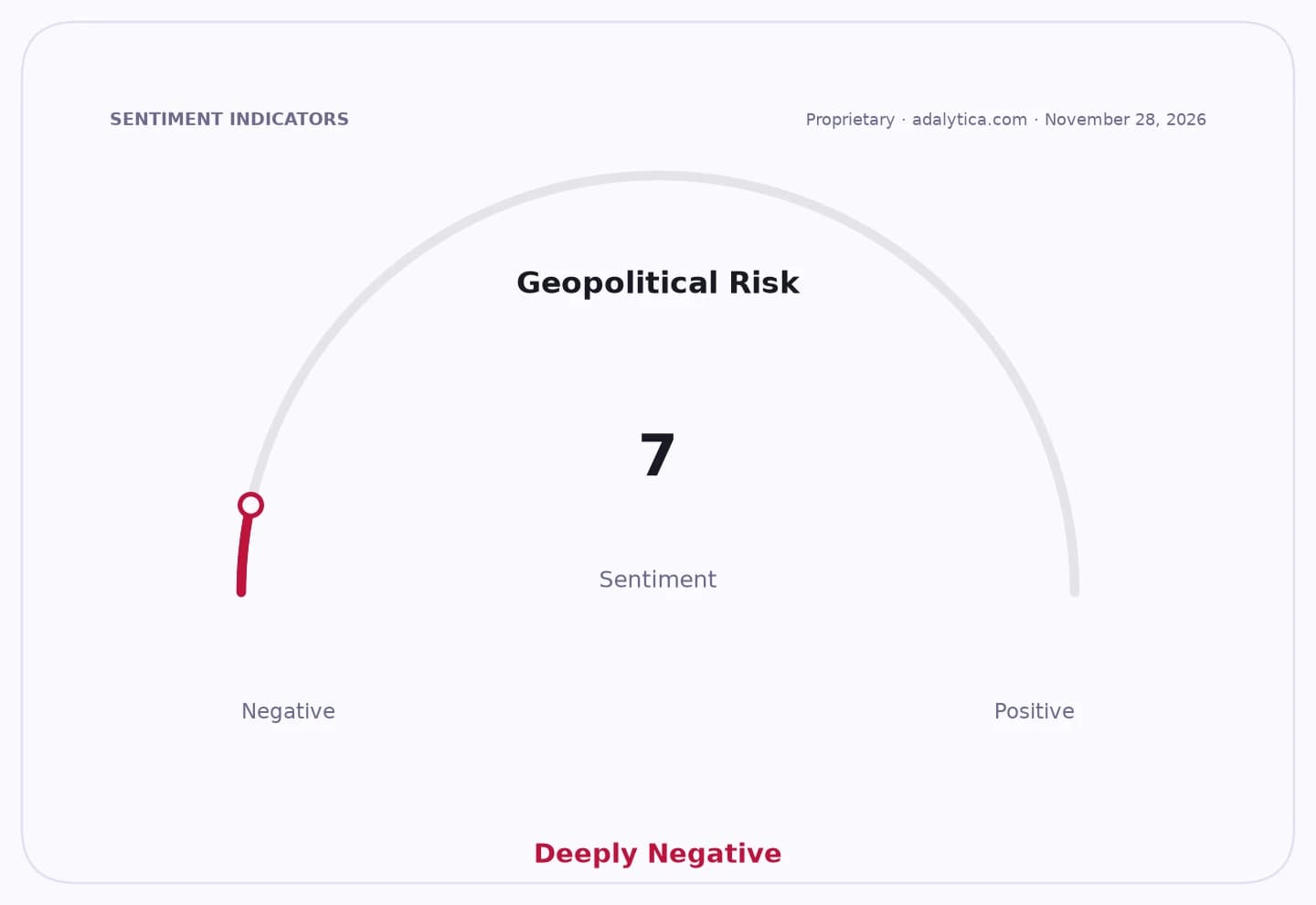
Geopolitical Risk — 30-day sentimentadalytica.com
Explore this data interactively — full history, time series and cross-market comparisons.
A broader gauge from Adalytica.com shows global stability sentiment at 7, marked “Extreme Fear,” after a 30-point jump in the latest day but a 93-point drop over the past month, highlighting how quickly geopolitical shocks can unsettle markets.
NATO’s next discussion of the incursions is likely to set the tone for any coordinated response, with investors watching for signs of escalation, tougher sanctions or a further lift in defense-related spending across the region.
| Entity | Gains | Losses |
|---|---|---|
| Poland / NATO | ▲stronger deterrence case | ▼higher security burden |
| Russia | ▲none | ▼diplomatic pressure |
| Defense contractors | ▲more demand potential | ▼broader market risk aversion |
| Poland ETFs / regional equities | ▲limited safe-haven inflows | ▼geopolitical discount |