The Bank of Ghana kept its policy rate unchanged at 14%, a sign that policymakers still see inflation as a live threat even as they wait to see whether recent price pressures prove temporary.
Ghana Holds Rates as Inflation Risks Persist
That matters because a rate hold in the face of rising global uncertainty is usually the central bank’s way of saying it would rather protect credibility than rush to ease. For Ghana, where inflation expectations can move quickly and financing costs still shape everything from borrowing to business planning, the decision suggests officials are prioritizing stability over stimulus for now.
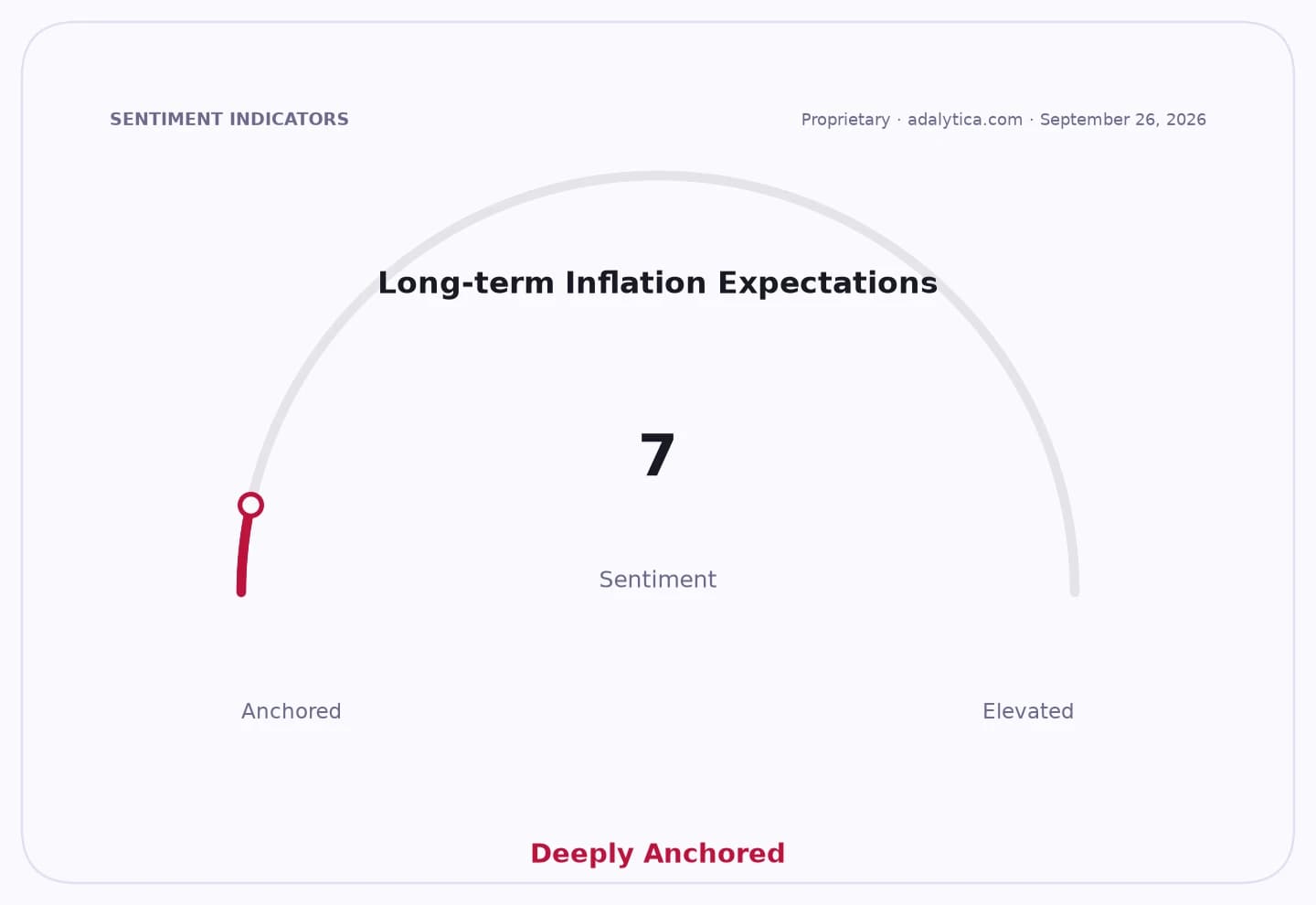
Sentiment IndicatorsⓘProprietary · adalytica.com · July 26, 2026
This is a snapshot — live sentiment, awareness and momentum for 130+ markets update continuously in the dashboard.Open AlphaPulse
The backdrop is not especially comforting. Escalating geopolitical tensions in the Middle East are feeding concerns about higher energy costs, and that can ripple through transport, food and imported goods prices. In other words, the inflation threat is not just local. It is the kind of external shock that can force central banks in emerging markets to stay cautious even when domestic growth would prefer lower rates.
For investors, the immediate signal is that Ghanaian assets may remain in a wait-and-see market. A steady policy rate can support the cedi and help anchor bond yields if traders believe the central bank is serious about containing inflation. But it also means borrowing costs are likely to stay elevated for companies and consumers, which can pressure earnings, slow credit growth and keep valuation multiples from expanding too quickly.
Bond investors, in particular, will read the decision as a commitment to defend real returns if inflation proves sticky. That is especially important when long-term inflation confidence is fragile, because once investors doubt a central bank’s resolve, they demand higher yields and shorter durations. Equity investors, meanwhile, should focus on businesses with pricing power, low leverage and hard-currency revenue, since those are the companies best positioned to weather a prolonged high-rate environment.
The broader narrative is familiar to long-term investors: central banks can pause, but they cannot declare victory too early. If global shocks ease and inflation cools, Ghana may eventually have room to cut. If not, this hold could be the first sign of a longer period of policy restraint. Either way, the message is simple — for now, inflation is still the problem, not the solution, and investors should keep that in mind when assessing Ghana’s bonds, banks and consumer-facing stocks.
| Entity | Gains | Losses |
|---|---|---|
| Bank of Ghana | ▲Credibility | ▼Growth support |
| Bondholders | ▲Higher real returns | ▼Rate-cut hopes |
| Cedi bulls | ▲Policy backstop | ▼Easier liquidity |
| Borrowers/consumers | ▲Stability later | ▼Higher financing costs |