Ukraine’s disclosure that Russia invited its negotiators to Moscow in February adds a new diplomatic wrinkle to a war that still shows no sign of a quick ceasefire, and that uncertainty is exactly why investors should keep treating geopolitical risk as a live macro trade.
GLD Holds Above 50-Day Average as Ukraine Talks Stall

The most important point is not the invitation itself, but what it says about the shape of the conflict: peace channels remain open behind the scenes, yet the gap between the two sides is still wide enough to prevent a breakthrough. Ukraine said the offer came after talks in Geneva and would have included the possibility of Russian President Vladimir Putin joining discussions, but the trip never happened and negotiations stalled soon afterward. Kyiv now expects any serious progress to be delayed until at least spring, while officials brace for another Russian winter campaign against energy and civilian infrastructure.
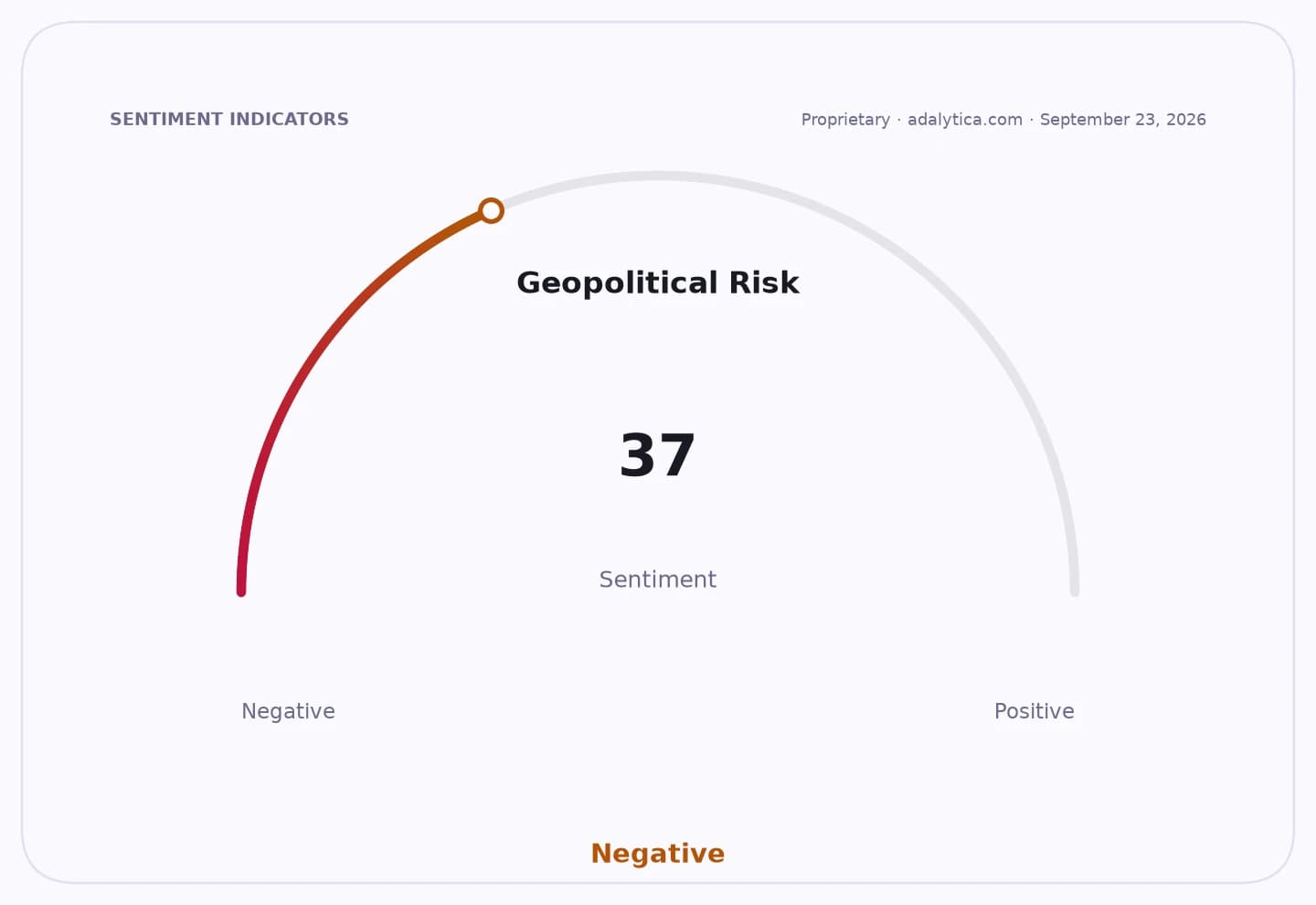
Sentiment IndicatorsⓘProprietary · adalytica.com · September 5, 2026
This is a snapshot — live sentiment, awareness and momentum for 130+ markets update continuously in the dashboard.Open AlphaPulse
That matters economically because this war continues to distort Europe’s energy security, inflation path and defense spending, while keeping commodity markets on edge. Even the possibility of talks can move prices at the margin, but the harder reality is that a durable settlement still looks distant. Ukraine says two core issues remain unresolved: control of the Zaporizhzhia nuclear plant and the future of territory in Donbass. Those are not cosmetic sticking points; they are the kind of disputes that keep sanctions, supply-chain risk and military spending elevated.
For investors, the message is that the war premium has not gone away. Gold is already trading as if geopolitical anxiety remains embedded in markets, with GLD near $406.77 after a violent run higher earlier this year. The metal has cooled from an overbought reading, with its 14-day RSI at 50.7 on the latest data, but the bigger picture is still constructive: the ETF remains well above its 50-day moving average of $388.88, and the broader bid for havens has been reinforced by the latest slide in Adalytica’s Global Stability Sentiment, which fell 4 points in a day and 41 points over the past week to a neutral 44.
Geopolitical Risk — 30-day sentimentadalytica.com
Explore this data interactively — full history, time series and cross-market comparisons.Open AlphaPulse
That combination is why I believe the market is underestimating the durability of the geopolitical hedge. If talks resume at the end of September, as Ukraine suggests, the headlines may briefly support risk assets. But unless Moscow and Kyiv move meaningfully closer on territory and security guarantees, the war will continue to favor gold, defense contractors, energy infrastructure plays and companies tied to rebuilding and grid resilience. The stronger trade is not betting on peace; it is positioning for a long, uneven process where every ceasefire rumor collides with the reality of winter strikes, stalled diplomacy and persistent strategic rivalry.
The actionable takeaway: stay long the assets that benefit from unresolved conflict, not from wishful thinking. Gold, defense and energy-security exposure remain the cleaner way to play this war until the diplomacy produces something more than another round of invitations.
| Entity | Gains | Losses |
|---|---|---|
| Gold / GLD | ▲Safe-haven demand | ▼Peace premium fades |
| Defense contractors | ▲Sustained budgets | ▼Ceasefire hopes |
| Ukraine infrastructure | ▲Rebuild need | ▼Winter strikes |
| Russia / Ukraine talks | ▲Diplomatic leverage | ▼Time, trust |