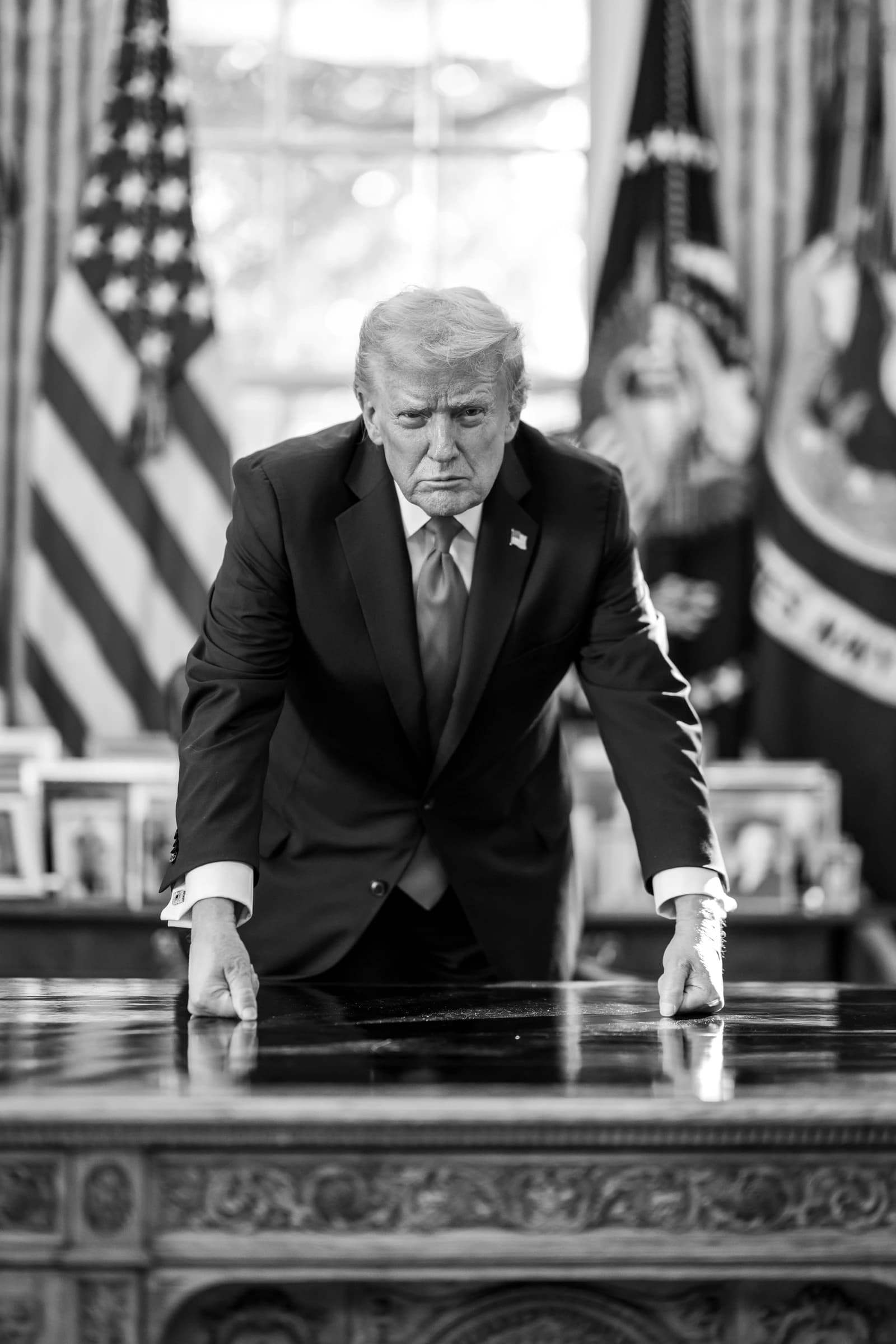
The White House’s renewed push for direct talks on Ukraine moved into sharper focus after the visit of Steve Witkoff and Jared Kushner, with the US reported to have relayed requests to both Moscow and Kyiv as Washington probes whether a negotiated path is still possible.
Ukraine talks and gold, oil market implications

That matters because any credible opening toward diplomacy would reshape the war’s economic and market risks far beyond the battlefield. A ceasefire or even a durable pause would affect European growth expectations, energy pricing, sanctions policy, sovereign risk premia and the defensive positioning that has kept gold near record territory.
The timing of the request, as described by The New York Times, suggests the administration is trying to turn a high-level visit into a working channel with both sides rather than a one-off political gesture. Putin has signaled openness to “concrete talks,” while Ukrainian officials have been leaning on Washington for renewed mediation and have shown more interest in discussing Russia’s frozen assets as part of any settlement framework.
For investors, the most immediate read-through is not a rapid peace dividend but a reassessment of tail risks. Gold has remained elevated, with SPDR Gold Shares trading around $406.77 on Sept. 4 after touching as high as $490 earlier this year, a sign that markets still assign meaningful value to geopolitical protection. The fund’s price has also stayed well above its 200-day moving average of about $415, underscoring that safe-haven demand has not disappeared even as the rally cooled from its peak.
Geopolitical Risk — 30-day sentimentadalytica.com
Explore this data interactively — full history, time series and cross-market comparisons.Open AlphaPulse
Oil is the other obvious channel. USO, the US Oil Fund, was trading at $141.96 on Sept. 4, roughly in line with recent highs and above its 200-day moving average of $107.49, reflecting a market that has not yet priced in a meaningful easing of conflict-related supply risk. Any progress in talks would likely pressure crude and narrow the premium embedded in refined products, though a failed diplomatic effort could just as easily reinforce it.
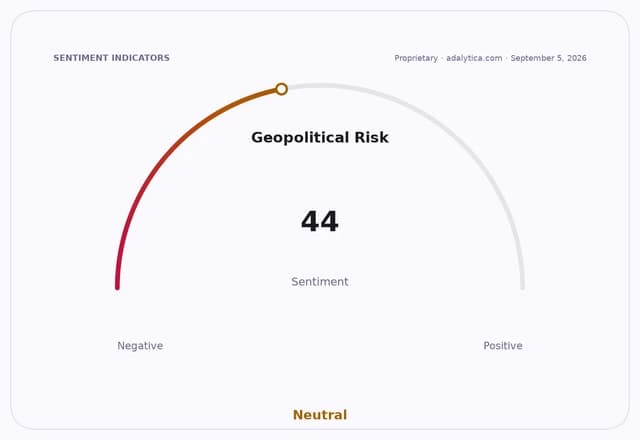
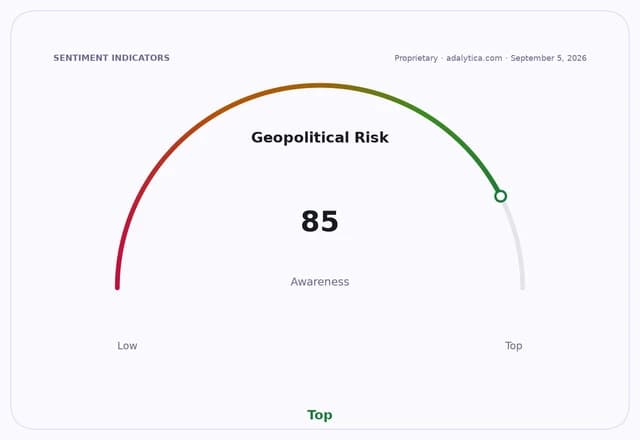
The broader macro significance is that the war has become not just a military contest but a standing test of the global risk regime. Adalytica’s Global Stability Sentiment index remains neutral at 44, but awareness is elevated at 85, suggesting investors and policymakers are highly attuned to the prospect of a shift even if confidence in a breakthrough is still limited.
The bull case is that the Witkoff-Kushner channel becomes the first serious diplomatic track in months and opens the door to discussions on ceasefire terms, asset freezes and phased sanctions relief. The bear case is that Moscow uses the process to buy time while fighting continues, leaving energy, defense and safe-haven trades intact.
For now, investors should treat the development as an early-stage policy signal rather than a settlement. But if Washington can sustain direct engagement with both Russia and Ukraine, the market implications would be broad: lower geopolitical risk premium, weaker defensive flows and a possible rotation into European cyclicals, while gold and oil would likely give back some of the war premium they still carry.
| Entity | Gains | Losses |
|---|---|---|
| Diplomacy/ceasefire hopes | ▲Higher odds of talks | ▼If negotiations stall |
| Gold holders | ▲Safe-haven demand | ▼Any credible peace progress |
| Oil bulls | ▲Conflict premium | ▼Easing supply-risk fears |
| Europe/Ukraine economy | ▲Lower risk premia | ▼Prolonged war uncertainty |