Global food prices climbed in August to their highest level since late 2022, reviving the risk that a fresh commodity shock will feed back into inflation, squeeze household budgets and keep pressure on policymakers and consumer stocks.
Global food prices hit highest level since 2022

The UN Food and Agriculture Organization said its food price index rose 1.9% from July, led by gains in cereals, sugar and dairy. The move matters because the index tracks internationally traded food commodities, meaning the effect on supermarket shelves usually arrives with a lag rather than immediately. But the direction is clear: markets are again tightening at a time when supply chains are already fragile.
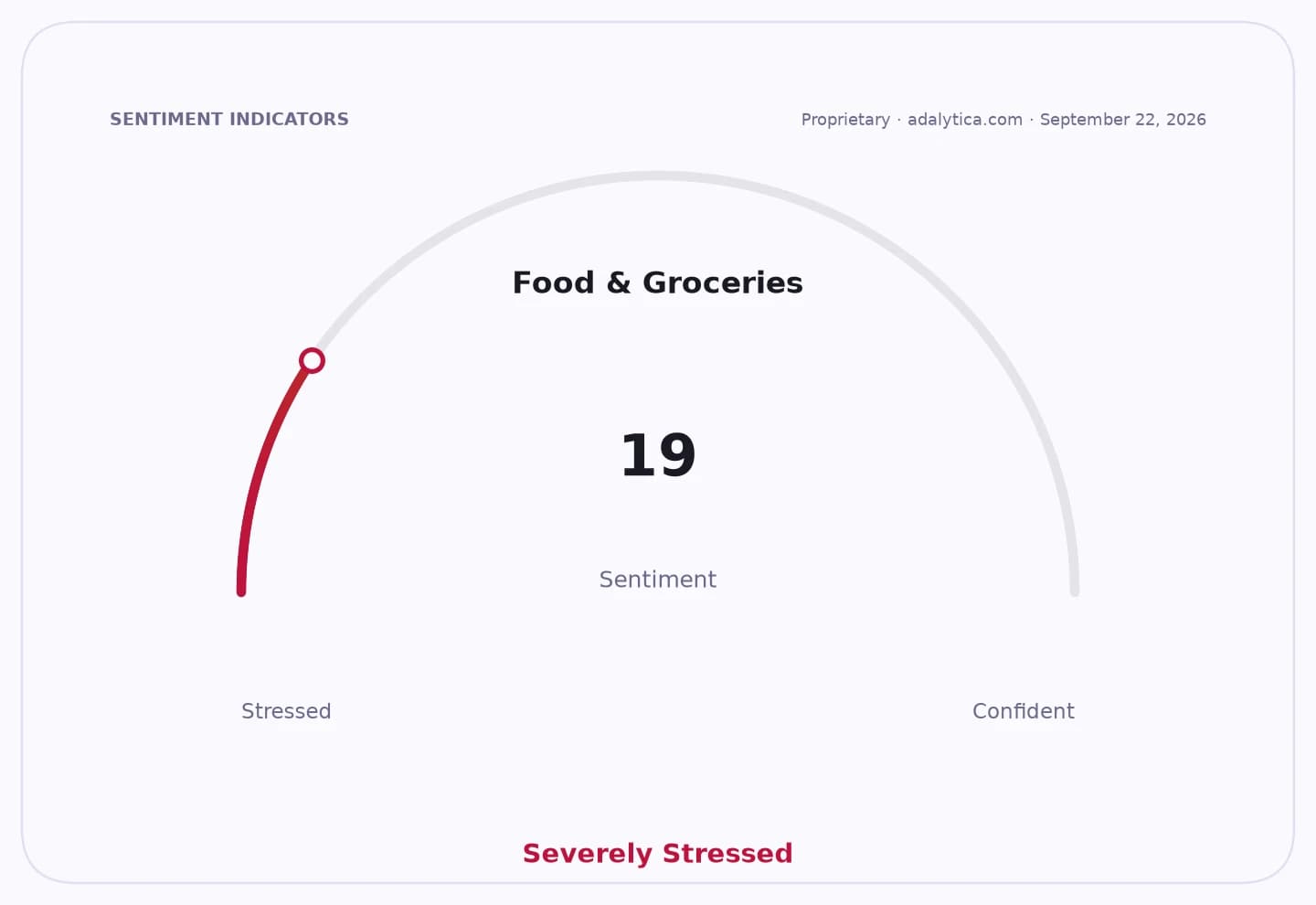
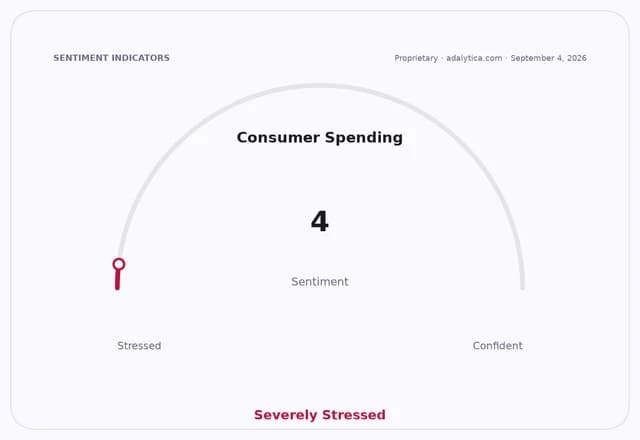
Sentiment IndicatorsⓘProprietary · adalytica.com · September 4, 2026
This is a snapshot — live sentiment, awareness and momentum for 130+ markets update continuously in the dashboard.Open AlphaPulse
The FAO reading underscores how quickly geopolitics and climate can interact to move a basic input for global inflation. War in the Black Sea region has intensified since mid-July, raising the prospect of further disruption to Ukrainian grain exports just as Russian attacks on agricultural infrastructure and logistics deepen uncertainty. At the same time, weaker European harvests may force the continent to lean more heavily on imports, increasing competition for available supplies. The fading hope of a U.S.-Iran deal removes another source of potential relief for energy and trade conditions that shape farm economics.
Sugar was the sharpest mover in August, jumping 11.9%, while wheat rose 2.6%. Futures in key crops such as wheat and corn have also climbed to multi-year highs, reinforcing the message that the rally is not confined to one market. The Bloomberg Agriculture Spot Index, which tracks 10 major commodities, rose more than 13% in August, its biggest increase since July 2012 — a sign that broader food-cost pressure is building across the agricultural complex.

For investors, the implications cut both ways. Food producers and agricultural traders with inventory exposure can benefit from firmer prices, especially if supply tightness persists. But processors, packaged-food companies and retailers face margin risk if they cannot pass on higher input costs quickly enough. That tension is already visible in the equity market, where wheat-focused funds such as WEAT and broad agriculture baskets such as DBA have extended gains and remain above key longer-term trend markers, including the 50-day and 200-day moving averages.
The macro backdrop is also getting less forgiving. An unusually strong El Niño threat raises the odds of more weather shocks, which could keep crop markets volatile into year-end. That would complicate the inflation outlook just as policymakers are trying to judge whether recent price gains in goods and food are temporary or the start of a broader reacceleration. For consumers, the risk is delayed but persistent price pressure; for investors, the question is whether this becomes another short-lived spike or a longer upcycle in agricultural commodities.
| Entity | Gains | Losses |
|---|---|---|
| Farmers / crop owners | ▲Higher commodity prices | ▼Higher input and logistics costs |
| Agribusiness traders / commodity funds | ▲Inventory and price exposure | ▼Counterparty and volatility risk |
| Food processors / retailers | ▲Limited pricing power if demand holds | ▼Margin compression from input inflation |
| Consumers / central banks | ▲— | ▼Higher grocery bills and inflation pressure |