Women still earn about 18% less than men globally, and the gap is proving stubborn even as unemployment stays near a multi-decade low and inflation eases, underscoring how much of the pay divide is structural rather than cyclical.
Global Gender Pay Gap Stays Near 18%
That matters because the gender pay gap is no longer just a social metric. It is a drag on labor-force participation, household income growth and long-term productivity at a time when economies are trying to extract more output from tighter workforces. If women are consistently paid less for comparable work, economies lose purchasing power and firms risk underutilizing talent just as demographic aging and skills shortages make every worker more valuable.
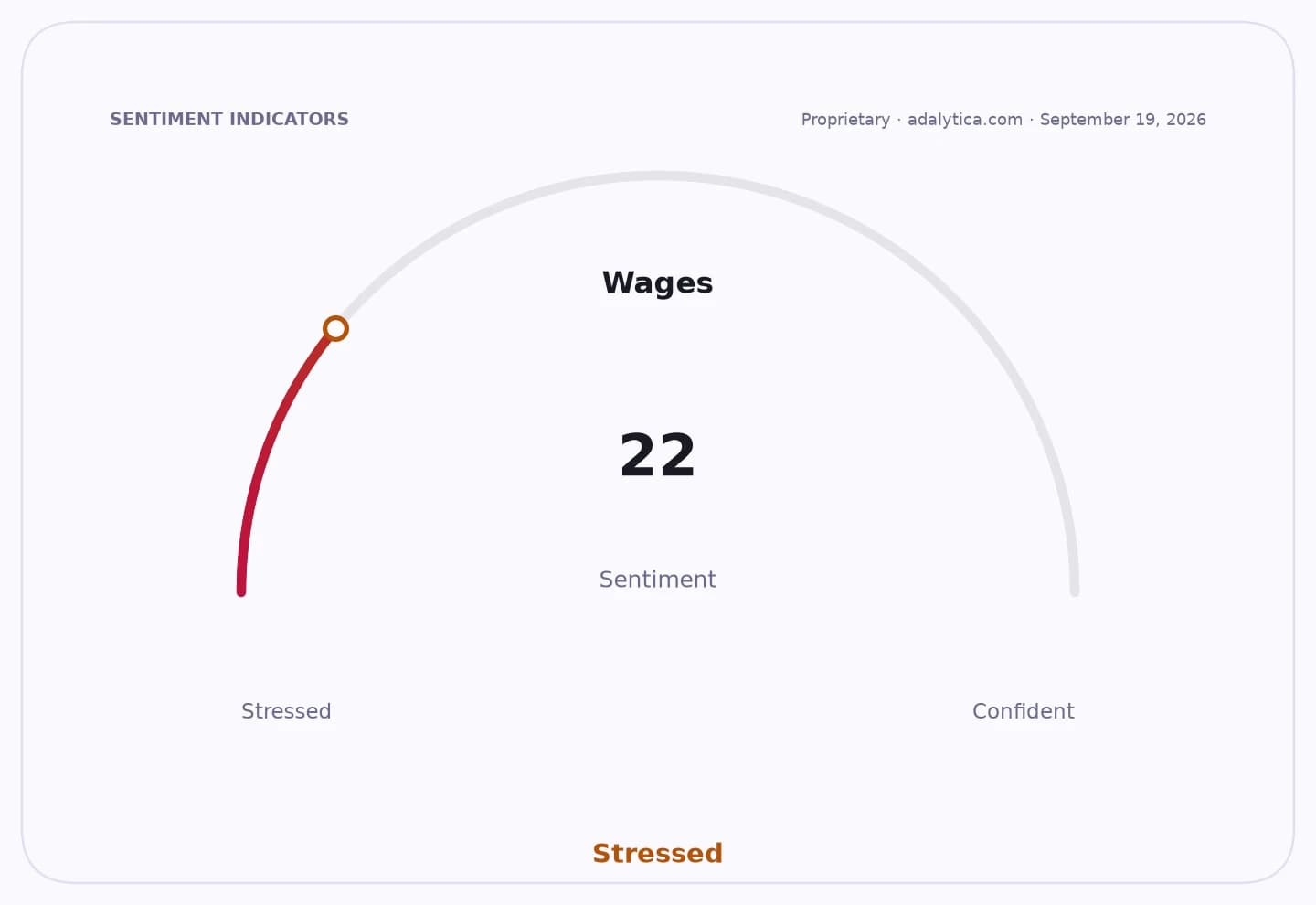
Sentiment IndicatorsⓘProprietary · adalytica.com · September 19, 2026
This is a snapshot — live sentiment, awareness and momentum for 130+ markets update continuously in the dashboard.Open AlphaPulse
The International Labour Organization’s estimate of an 18% shortfall captures the scale of the problem: women are effectively working part of the year unpaid relative to men. The gap also tends to widen at seniority levels, where promotions, bonuses and stock compensation amplify disparities. In markets, that translates into a real earnings penalty for households and a slower path to closing the wealth gap, since compensation feeds savings, retirement balances and investment capacity.
The policy backdrop suggests little immediate relief. The World Economic Forum and the United Nations have warned that full gender parity remains decades away, and the ILO says progress has been too slow to meet stated equality goals. Governments have introduced pay-transparency rules and equal-pay laws in some markets, but enforcement remains uneven and many gaps are driven by occupational segregation, caregiving burdens and promotion pipelines that still favor men in higher-paid roles.
For investors, the issue is both balance-sheet and valuation relevant. Companies with narrower pay gaps, stronger parental leave, flexible work and clearer promotion structures tend to face lower turnover and better retention, which can support margins over time. The reverse is also true: pay inequity can create legal, reputational and recruitment costs, especially in consumer-facing businesses that depend on brand trust and labor intensity.
The rise of artificial intelligence adds another layer of risk. The ILO has flagged AI as a potential amplifier of existing inequality, because workers in clerical, administrative and routine-support roles — jobs where women are often overrepresented — are more exposed to automation. If AI adoption reduces demand for those roles faster than women can move into higher-paying technical and managerial jobs, the wage gap could widen even as aggregate productivity rises.
That makes the next phase of wage equity less about broad labor-market tightness and more about who benefits from the next wave of corporate restructuring. Investors should watch pay-transparency regulation, AI-driven job redesign and company disclosures on hiring, promotion and compensation. The broader thesis is simple: until pay-setting changes as fast as technology and labor demand do, the gender wage gap will remain a persistent economic inefficiency rather than a shrinking legacy issue.
| Entity | Gains | Losses |
|---|---|---|
| Women workers | ▲Higher-pay equity policies | ▼Persistent wage gap |
| Employers with fair pay practices | ▲Lower turnover, stronger reputation | ▼Higher near-term labor costs |
| Policymakers | ▲Public pressure for reform | ▼Slower progress on equality targets |
| AI adopters in routine-heavy sectors | ▲Productivity gains | ▼Workers in exposed clerical roles |