Artificial intelligence is poised to widen gender inequality in the labour market unless governments and employers move faster to bring women into the AI talent pipeline, the World Economic Forum and LinkedIn warned on Tuesday.
WEF Warns AI May Widen Gender Gap
The warning matters because the roles most exposed to automation and AI-driven restructuring are still the ones where women are heavily concentrated, especially administrative, clerical and other white-collar jobs that have underpinned gains in female employment over recent decades. If those jobs are disrupted faster than women are being hired into new AI-enabled roles, the technology’s economic gains could accrue disproportionately to men while women absorb a larger share of the dislocation.
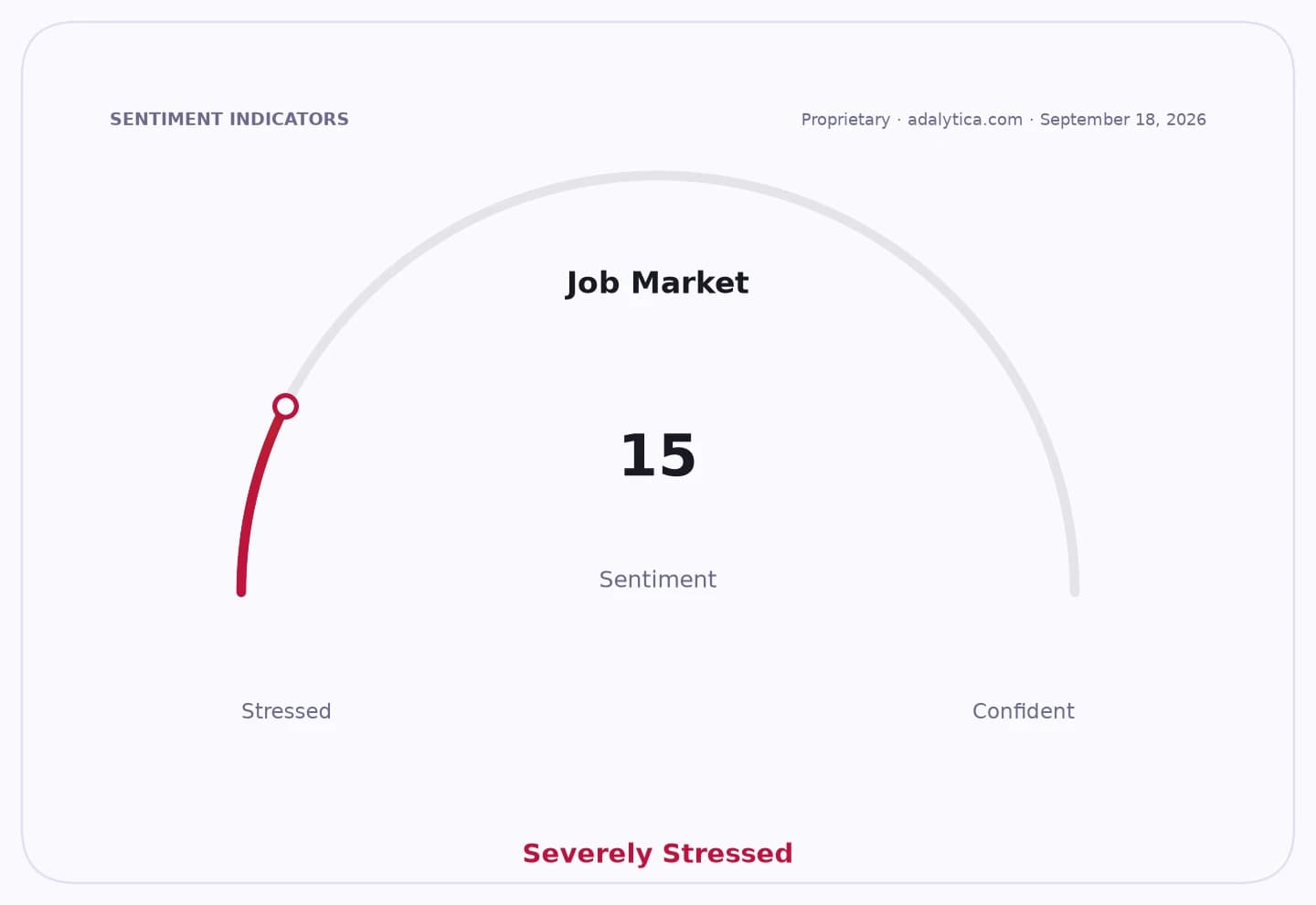
Sentiment IndicatorsⓘProprietary · adalytica.com · September 18, 2026
This is a snapshot — live sentiment, awareness and momentum for 130+ markets update continuously in the dashboard.Open AlphaPulse
“We found that the type of roles that are being disrupted by AI tend to be the type of roles that women have been concentrated in,” WEF managing board member Saadia Zahidi said at a London event launching the Global Gender Gap Report 2026. “It is white-collar work that has brought in a lot of women and given them very good livelihoods over the last few decades, and here is exactly those roles that are being disrupted.”
The report also pointed to a stark representation gap inside the AI industry itself. Women hold just one in five AI engineering roles, LinkedIn’s managing director Sue Duke said, a shortfall that raises the risk women will be underrepresented not only among workers exposed to AI disruption but also among the engineers building the systems that will define future productivity gains.
For investors, the issue goes beyond diversity metrics. Labour-market inequality can affect consumer spending, workforce participation and the political response to automation, all of which influence corporate earnings and policy risk. If AI adoption concentrates gains in a narrower slice of the workforce, it could deepen pressure on household demand and heighten calls for regulation, retraining spending or even new taxes on automation. That is especially relevant for technology companies, which are under pressure to show that AI can drive productivity without triggering a backlash over jobs.
The findings also underline a broader slowdown in progress on closing the global gender gap. The WEF said the trend towards narrowing inequality has lost momentum over the past decade compared with the prior ten years, suggesting that the next phase of AI adoption could either accelerate inclusion through training and access or lock in existing disparities.
Duke said governments and businesses need to invest in bringing women into AI training pathways and roles “from the outset” and keep doing so throughout their careers. Without that, the economic opportunities created by AI may primarily benefit men, turning what is marketed as a productivity revolution into a new source of labour-market divergence.
The next test is whether employers treat AI reskilling as a broad workforce strategy or a narrow technical recruitment challenge. If women remain underrepresented in both the threatened jobs and the new ones, the gap could widen quickly as AI rolls through white-collar work.
| Entity | Gains | Losses |
|---|---|---|
| Men in AI roles | ▲More access to AI-led opportunities | ▼None directly |
| Women in white-collar jobs | ▲Potential retraining pathways | ▼Greater automation exposure |
| Tech firms | ▲Faster productivity gains | ▼Reputational and policy risk |
| Governments | ▲Chance to shape inclusion policy | ▼Pressure to fund retraining |