Global growth is likely to stay resilient into 2027 because governments and companies are still spending, even as inflation gradually eases, J.P. Morgan Asset Management said — a view that suggests the next phase of the expansion may be driven less by emergency stimulus and more by structural capital formation.
Global growth resilient through 2027, JPMorgan says
That matters because it shifts the market debate away from whether the world economy can avoid a hard landing and toward whether a broadening, investment-led expansion can survive tighter financing conditions, rising public debt and uneven consumer demand. If JPMorgan is right, the main support for activity will come from defense budgets, energy security, onshoring and artificial intelligence infrastructure rather than from a short-lived post-pandemic rebound.
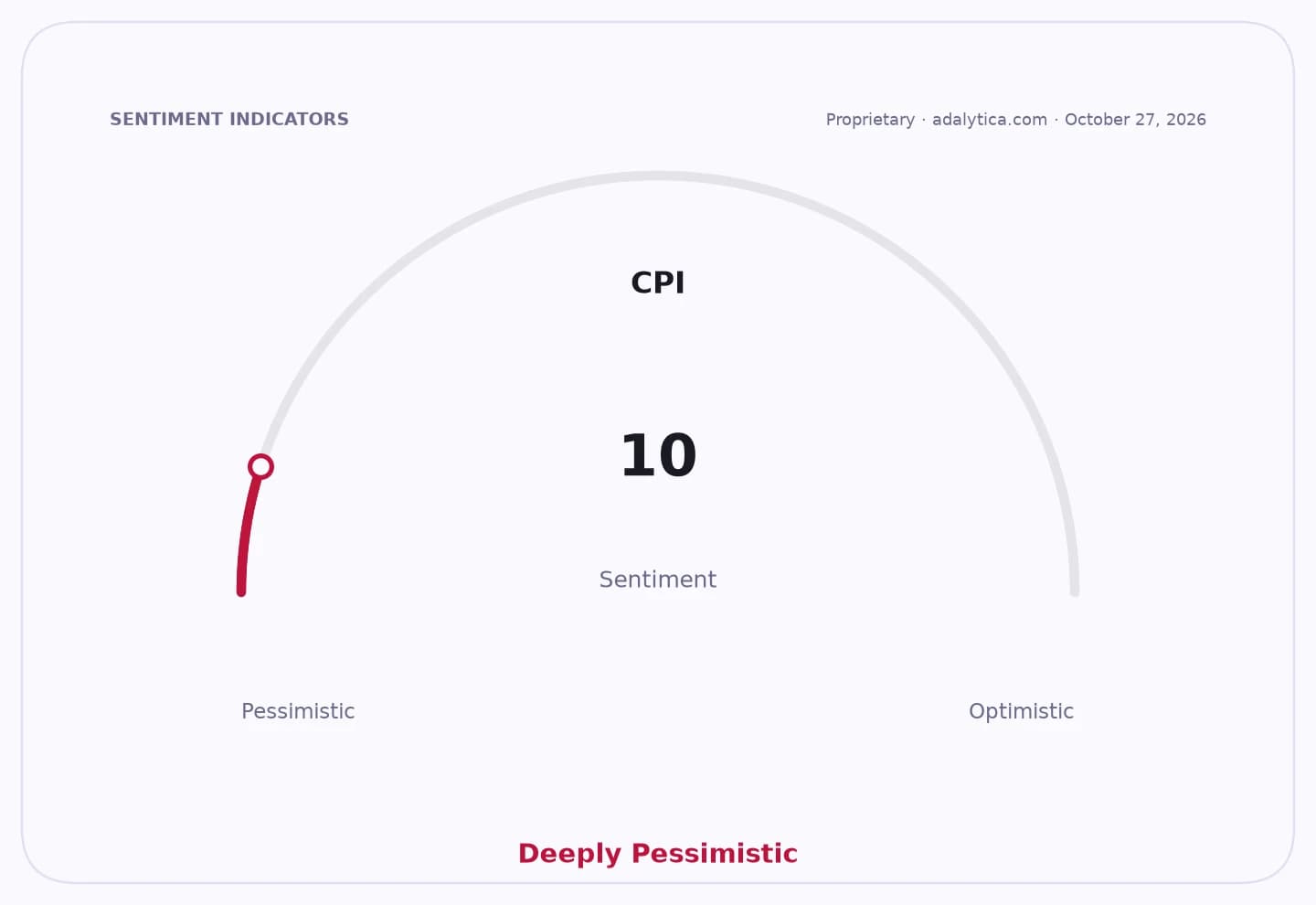
Sentiment Indicators
The investment manager said government outlays on defense, domestic energy, technology and critical manufacturing should remain a key pillar of demand, with Germany’s fiscal push helping to offset the fading of the European Union’s Recovery Fund after 2026. In Europe, the timing is important: the bloc is approaching the end of a major source of public support just as private and public capital spending needs to fill the gap.
Corporate spending is the other major leg of the story. JPMorgan said the large US technology firms building AI infrastructure — the so-called hyperscalers — plan to spend more than $1 trillion in both 2027 and 2028, underlining that the capex cycle in data centers, chips and power is still in its early stages. For investors, that keeps earnings support concentrated in suppliers to the buildout, from semiconductors and electrical equipment to industrials and utilities tied to power demand.
Consumer spending should also improve as inflation pressures ease, according to the firm. US households have held up better despite higher energy costs, while European consumers have been more cautious and are sitting on about 3 trillion euros in savings accumulated since the pandemic. Lower energy prices could unlock some of that spending, helping the recovery broaden beyond the US and beyond investment-heavy sectors.
JPMorgan also argued that inflation would remain elevated into early 2027 but should gradually fade, with subdued wage growth preventing energy-driven price increases from turning into a wider inflation problem. That backdrop is constructive for duration-sensitive assets if disinflation continues, but it also complicates the picture for borrowers: higher government funding needs and stronger competition for capital could keep pressure on bond markets even as growth improves.
The investor takeaway is that the global economy may be entering a more durable, but more capital-intensive, phase of expansion. That favors companies tied to government investment and AI spending, while leaving more cyclical consumer names and heavily indebted issuers more exposed if funding costs stay sticky and public deficits keep crowding markets for capital.
| Entity | Gains | Losses |
|---|---|---|
| Governments | ▲Higher strategic investment | ▼Bigger borrowing needs |
| AI infrastructure builders | ▲Strong capex demand | ▼ROI pressure |
| Industrial and energy suppliers | ▲More project spending | ▼Margin risk from input costs |
| Bond investors / borrowers | ▲Easier inflation backdrop | ▼Greater capital competition |