Gold prices in Baghdad and Erbil stabilized above the 900,000-dinar mark on Thursday, underscoring how local bullion remains pinned to the direction of the dollar and global risk appetite rather than domestic retail demand alone.
Gold in Baghdad and Erbil Stabilizes Above 900,000 Dinars
That matters because gold in Iraq is both a store of value and a hedge against currency swings. When prices hover near psychologically important thresholds, households delay purchases, jewelers manage thinner inventories and traders become more defensive, especially after the recent sharp swings that pushed some gold products toward record lows before a modest rebound.
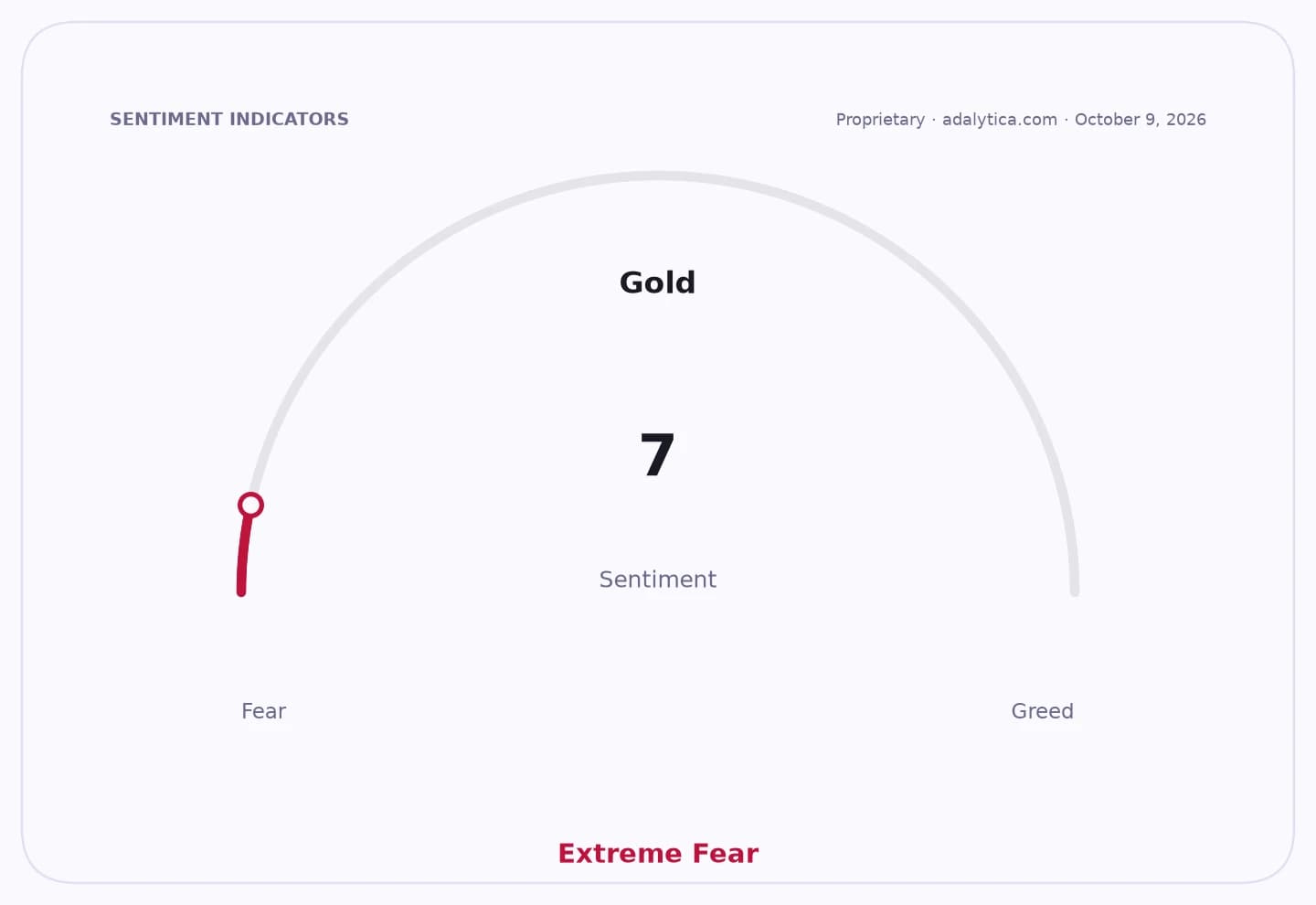
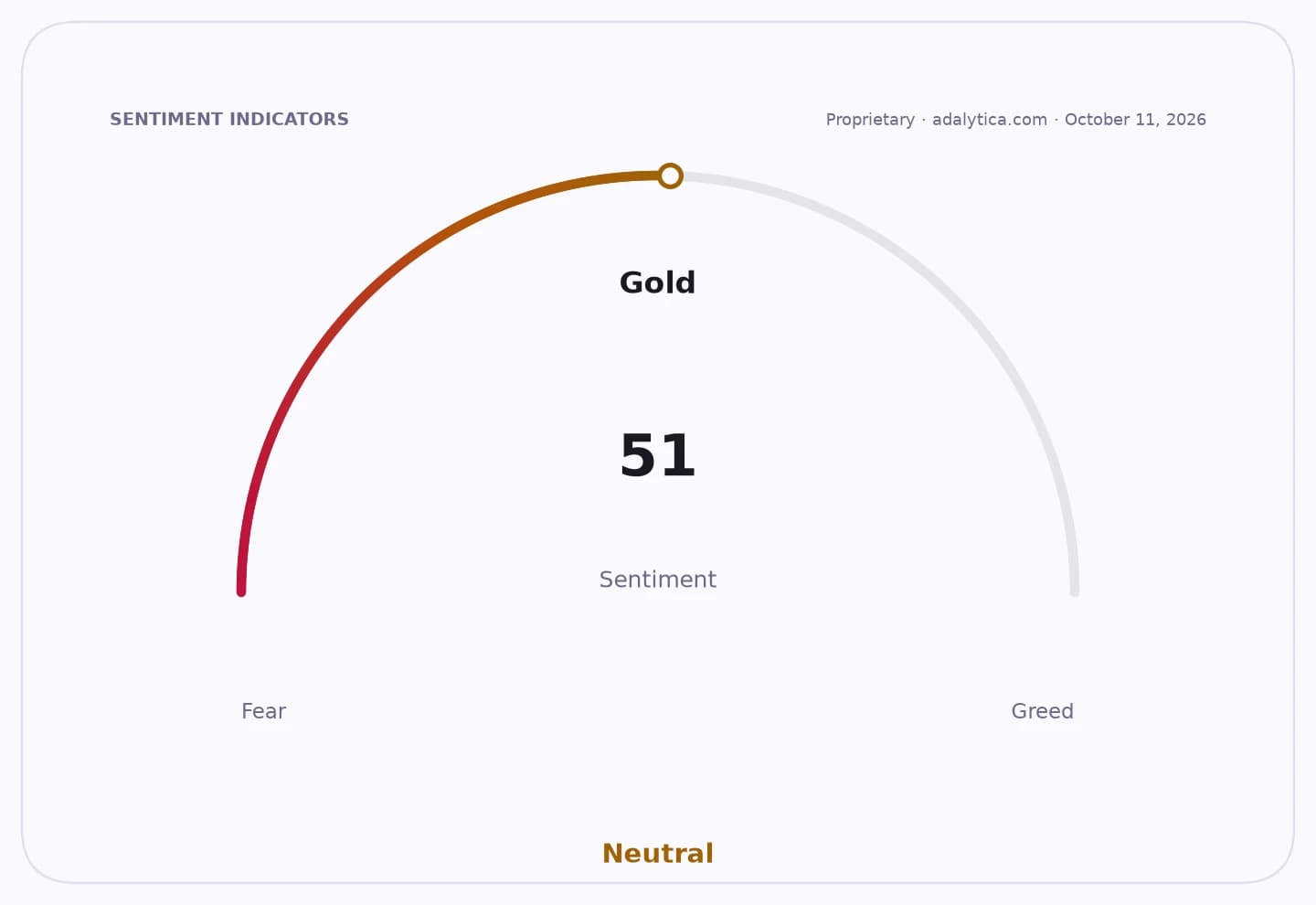
Sentiment IndicatorsⓘProprietary · adalytica.com · October 2, 2026
This is a snapshot — live sentiment, awareness and momentum for 130+ markets update continuously in the dashboard.Open AlphaPulse
The latest price action suggests the market is still searching for a floor. Recent moves in international gold-tracking funds show the metal has been under pressure, with GLD trading around $382.76 on October 1, well below its 50-day moving average of $396.12 and its 200-day average of $416.23. The ETF’s relative strength index, or RSI, was 36.2, a level that points to weakness but not a fully washed-out market. GDX, which tracks gold miners, fell to 86.74, also below both its 50-day and 200-day averages, showing that the correction has hit producer equities as well as bullion.
In conventional technical terms, the picture is one of a market trying to stabilize after a steep drop. GLD’s MACD remained negative at minus 4.762, while the lower Bollinger Band sat close to 377.63, suggesting prices have moved into a softer range after the earlier rally and subsequent reversal. That fits the broader tone in the physical market, where dealers have seen uneven demand rather than a clear return of momentum.
Investor sentiment is poor. Adalytica’s Gold Fear & Greed Index shows “Extreme Fear” at 8, even as its awareness reading remains in “Greed” territory, a sign that attention is high but conviction is low. The US dollar signal is also flashing extreme fear, with sentiment and awareness both near the bottom of the scale, reinforcing the idea that currency moves continue to dominate gold pricing across markets.
For investors, the key issue is whether the stabilization in Baghdad and Erbil reflects genuine demand or merely a pause after a fast decline. A sustained move above the 900,000-dinar level would support retailers and consumers who need price certainty, while a failure to hold that zone would likely keep buyers sidelined and could trigger another round of discounting.
The next catalyst is the dollar. If the greenback remains volatile and global gold stays below key moving averages, Iraqi prices are likely to keep oscillating around current levels rather than break decisively higher. If the dollar weakens further, local bullion could firm quickly, but for now the market appears to be balancing caution against bargain hunting.
| Entity | Gains | Losses |
|---|---|---|
| Gold buyers in Baghdad and Erbil | ▲Price stability | ▼Fear of another jump |
| Local jewelers | ▲Easier inventory planning | ▼Thin margins |
| Dollar bulls | ▲Stronger pricing power | ▼Softer gold demand |
| Gold holders | ▲Hedge value preserved | ▼Upside limited if prices stay capped |