Gold is struggling to extend its record run as fresh signs of Fed tightening and a jump in U.S. yields keep pressure on bullion, leaving traders doubtful it can clear $4,400 an ounce before the October FOMC meeting.
Gold Holds Below $4,400 Ahead of Fed Meeting

Spot gold was trading around $4,314 an ounce late Tuesday in Vietnam time, holding below the level some analysts say would be needed to confirm another leg higher. The immediate driver is the Federal Reserve’s latest 25-basis-point rate increase and the market’s view that policymakers are still uneasy about inflation.
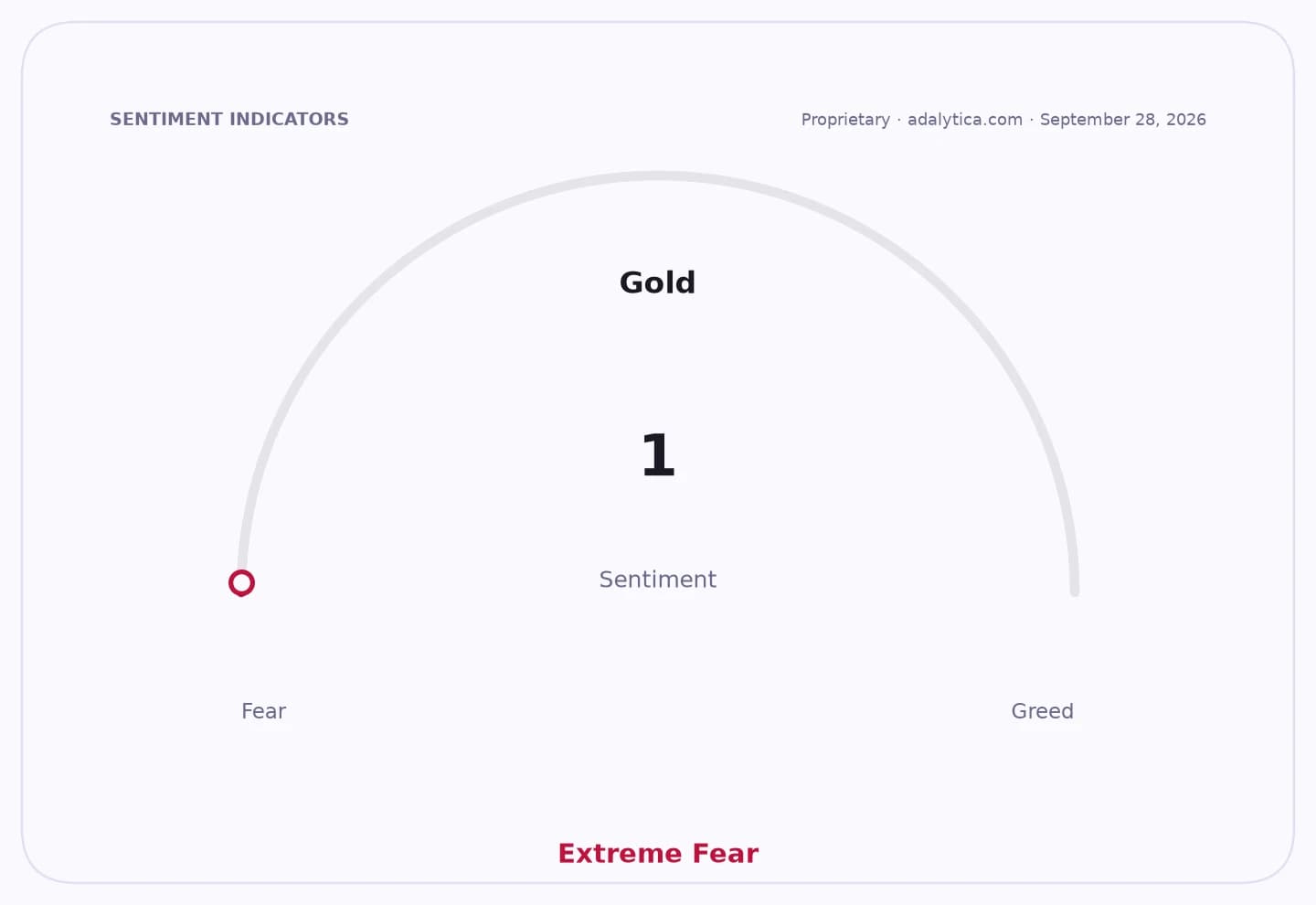
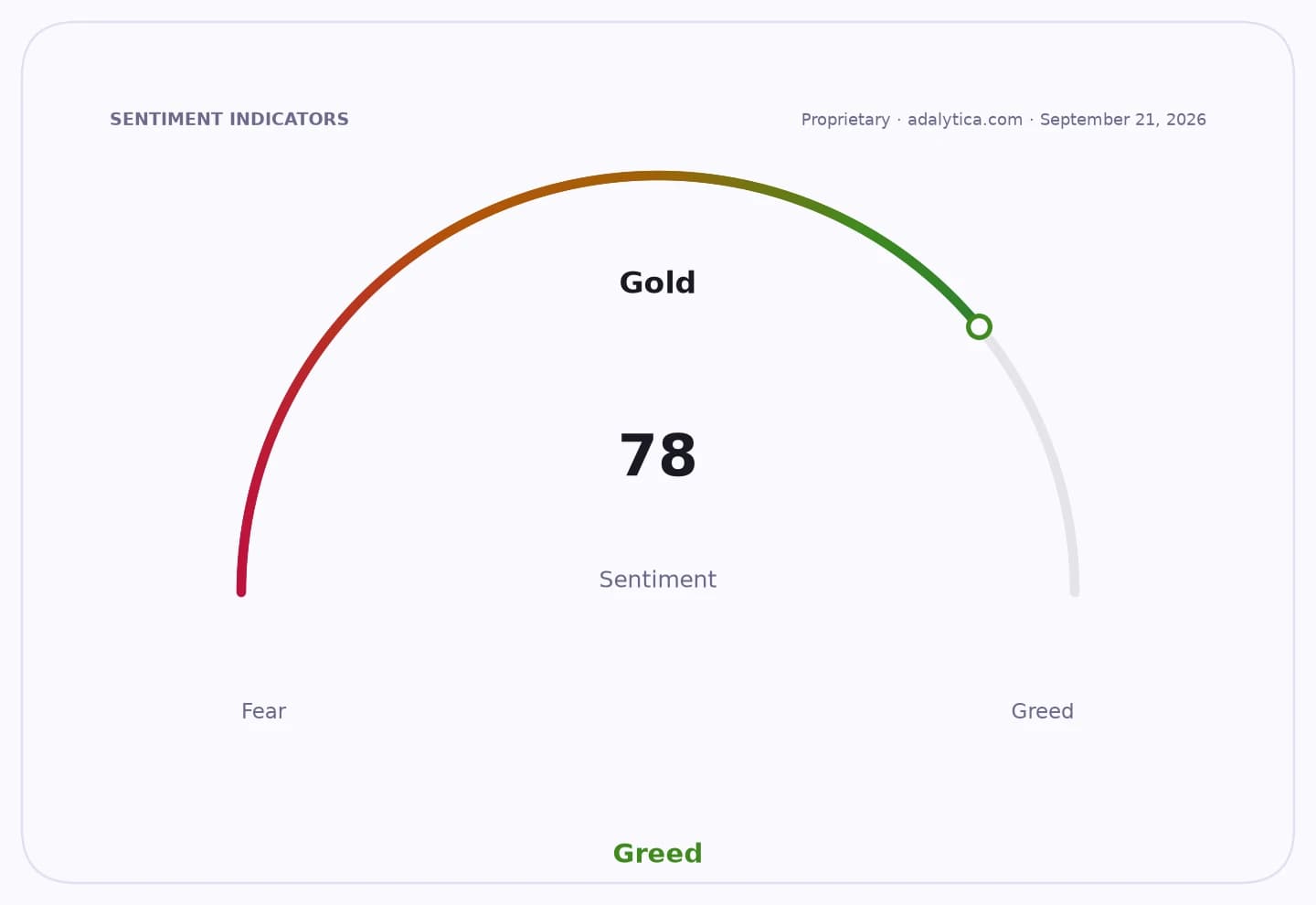
Sentiment IndicatorsⓘProprietary · adalytica.com · September 28, 2026
This is a snapshot — live sentiment, awareness and momentum for 130+ markets update continuously in the dashboard.Open AlphaPulse

That matters because higher rates raise the opportunity cost of owning a non-yielding asset like gold, while a stronger dollar and firmer Treasury yields can pull capital away from bullion. The 10-year U.S. Treasury yield has climbed to 5.18%, up from 4.96% two days earlier and 3.61% in 2008, underscoring the yield pressure confronting precious metals.
Fed officials have reinforced that message. St. Louis Fed President Alberto Musalem said strong consumer demand and broad commodity price pressure could justify more tightening, while Richmond Fed President Tom Barkin and Boston Fed President Susan Collins have both warned inflation shocks may take longer to return to the 2% target.
Still, the bullion market is not being hit by macro headwinds alone. Gold has found support from physical buying, especially in Asia, where global coin and bar demand hit 1,200 tons in 2025, the highest in 12 years, according to the data cited in the source. China’s gold imports had already topped 1,000 tons by the end of August, above all of last year’s total.
That physical demand is helping offset some selling from financial investors who are more sensitive to rates and currency moves. It also explains why gold has not cracked more sharply even as policy expectations have turned less friendly.
Recent price action points to a market still under strain. Gold futures settled at $4,189 on Monday, below the 50-day moving average of $4,358 and the 200-day moving average of $4,556, while RSI readings near 26 suggest the contract is deeply oversold by standard technical measures. The VanEck Gold Miners ETF has also slipped to $92.87, down from its recent highs, as mining shares track the metal lower.
The pressure is feeding through to producers and bullion-related businesses. Companies with lower all-in sustaining costs and manageable debt are better positioned to protect margins if gold stays above $4,300, while higher-cost miners face tighter funding conditions if Fed policy stays restrictive.
Oil’s recent six-session slide is one counterweight, easing some inflation fears and reducing the case for still more Fed tightening. But for now, the dominant market narrative remains policy first: unless upcoming inflation data cools or the Fed pauses, gold may remain trapped in the $4,300-$4,400 range into the Oct. 28 FOMC decision.
| Entity | Gains | Losses |
|---|---|---|
| Fed hawks | ▲More room to tighten | ▼None from weaker gold |
| Gold bulls | ▲Physical demand support | ▼Rate/yield headwinds |
| Miners with low AISC | ▲Margin resilience above $4,300 | ▼Limited if costs are high |
| Treasury bears / dollar bulls | ▲Higher yields, stronger dollar | ▼Bullion demand pressure |