Gold fell below $4,300 an ounce for the first time since Sept. 16, a sharp reminder that even the market’s most trusted hedge can get sold when traders rush to cut risk all at once. The December Comex contract slipped as much as 0.5% to $4,297 an ounce, extending a slide that has already hit gold-backed funds and mining shares.
Gold Falls Below $4,300 as ETFs and Miners Slump
That matters because gold’s move is rarely just about jewelry demand or one day’s trading. It is a clean read on how investors are balancing geopolitical fear, interest-rate expectations and the dollar. When gold sells off this hard, it often means some combination of profit-taking and a temporary reduction in safe-haven demand. For long-term investors, that can be uncomfortable — but it also matters because the same forces that drive gold lower can affect inflation hedges, currency trades and the valuation of gold miners.
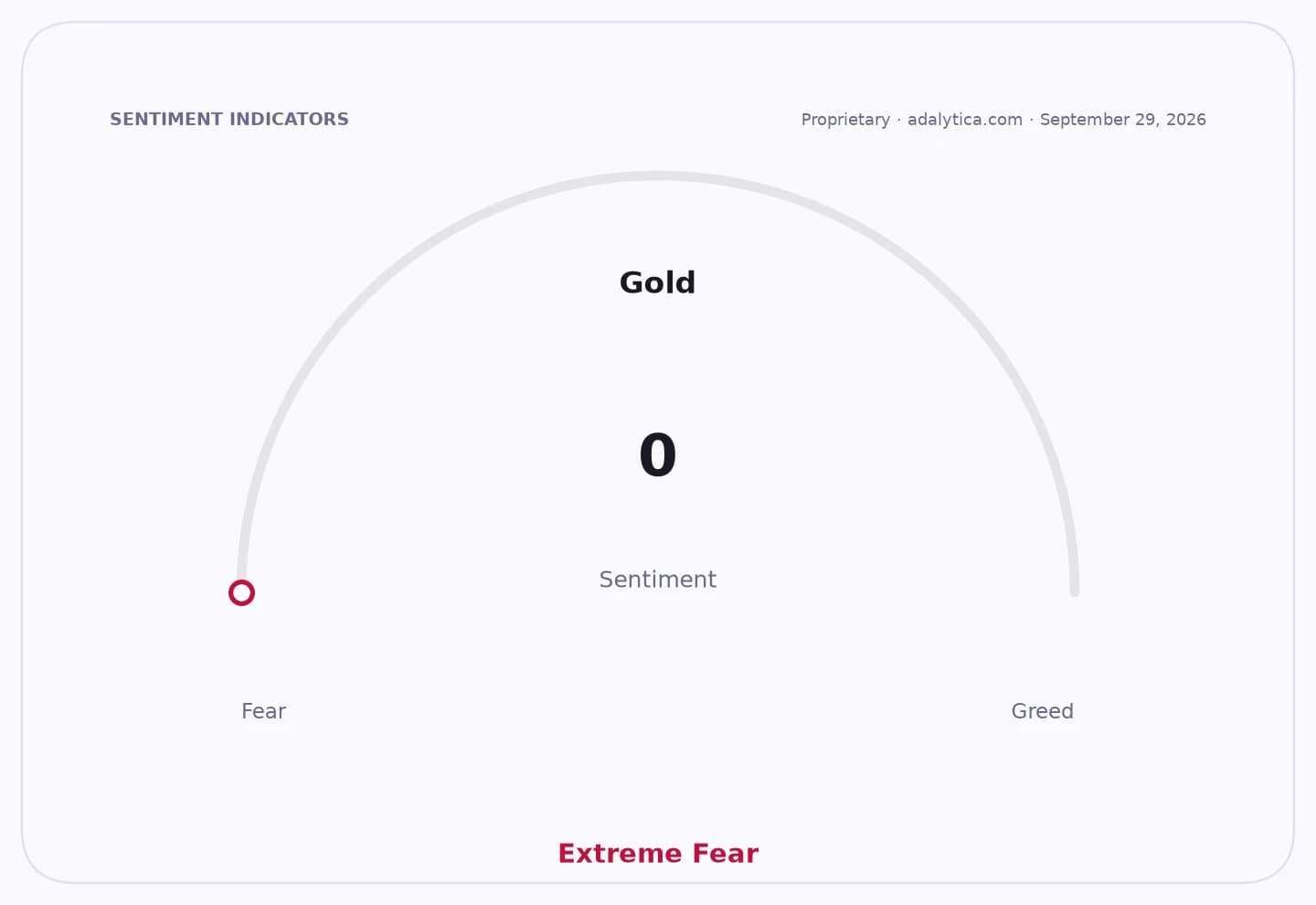
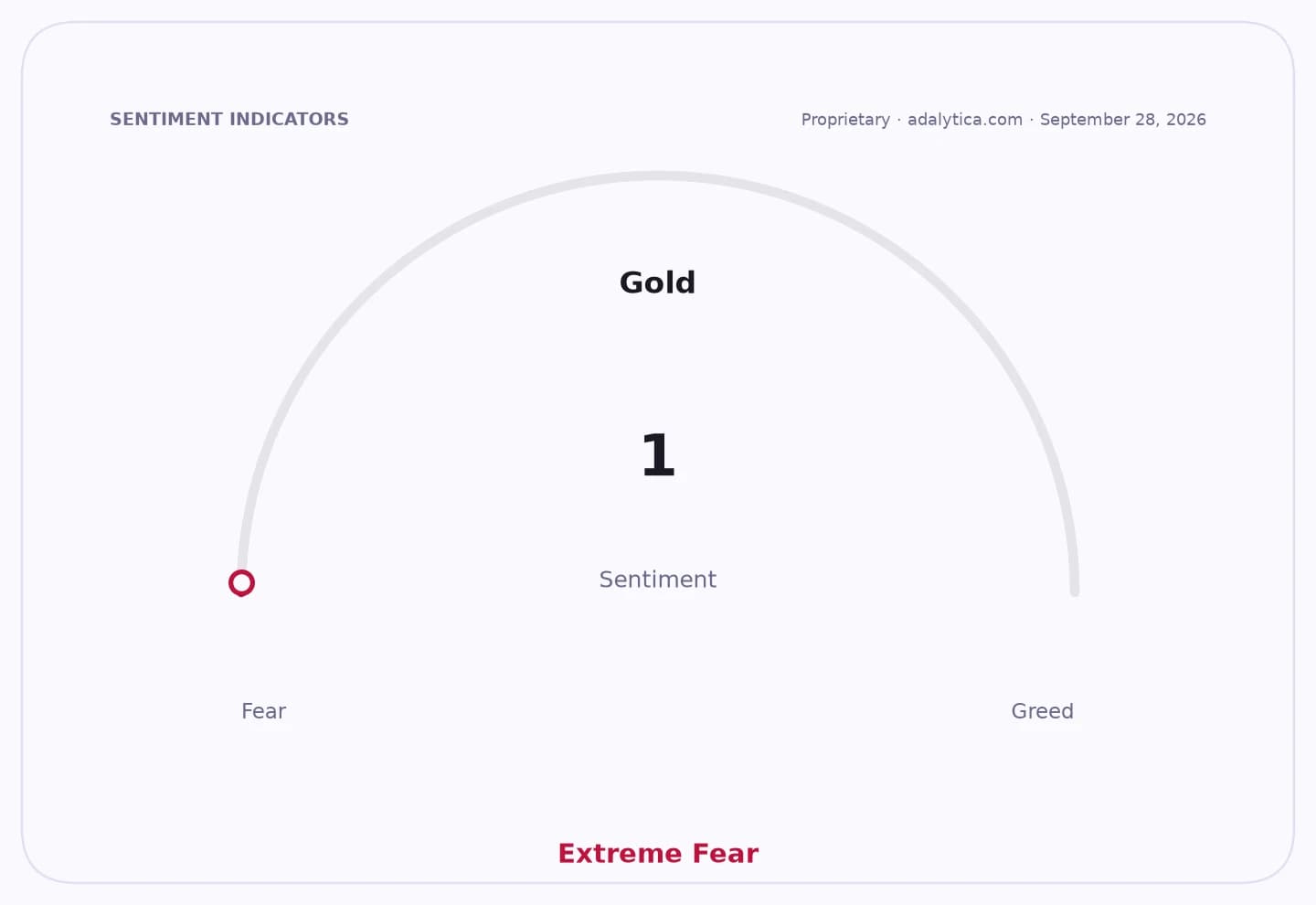
Sentiment IndicatorsⓘProprietary · adalytica.com · September 29, 2026
This is a snapshot — live sentiment, awareness and momentum for 130+ markets update continuously in the dashboard.Open AlphaPulse
The drop also spilled into the broader precious-metals complex. GLD, the largest U.S. gold ETF, closed at 377.91 on Sept. 28, well below its 50-day moving average of 395.62 and its 200-day average of 416.39. Its 14-day RSI at 32.5 shows the fund is getting close to oversold territory, but the trend remains weak for now. IAU, another major gold ETF, fell to 77.5, also below both its 50-day and 200-day averages. GDX, the VanEck Gold Miners ETF, dropped to 87.89, dragging miners back under pressure after a year of violent swings.
That is where investors need to pay attention. Gold bullion can be volatile, but miners are leveraged to every move in the metal. When gold falls, operating margins can compress quickly, and the market usually punishes mining stocks harder than the commodity itself. That means the latest decline helps explain why gold ETFs and miners have become weaker short-term trades even after a strong run earlier in the year.
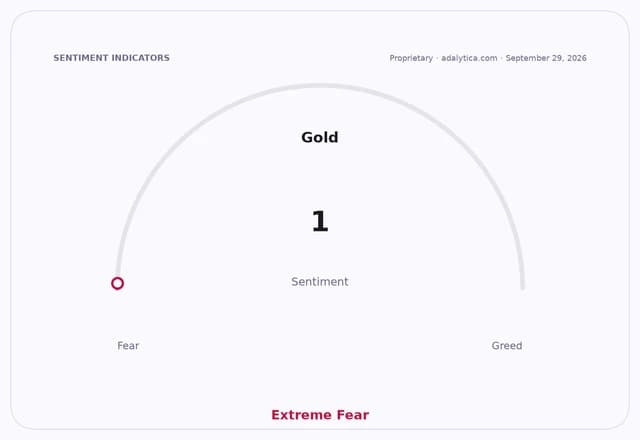
Still, the bigger story is not that gold has stopped mattering. It is that the market is repricing what kind of protection investors want right now. Adalytica’s Gold Fear & Greed Index shows “Extreme Fear,” while its U.S. dollar signals also sit in “Extreme Fear,” pointing to a market that is unstable rather than settled. Add in geopolitical tension, higher crude prices and uncertainty around Federal Reserve policy, and you have a recipe for fast reversals in both directions.
For investors, the lesson is simple: gold is still a useful portfolio diversifier, but it is not a straight line up. If you own it for insurance, think in years, not days. If you own miners, be prepared for much bigger swings than the metal itself. And if you are waiting for perfect clarity, you may miss the point entirely — gold often becomes most attractive when the crowd is least comfortable holding it. Worth watching, but not a place to chase blindly.
| Entity | Gains | Losses |
|---|---|---|
| Gold buyers | ▲Lower entry point | ▼Recent momentum |
| Gold miners | ▲None immediately | ▼Margin pressure |
| ETF holders | ▲Possible oversold rebound | ▼Paper losses |
| U.S. dollar bears | ▲Potential safe-haven volatility | ▼Stronger dollar backdrop |