Gold’s rally may have further to run, but the bigger market story is that the move is becoming more reflexive and more fragile at the same time. Goldman Sachs Research says the metal could reach $4,900 an ounce by year-end 2026, yet warns that heavy use of gold call options and related derivatives to hedge policy risk could push prices even higher — and make the path there much more volatile.
Gold near $4,900 as central banks buy more
The bank’s call rests on two structural supports: sustained central-bank buying and easing expectations for U.S. rate increases. Goldman said sovereign buyers are likely to keep accumulating bullion as they diversify reserves away from dollar assets, with purchases averaging 50 tonnes a month in 2026, up from 17 tonnes a month before 2022. It also said China was the largest confirmed buyer in June, underscoring how reserve diversification has become a persistent demand source rather than a tactical trade.
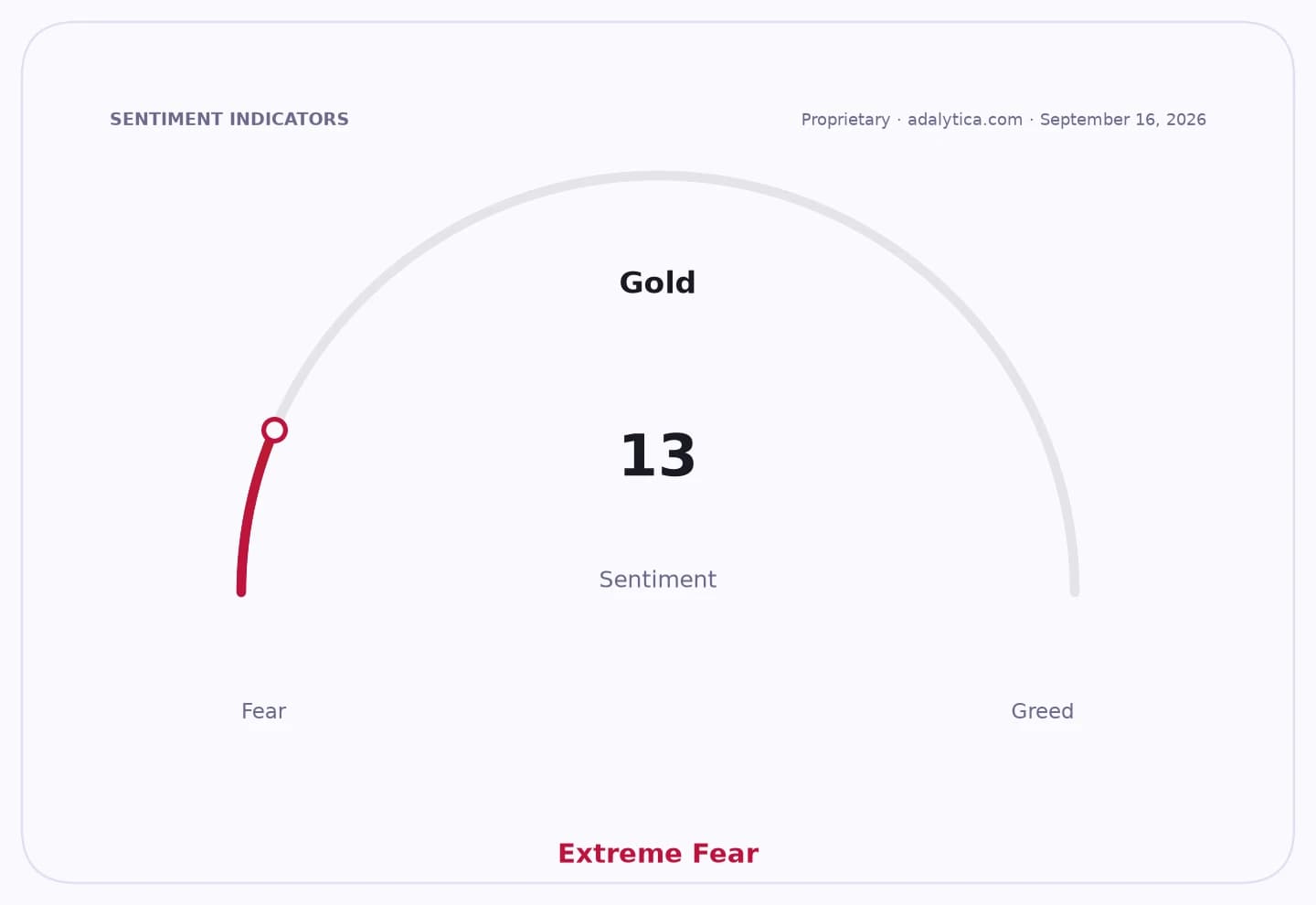
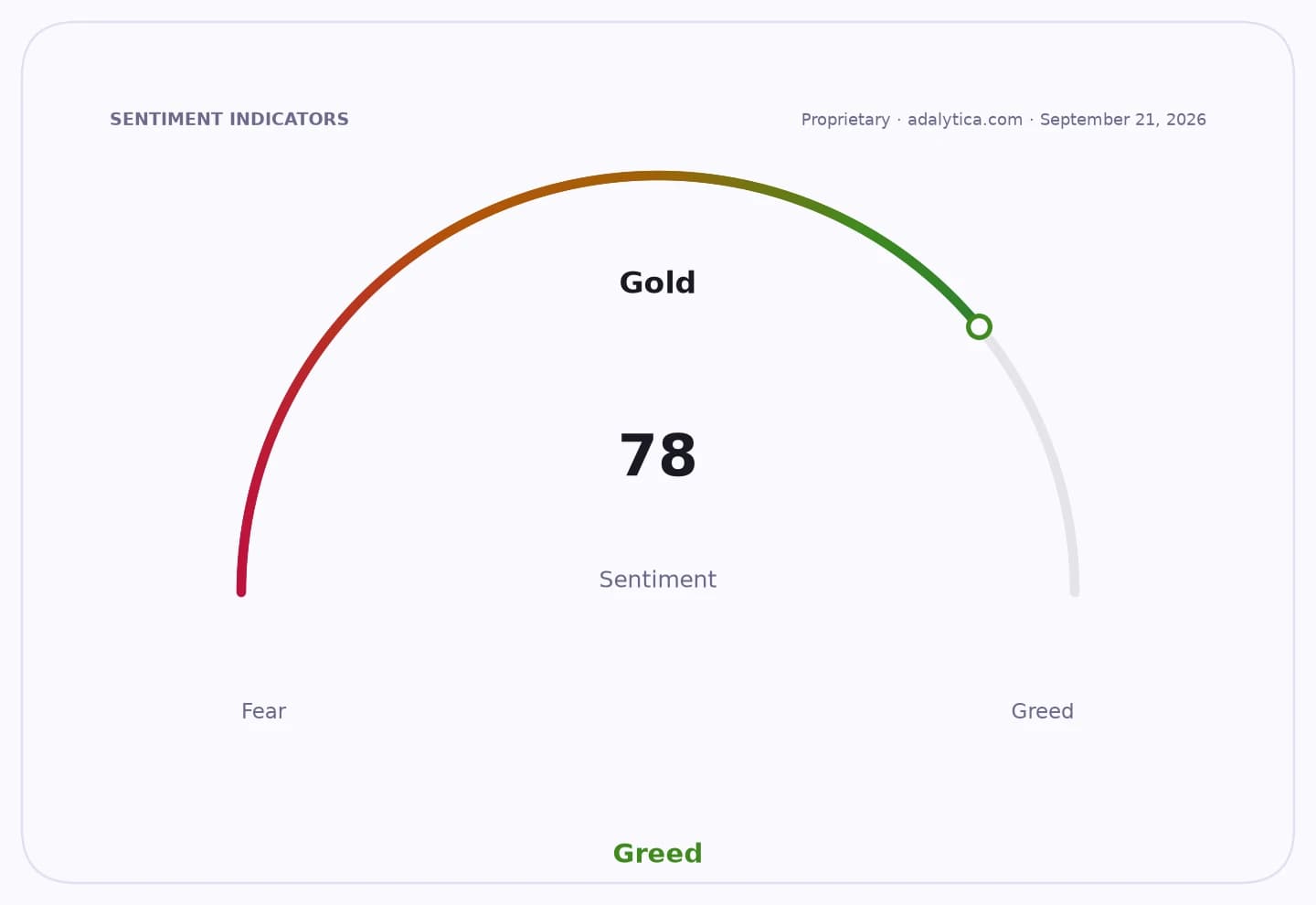
Sentiment IndicatorsⓘProprietary · adalytica.com · September 4, 2026
This is a snapshot — live sentiment, awareness and momentum for 130+ markets update continuously in the dashboard.Open AlphaPulse
That matters economically because gold is no longer being driven mainly by short-term inflation fears or speculative momentum. Central-bank accumulation points to a deeper shift in reserve management, one linked to geopolitical risk, sanctions concerns and broader skepticism about Western fiscal sustainability. In that setting, gold functions less like a commodity and more like a monetary hedge, which can support prices even when traditional macro signals are mixed.
For investors, the more important twist is market structure. Goldman said demand for gold call options is rising as investors hedge against large policy shifts, and that could amplify both rallies and selloffs. As spot prices approach key strike levels, dealers who sold those calls may need to buy gold to stay hedged, adding fuel to upside moves. If prices retreat, those same hedges can unwind into sales, intensifying declines. In other words, the market may be entering a regime where flows from derivatives matter as much as physical demand.
The setup helps explain why gold can keep rising even as it has already delivered a major run. The price of U.S. benchmark futures was last around $4,491.7 an ounce on Sept. 3, while GLD, the largest gold-backed ETF, closed at $410.22 and had rebounded from a sharp mid-year selloff. But technical readings also show a market that is recovering rather than overheated: GLD’s RSI was in the mid-50s and the fund remained below its 200-day moving average, suggesting room for further gains without the kind of extreme overbought conditions seen earlier in the year.
Still, Goldman’s forecast is not a straight-line bullish case. The same derivative demand that could propel gold above $4,900 also raises the odds of two-sided volatility, particularly if investors begin closing hedges or if rate expectations shift back toward tighter policy. The firm’s note implies that the gold market is being pulled by a combination of reserve diversification, macro hedging and dealer hedging — a mix that can extend the cycle, but also make reversals sharper.
For investors, the key catalyst remains whether central banks keep buying at the same pace and whether options positioning continues to compress the market into higher strike levels. If both persist, Goldman’s $4,900 target may prove conservative. If either falters, gold’s advance could become much less orderly.
| Entity | Gains | Losses |
|---|---|---|
| Central banks | ▲Reserve diversification | ▼Dollar asset exposure |
| Gold bulls | ▲Higher spot prices | ▼Short positioning |
| Options dealers | ▲Premium income | ▼Hedge losses |
| Importers/jewellery buyers | ▲Lower prices | ▼Higher replacement costs |