Gold is losing its shine just as oil is regaining a geopolitical bid, and the split tells investors that today’s market is being driven less by headline risk than by the cost of money.
Gold Falls as Oil Gains on Gulf Risk
Bullion has slipped to around $4,130, near its weakest level since August and well below the late-August peak near $4,650, because elevated Treasury yields and a firmer dollar are overpowering safe-haven demand. The 10-year US yield is hovering around 5.3% and real yields near 2.9%, a painful backdrop for an asset that pays no income. At the same time, Federal Reserve minutes reinforced the message that policymakers are not ready to declare inflation defeated, keeping rate-cut hopes on the back burner and raising the bar for gold to stage a durable rebound.
Sentiment IndicatorsⓘProprietary · adalytica.com · October 10, 2026
This is a snapshot — live sentiment, awareness and momentum for 130+ markets update continuously in the dashboard.Open AlphaPulse
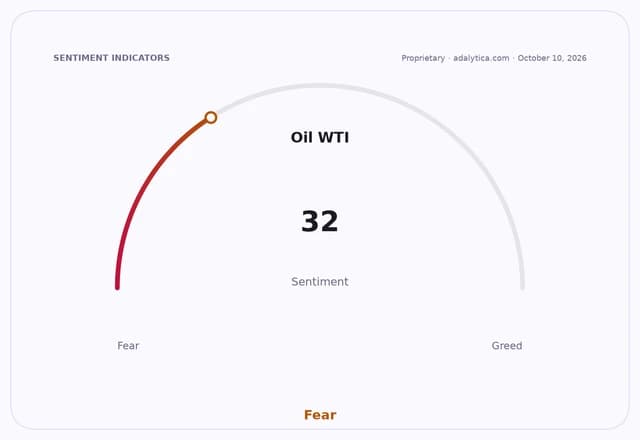
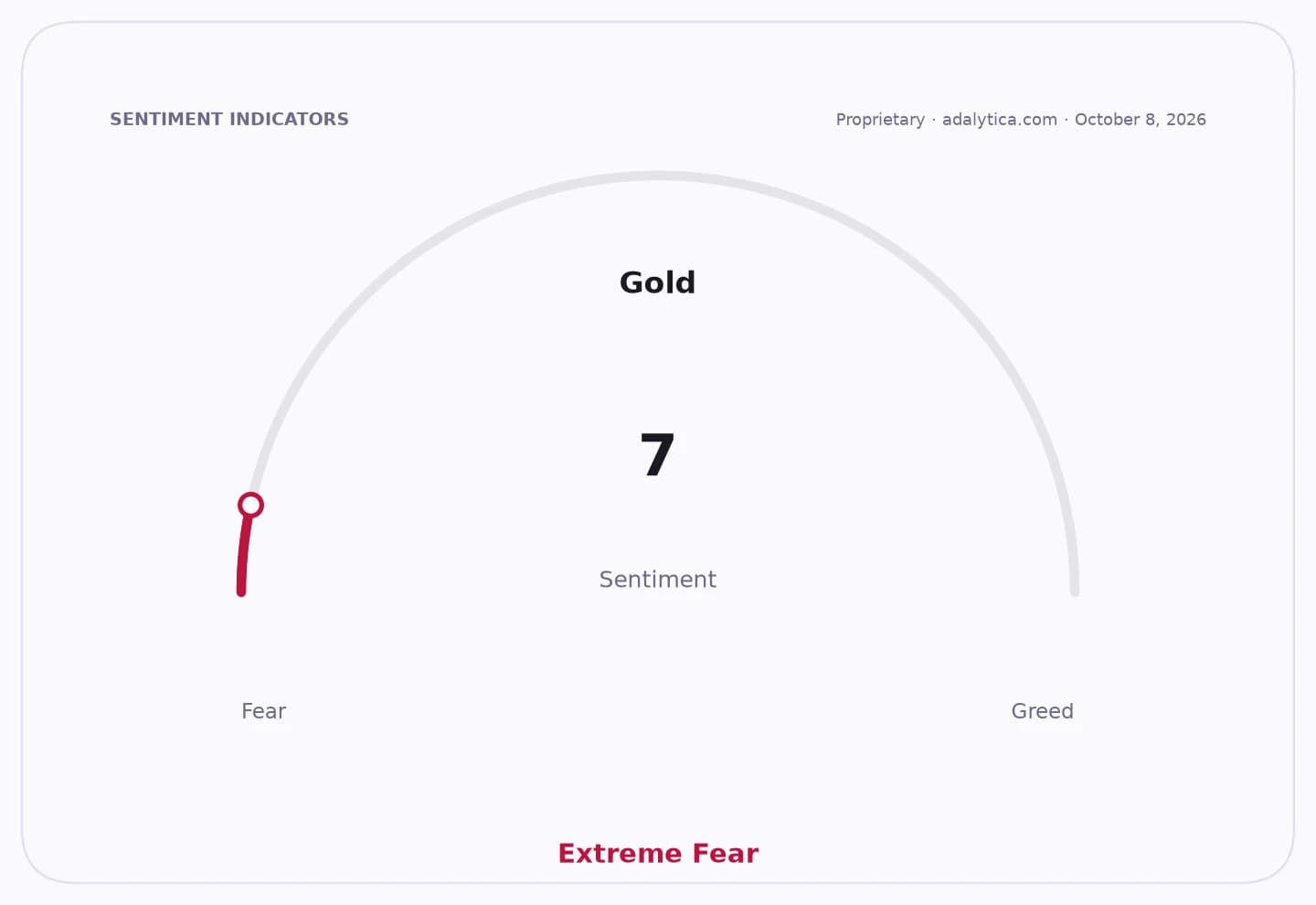
That matters because gold is increasingly competing with Treasuries as a defensive allocation. When investors can lock in a substantial real return in government bonds, bullion has to clear a much higher hurdle to attract capital. The price action reflects that shift: gold is trading below its 20-, 50-, 100- and 200-day moving averages, and the RSI around 29 to 39 points to weak momentum without yet signaling a true capitulation. In Adalytica.com’s Gold Fear & Greed Index, sentiment has collapsed to 7, labeled extreme fear, underscoring how quickly the market has moved to the sidelines.
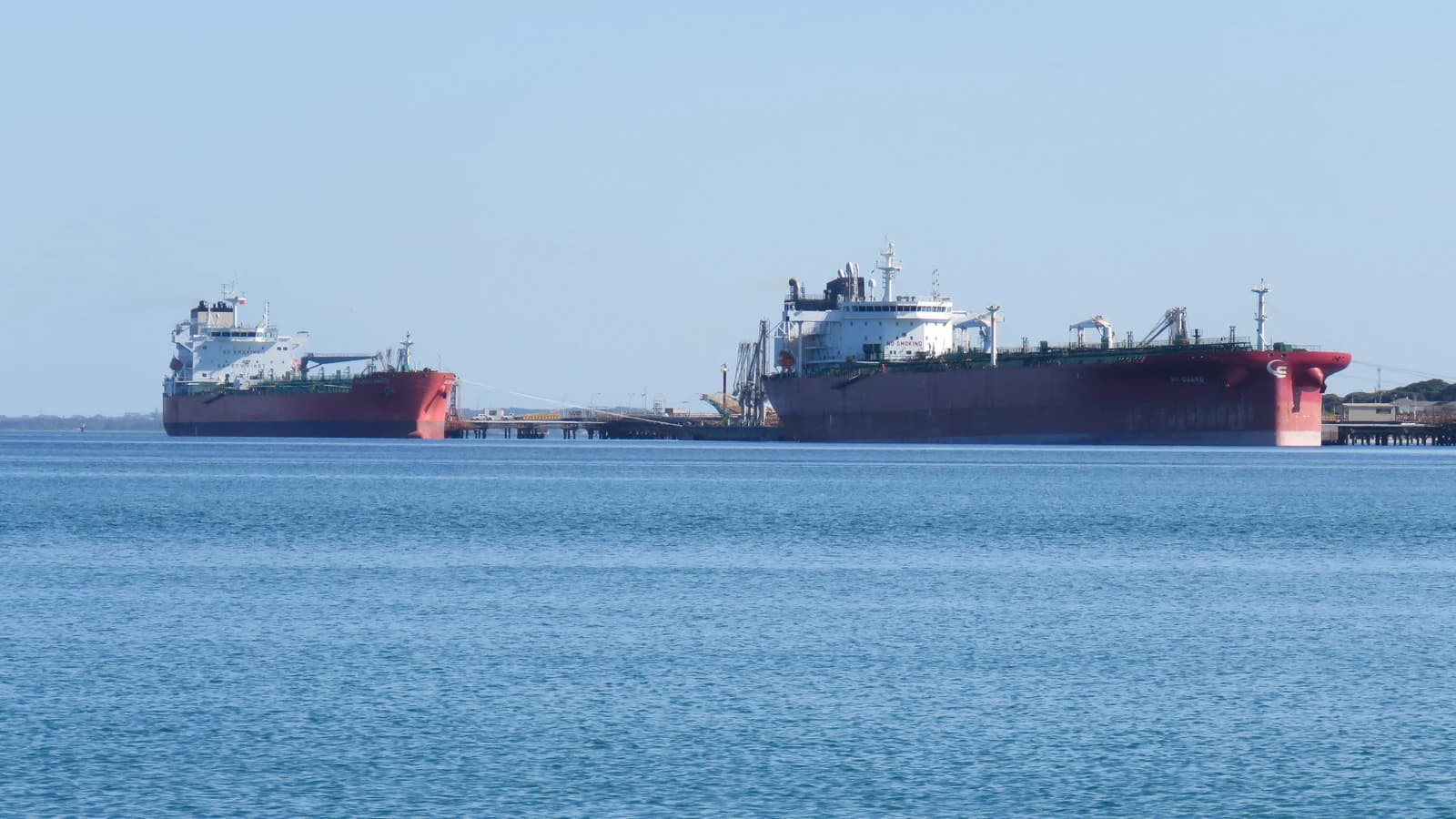
Oil is telling the opposite story. Brent has climbed back above $100, with WTI-related signals showing renewed urgency after attacks on shipping in the Gulf revived the geopolitical premium that had faded when US-Iran talks looked more constructive. A tanker was struck off Qatar, and disruptions around the Strait of Hormuz have forced traders, insurers and ship operators to reprice the risk of further supply interruptions even as diplomacy remains technically alive.
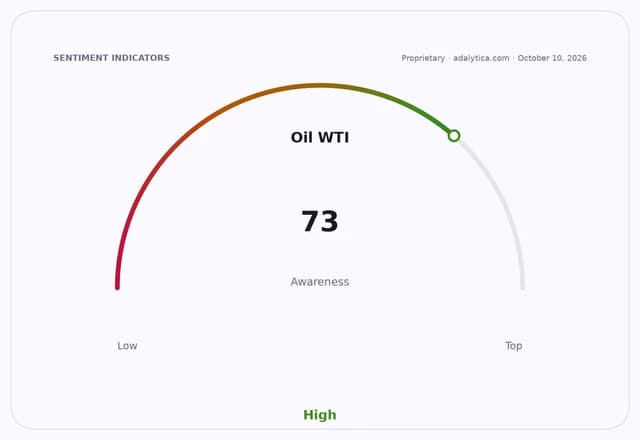
The market is not pricing a full-blown supply shock, and that is why crude is around $103 rather than racing immediately back toward the $110 to $115 zone seen earlier this year. Saudi Arabia’s East-West Pipeline, improving Gulf exports and strategic inventory releases have cushioned the blow. But that cushion does not remove the need for risk premiums, especially when physical flows can be disrupted faster than negotiations can be completed.
For investors, the message is straightforward: the winners and losers are diverging around rates and geopolitics. Gold miners and bullion funds need either softer US data, lower real yields or a weaker dollar to regain leadership. Oil producers, tanker owners and energy equities can still benefit if shipping attacks intensify or if the market starts to believe that Middle East disruption is becoming structural rather than episodic.
Our thesis is that the real trade is not simply “risk-on versus risk-off.” It is a capital-flows trade. High yields are pulling money away from gold, while renewed Gulf tension is pushing it back into oil and energy exposure. Until the Fed blinks or real yields roll over, gold likely stays capped. Until attacks ease or diplomacy produces tangible security gains, Brent should keep a geopolitical floor.
For now, the asymmetric setup favors energy over bullion. Investors looking for the next move should lean into oil-linked exposure and remain cautious on gold until the bond market stops doing the heavy lifting.
| Entity | Gains | Losses |
|---|---|---|
| Brent crude / oil producers | ▲Geopolitical premium | ▼Stable safe-haven flows |
| Gold / bullion funds | ▲Lower real yields, weaker dollar | ▼High Treasury yields, hawkish Fed |
| Energy equities / tanker names | ▲Higher crude prices | ▼Easier Gulf shipping conditions |
| US Treasuries | ▲Defensive allocation demand | ▼Gold’s traditional haven bid |